Another in our “Little Town of Summerland” series
As a teenager growing up in Victoria I remember walking home with a friend who always knew what songs were popular. As a geeky kid with strange coloured hair and wobbly eyes, I needed help integrating with student and teenage culture. I asked him how he found out about this music. Sure, he had an older brother who led him along culturally. His advice to me was to listen the rock station CKLG, a practice I immediately commenced. I found music by the Beatles, the Monkeys, Three Dog Night, The Who, and other seventies musical icons. What I needed to know was where to look and how to listen.
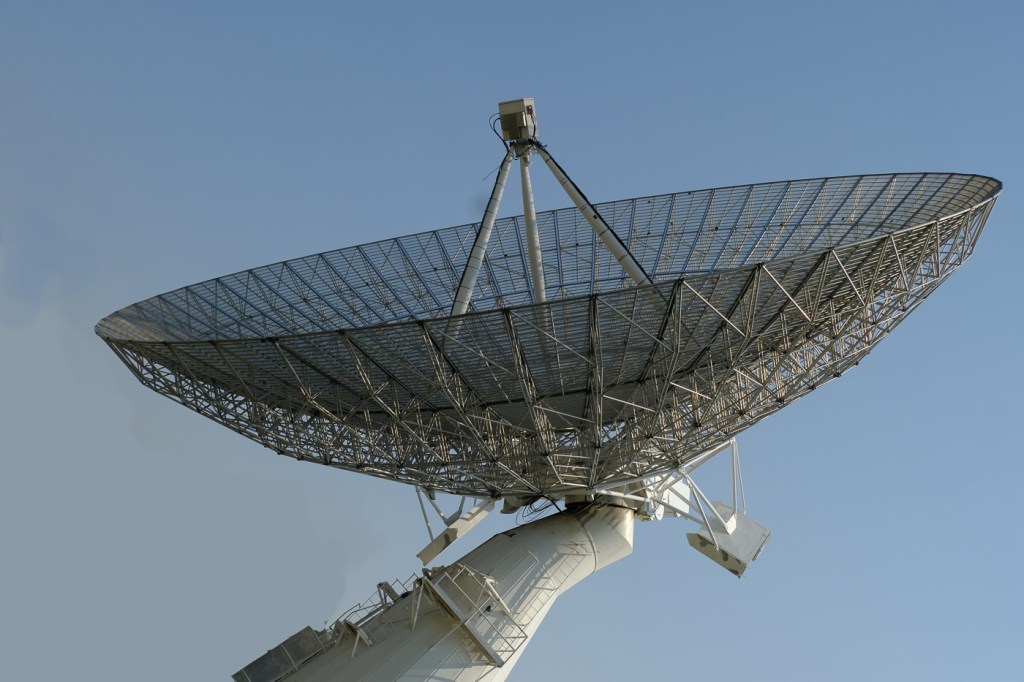
Such is the work of Astronomy, and of Radio Astronomy in particular. Here in the South Okanagan at the site of the Dominion Radio Astrophysical Observatory research facility we are fortunate to have a spectacular facility right next door to our little town of Summerland. The Canadian Dominion Radio Astrophysical Observatory (DRAO) is an internationally known facility for science and technology research and development related to radio astronomy. Home to NRC astronomers, astrophysicists, engineers and technologists, as well as visiting researchers and students from universities and astronomical observatories around the world, these facilities support the design and development of leading-edge instrumentation for new and existing telescopes.
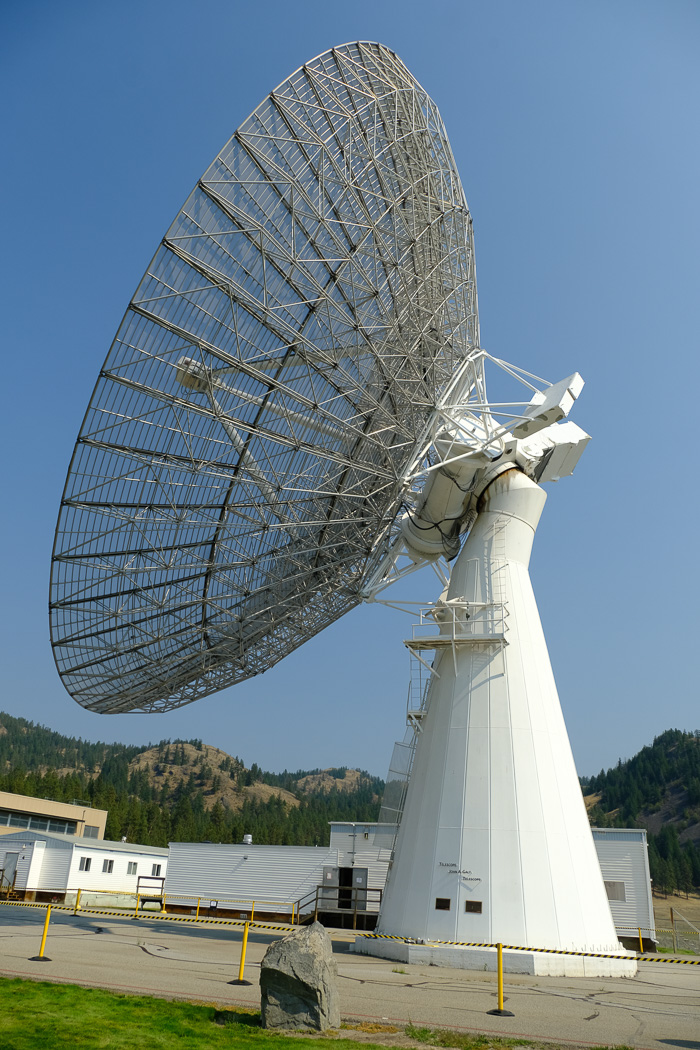
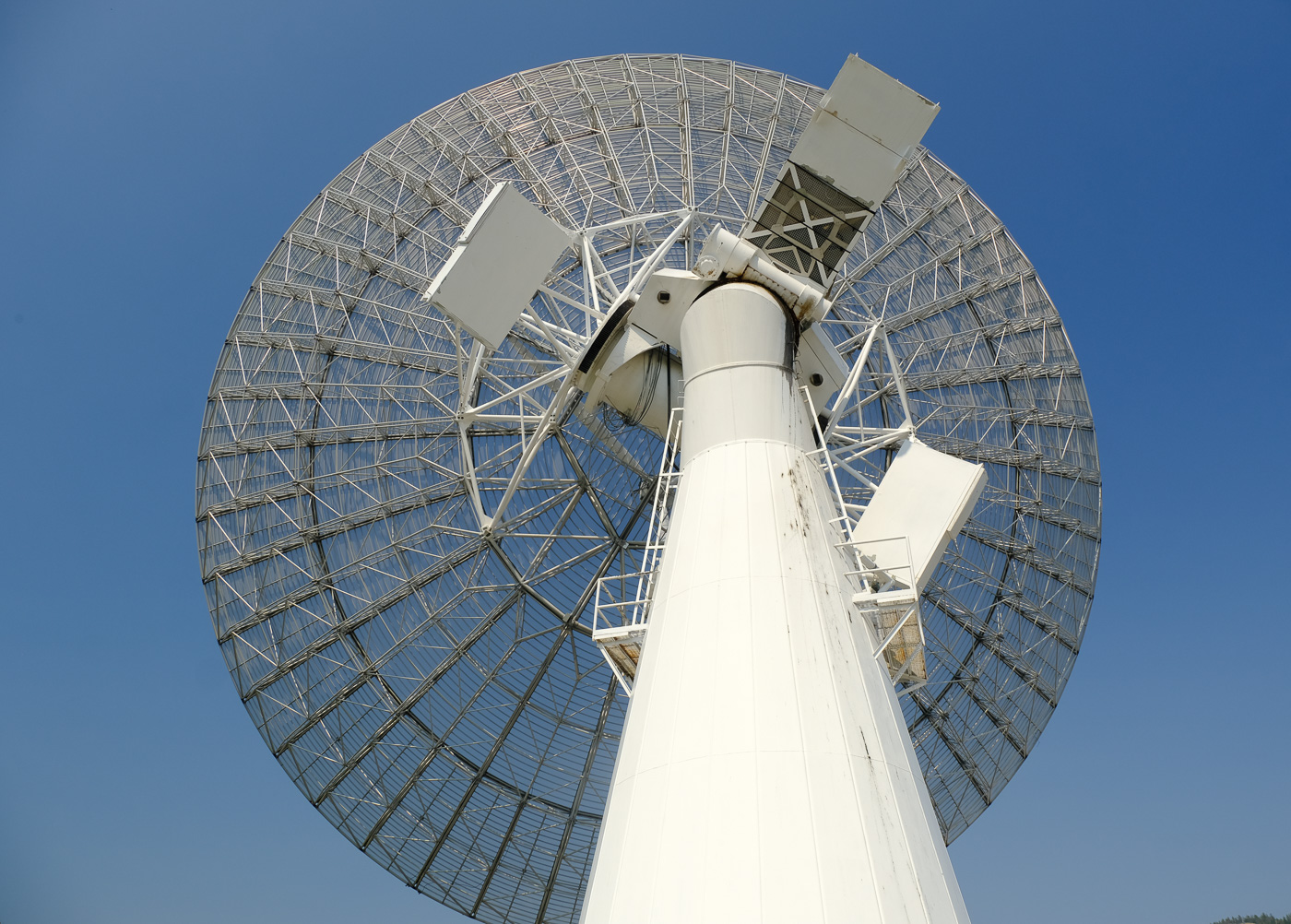
Joining a group in the control room of the 50-year-old John A. Galt Telescope: a 26-m diameter, prime-focus, equatorially mounted telescope with interchangeable feeds that currently operate from 0.4 to 2 GHz, I asked one of the scientists what they looked for in their research. His response was, to me, somewhat abstract. High school physics was not my strong suit.

He definitely did NOT say they were looking for extra-terrestrial beings, as in the 1997 psychological thriller and sci-fi blockbuster Contact, starring Jodie Foster. Astronomer Dr. Ellie Arroway (Jodie Foster) has long been interested in contact with faraway lands, a love fostered in her childhood by her father, Ted Arroway (David Morse), who dies when she was nine-years-old, leaving her an orphan. Her current work with SETI, the Search for Extraterrestrial Intelligence, is based on that love and is in part an homage to her father.
My lack of scientific prowess noted, as an amateur I can appreciate radio astronomers’ search for evidence of patterns of energy, and of chemical concentrations of amongst other elements, Hydrogen. Radio observation penetrates the cosmos well beyond the reach of optical telescopes such as those in Victoria and Hawai’I, and even through the Hubble Space Telescope.
Here at the DRAO the Galt telescope is the largest antenna, a piece of equipment updated throughout its working life though still containing the original 50-year-old chicken wire (I kid you not—the stuff you buy at Home Hardware) which continues to collect radiation for analysis and understanding.
Other equipment on site includes Solar radio flux monitoring: a fully automated solar weather monitoring facility that provides “space weather” data for many scientific and commercial activities at both industrial organizations and government agencies around the world.
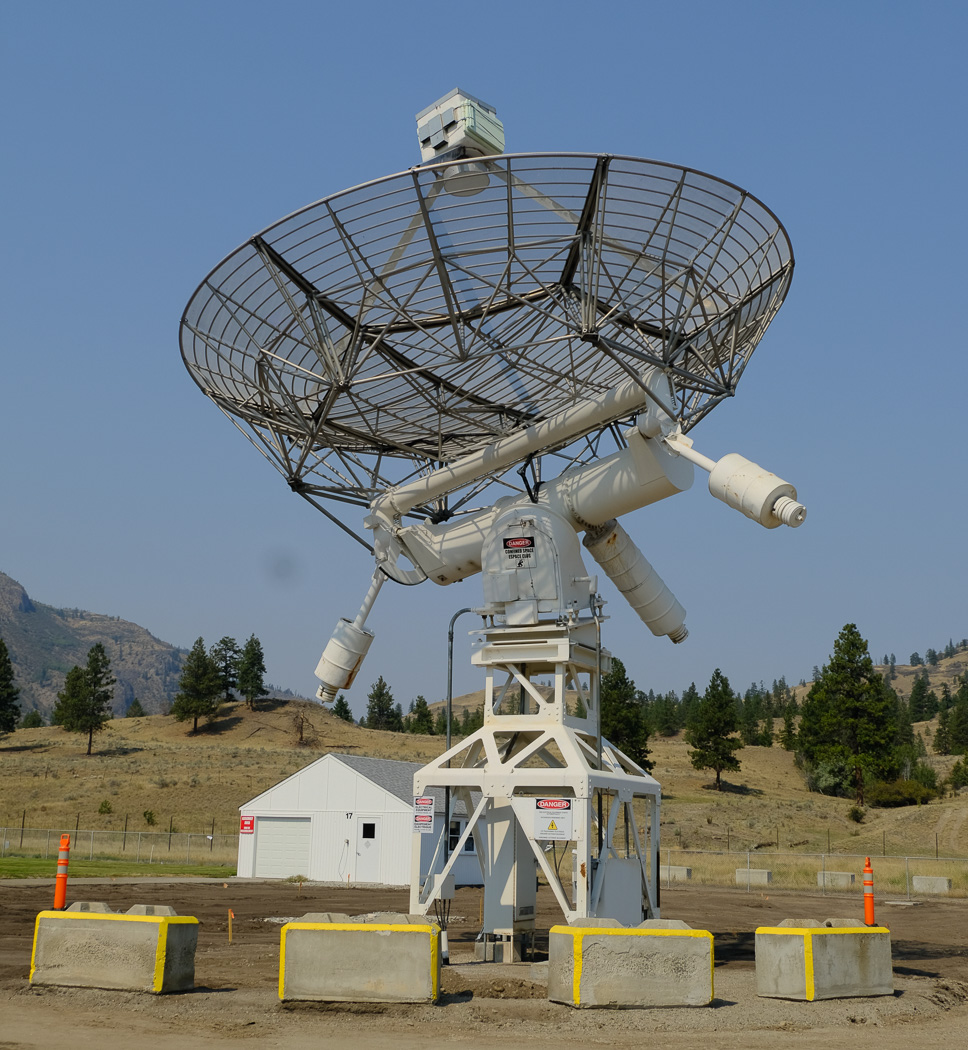


A next-generation solar flux monitor (NGSFM) has just been completed . . . designed to provide the solar flux at five additional wavelengths, providing greater insight into the processes underlying solar storms and other solar phenomena that impact the Earth.
Also on site is Canada’s largest radio telescope, CHIME, a collaboration between the University of British Columbia, McGill University and the University of Toronto. Collecting radio emissions from the Universe between 400 and 800 MHz, it is designed to survey atomic hydrogen from the largest volume of the Universe to date . . . CHIME maps the whole sky visible overhead every day.
As to the future, DRAO has been at the centre of more than 50 years of outstanding achievement in astronomical sciences and technology development. This includes the ground-breaking Very Long Baseline Interferometry (VLBI) technique that telescopes at DRAO and the Algonquin Observatory in Ontario used to produce observations of similar resolution (i.e. level of detail) that a single radio telescope thousands of kilometres across might achieve.


DRAO is currently working on novel technologies for the Square Kilometre Array (SKA), including composite telescope construction, phased-array feed and receiver systems, low-noise amplifiers, and digital signal processing hardware and software.
Admittedly, it’s a lot to take in on a single visit. We joined a large number of citizen scientists gathered, not only for the fabulous poutine, but for lectures, workshops, tours, and casual conversation. Kathie and I plan to return next year for another open house, and a glimpse into things not visible to our naked eyes, though things real, measurable, and informative as to the very meaning and experience of life, an astronomical pursuit calling on the curiosity in all of us, and for some, a life profession.


Maybe next year’s Season of Creation adventure will be a trip up to the DRAO. Stay tuned, literally.
 Take Note - Reflections on life, music, politics, retirement and more by Ken Gray
Leave a comment