Jesse Zink is Principal of Montreal Diocesan Theological College and canon theologian in the Diocese of Montreal. His recent book Faithful, Hopeful, Creative: Fifteen Theses for Christians in a Crisis-Shaped World is now widely available. The following post by Jesse Zink was first published on Substack.com
[Jesse Zink] A high-profile international gathering in Assisi earlier this year has given momentum to an interesting idea: add a feast day to the liturgical calendar focused on God as Creator.
I’ve heard proponents of the idea argue that there is a feast day for virtually every affirmation made in the credal statements of the church—except for the opening affirmation, “I believe in God, the Father Almighty, creator of heaven and earth.” In recent years, many churches have added a Season of Creation (from September 1 to October 4) to focus specifically on creation. Adding a feast day on September 1 would be a natural liturgical kick-off. The liturgical calendar should evolve and change over time in response to the changing world. At a time when God’s good Creation is under threat, it makes sense to pay particular attention to God as Creator.
There’s a tendency to think of the liturgical calendar as immutable, but it’s not. Consider the Feast of Christ the King (sometimes called Reign of Christ Sunday), a relatively recent addition to the calendar. It was instituted in the 1920s by Pope Pius XI in his encyclical, Quas Primas at a time when many of the monarchies of Europe had been overthrown in World War I and the temporal authority of the pope was being challenged in Italy. Speaking about the kingship of Christ was, for a conservative pope in a conservative church, a helpful counter-reaction.
Today, much of that history has been forgotten and churches mark the Feast of Christ the King as an eschatological endpoint of the Christian year. It’s a lesson in how an event that emerges in a particular socio-political context can, over time, be transformed into something different and, arguably, more meaningful.
In Quas Primas, Pius XI argued that “The faithful, moreover, by meditating upon these truths, will gain much strength and courage, enabling them to form their lives after the true Christian ideal.” We may now disagree with what he thought was the “true Christian ideal” but it’s worth thinking about in the context of God the Creator. What ideals do we learn from thinking about God as Creator? Here are a couple:
- God is creative. That’s part of what it means to say God is Creator. And humans are made in the image of this creative God. We are called to be creative as well.
- God creates a community of creation: not just humans, not just land or waters, not just fish in the sea, or plants bearing seeds, but all of it. And each part of that community is called to take its place in the community of creation. It is a lesson in humility but also in thanksgiving.
- God delights. As Norman Wirzba has written, the point of sabbath is not that God got tired and needed rest on the seventh day, but that God wanted to take time to delight in Creation. We are called to take delight in this community of creation.
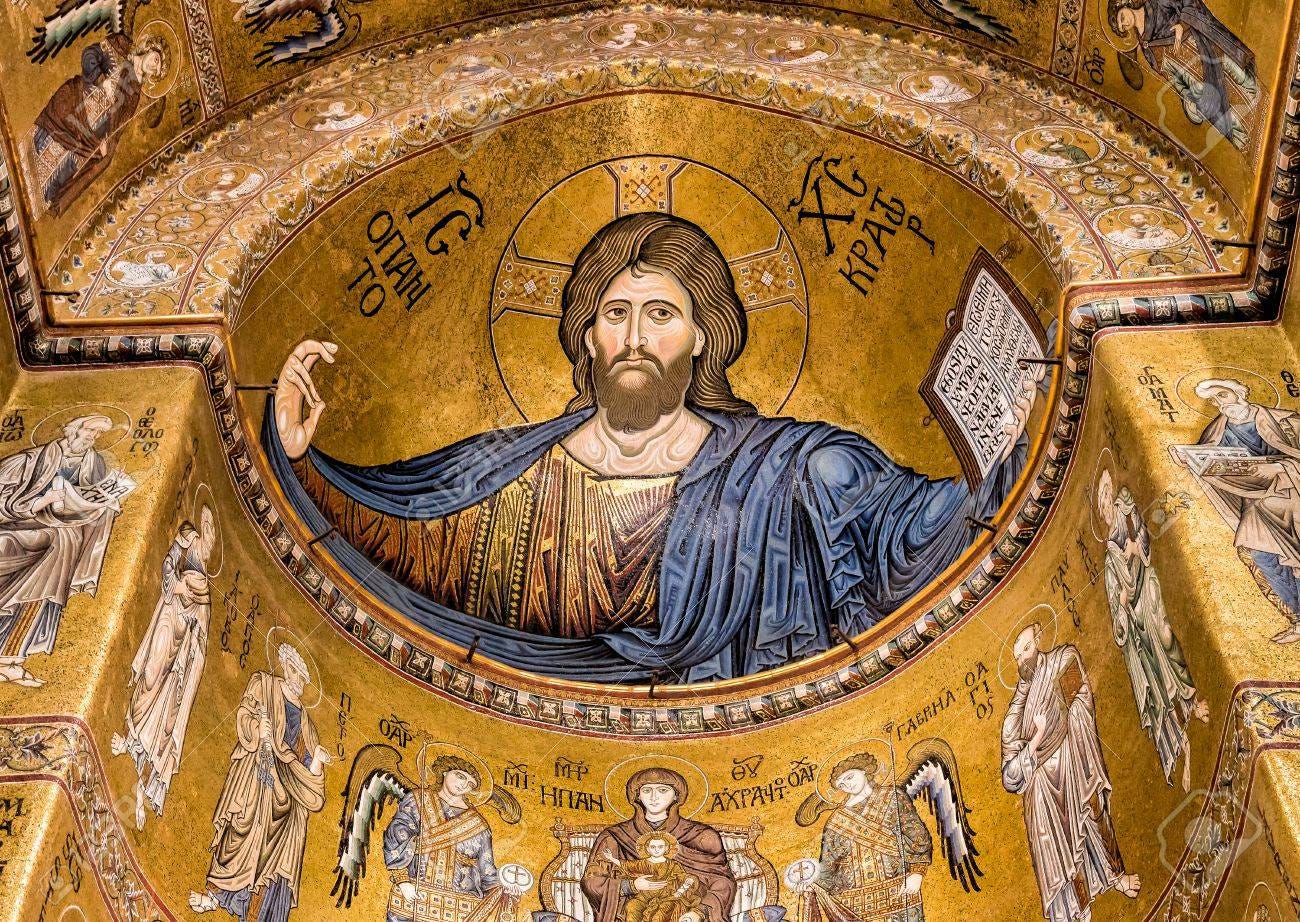
All of this leaves me in favour of a feast of God the Creator. Given some tendencies in some parts of mainline Protestantism, we’d need to be careful to ensure it didn’t become basically Unitarian and/or modalist. In other words, we need to remember that the whole of the Trinitarian God is involved in creation, not just the first person. I hope we could read some of the passages from the New Testament that make clear how Jesus was involved in Creation for instance. (Recall all of the fantastic Christian artwork of Christ Pantocrator.)
“For in him all things in heaven and on earth were created…” (Colossians 1:16)
But these are pitfalls that can be avoided. As a next step in the ongoing development of the liturgical calendar and at a time of climate crisis, a Feast of God the Creator is a worthy liturgical experiment.
[Ken Gray] I have previously posted on the Assisi initiative here and here.
 Take Note - Reflections on life, music, politics, retirement and more by Ken Gray
“…As a next step in the ongoing development of the liturgical calendar and at a time of climate crisis, a Feast of God the Creator is a worthy liturgical experiment….” Ditto to all in this post. At the same time, liturgical amendments, additions, experiments, succeed (IMO) when grown by/from the laity up rather than introduced/imposed by/from the clerical down. Catholics can pull it off (sort of) when the Pope makes it happen. Anglicans need to be careful in how the liturgical seeds get sown and grown to ensure the harvesters truly embrace and welcome the change. Reformed Christians, with their conciliar form of governing would have the new Season/Feast/liturgical addition begin in committee and seek additional approval in Synod and General Assembly and then slowly fed into congregational life and celebration. Just saying (smile).
LikeLike
Fear not former Presbyterian. Rome still works top down, though there is obvious intent to move in this very positive direction. Anglican Ken.
LikeLiked by 1 person
I think this would appeal to young people and others who tend to feel disengaged to many of the “traditional” feast days….
LikeLike