Six years ago BC led the world in addressing harms to First Nations. Why put that progress at risk?
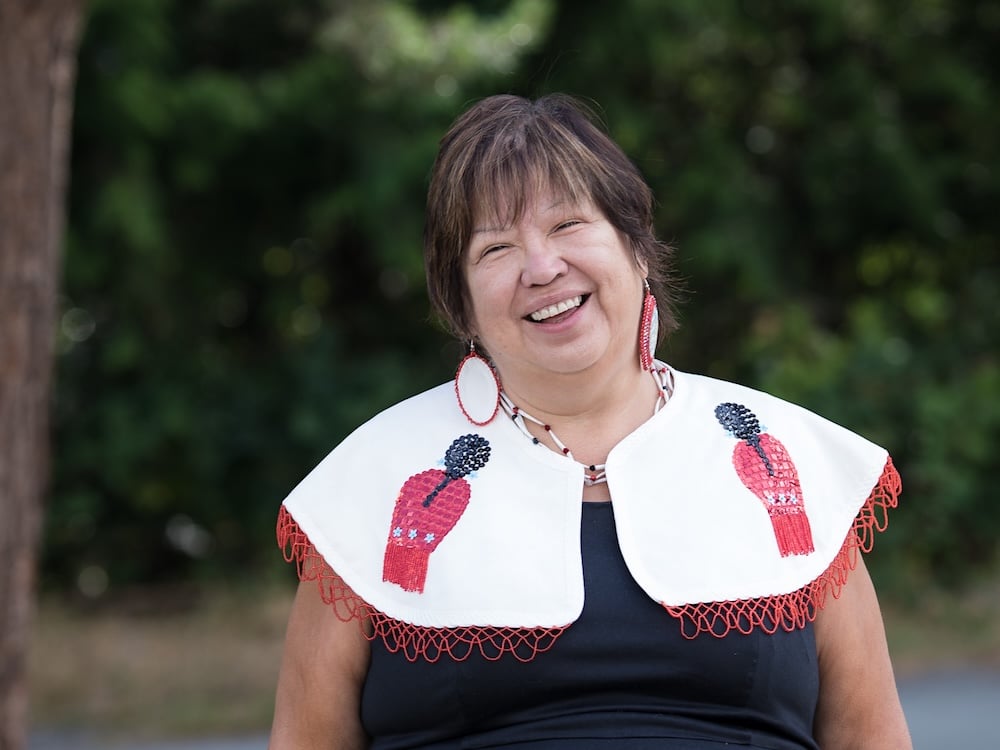
Judith Sayers in The Tyee – Judith Sayers, Cloy-e-iis, is from the Hupacasath First Nation in Port Alberni, B.C. She is president of the Nuu-chah-nulth Tribal Council.
Now that the Greens have pulled out of their governing accord with the BC NDP, Premier David Eby is left with a one-seat majority. That’s a thin margin. The NDP is losing ground. But is this because it needs to be more centrist? Or is this because the government has been failing to stand behind its own progressive works?
These questions need asking because the NDP government has vowed to amend the Declaration on the Rights of Indigenous Peoples Act, or DRIPA, which the legislature passed unanimously just six years ago.
In six short years, and especially in the past six months, B.C. has gone from leading the world in addressing historic and ongoing harms to Indigenous Peoples to giving in to misinformation that is feeding an anti-Indigenous frenzy.
In 2019, B.C. was among the first jurisdictions in the world to pass legislation bringing the United Nations Declaration on the Rights of Indigenous Peoples, or UNDRIP, into law. Since then, courts and public bodies have begun integrating UNDRIP into their decision-making processes, creating benefits step by step. Respect for human rights is good for everyone, but we may soon have the shameful distinction of being the first jurisdiction to take UNDRIP out of law.
British Columbians and political representatives who value equality need to demonstrate their commitment through action, more than ever.
A major misconception
Opposition to UNDRIP seems based in a misconception that it grants Indigenous Peoples “special rights” at the expense of other citizens. It does not. UNDRIP articulates basic human rights — the minimum standards necessary for our survival, dignity and well-being as Indigenous Peoples.
UNDRIP has been part of international law since 2007 and emerged from decades of work by United Nations working groups. The declaration recognizes rights held by both Indigenous individuals and Indigenous Peoples.
Indigenous Peoples hold collective rights rooted in our existence as self-governing nations. These collective rights reflect basic elements of nationhood, not special privileges. UNDRIP responds to historic campaigns of colonial powers to erase Indigenous nationhood.
Before the British Crown arrived in what is now B.C., our ancestors governed these lands, making decisions about territories, resources and relationships with other nations. Our territories were not empty wilderness waiting to be discovered. They were, and remain, the homelands of nations operating under our own legal and political systems.
After contact, the Crown chose to ignore this reality when convenient, though it acknowledged our status as nations when it served its objectives. Britain negotiated a small number of treaties to acquire land in B.C., implicitly recognizing our authority to cede territory. We were never conquered, but colonial legal systems also adopted narratives erasing Indigenous law and ownership, creating a contradictory foundation that persists in Canadian law today.
In B.C., this structural injustice cuts deep. Most of the province sits on unceded land. For generations, the provincial government refused to negotiate equitable treaties. Government still operates on a presumption that all land belongs to the Crown until the courts rule otherwise. Until we prove our rights in court, they exercise control over our land and authorize mining, forestry and industrial development.
B.C.’s delay in addressing the nationhood of Indigenous Peoples led to the recent Gitxaala decision, because B.C. has been giving away mineral rights without Indigenous consent, consultation or even notice, since 1858. Instead of dealing with the issue, B.C. decided to deny any issue existed. The courts found that B.C. must consult, both under the Constitution and under B.C.’s duty to align its laws with UNDRIP.
Premier Eby cites this outcome as his reason for amending DRIPA. But neither Canada nor B.C. would tolerate any outside power granting rights to local minerals. In the Gitxaala case, UNDRIP and DRIPA simply required that B.C. address the denial of Indigenous nationhood long entrenched in B.C.’s mining laws.
Time for MLAs to step up
UNDRIP asks for nothing more than what Canadians would expect if their own sovereignty were at stake (a familiar feeling these days). We seek equality in the most fundamental sense: recognition of our nationhood, our laws and our continuing connection to the territories that have always been ours.
More than 100 First Nations leaders are asking British Columbians to recognize the steady progress we have made together under DRIPA and to defend it.
MLAs in B.C. can resist pressure to weaken or abandon DRIPA, otherwise known as the Declaration Act. Voters can support leaders who treat UNDRIP implementation as a priority, not an obstacle. British Columbians can educate themselves about the ongoing denial of Indigenous nationhood and speak out against narratives that frame our rights as threatsWe are better than this. Together we can do much better. Let UNDRIP do its job. Elbows up for Indigenous (and Canadian) rights.
Visit the takenote.ca HOME page for a colourful display of hundreds of other blogs which may interest or inspire you
 Take Note - Reflections on life, music, politics, retirement and more by Ken Gray
Leave a comment