
I have now “sung for my supper,”–and I did actually sing, though not for my supper.
In leading Anglican worship at the Church of the Nativity in Sandy Cove Nova Scotia on Sunday, July 14, 2024, I have now fulfilled my liturgical obligation.
The deal was that I would lead worship for two successive Sundays in July. Things didn’t exactly work out that way for a variety of reasons, but I did lead worship yesterday. And it was fun.
First some history from the explanatory notes provided:
Sandy Cove is located about 35 km southwest of the Town of Digby, a little more than halfway along the peninsula known as Digby Neck.
Sandy Cove has a winter population of less than 100, mostly fishers of lobster, ground fish, or scallops (pronounced skull-ups).
There are only three year-round Anglican families in the village comprised of five individuals. During the summer there are many who come to their summer homes or cottages as they might be called in other parts of the country. These “summer people” come from far and wide: across North America and even from the UK.
The Church of the Nativity was consecrated August 7, 1844 by Charles Inglis, the first Lord Bishop of Nova Scotia.
Like many Anglican and mainline churches across Canada, COTN’s future as a worshipping community is uncertain. Developed by warden John Scott, I first discovered the summer ministry programme in a CBC online article titled “Summer at the beach.” I applied last year, but my application was too late. I was successful however this year.


In short, the church is a marvellous worship space. Lacking any stained glass the interior dazzles with light. Wooden pews allow for 60+ worshippers though we were only a hearty 15 yesterday. Equipped with carpet in the sanctuary proper, and only a floor runner in the nave, the sound is absolutely magnificent, especially for singing; and sing we did, even in parts, all a cappella.
The altar faces east and not towards the congregation. Such was the case historically in most Anglican parishes until the ascendency of the liturgical movement of the 1960s and later. Given space constraints it would be difficult to do otherwise; as with most tussles between liturgical principle and building architecture, the building typically wins.
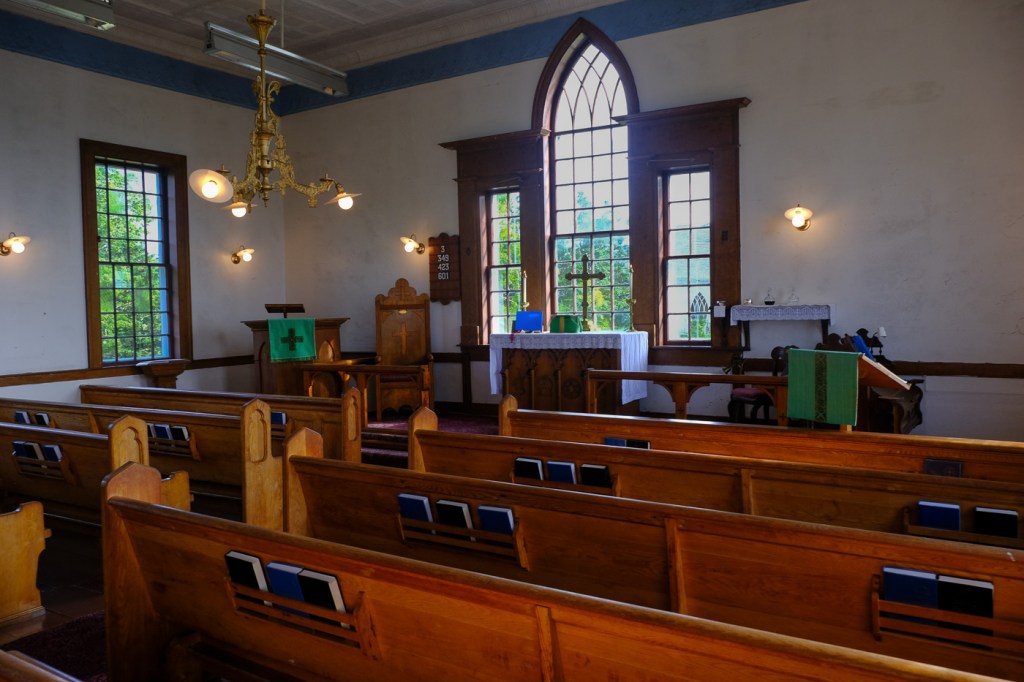
I have only presided at table once facing east. As I led the Great Thanksgiving I gazed out the main window, a posture that required some discipline as the view was captivating. I needed to remember to elevate the host and cup so they could be seen by the congregation. I also had to manage my worship notes with one hand, and moving through manual gestures with the other. I must have looked like an stranded octopus.
You may ask about the sermon. Itinerant preachers face a challenge; one has no idea of last week’s focus, style, or decorum. One is also unaware of local congregational traditions, interests, and experience of ecumenical and diocesan ministries, and especially given my interests, participation in global mission. Finally, I had little idea “who’s who in the zoo.”
I first delighted in the first chapter of the Letter to the Ephesians. I recalled singing a musical setting by S. S. Wesley as a boy chorister:
Blessed be the God and Father of our Lord Jesus Christ, which according to his abundant mercy hath begotten us again, unto a lively hope by the resurrection of Jesus Christ from the dead.
In naming this text a paean of praise I noted its human-centred bias. While creation is named, it is assumed though not celebrated as God’s primary grace as is the case elsewhere.
I moved on to Elizabeth Anne Johnson, a Roman Catholic religious and scholar who encouraged so many of us in the 1980s to consider, view, and enjoy God through a feminist perspective. Until that time, I and so many others thought God was a guy–male, patriarchal, all-powerful. It was the late Sallie McFague who first suggested that the doctrine of the Trinity can be expressed as Mother, Lover, and Friend.
Johnson now shows us how to do the same, to meet God, with and through creation.
The great living God of heaven and Earth who made the sea and all that swim in the waters, the skies and their flying birds, the solid land and all the creatures that grow, slither, burrow, lumber, or walk upon it on two or four or more legs, this great Love brought forth the beauty and bounty of the evolving world out of sheer unfathomable goodness.
Johnson reminds us of God’s nature, especially as One who loves justice, very much in the spirit of John the Baptizer whose death is described in the
Gospel text. Many, if not all prophets die, even today.
Staying with the prophetic theme I turned to Bishop Steven Charleston’s wonderful book: We Survived the End of the World: Lessons from Native America on Apocalypse and Hope.” Bishop Charleston highlights the stories of four Indigenous prophets including Smohalla (born c. 1815 or 1820, in the Upper Columbia watershed in modern day
Washington State. Smohalla taught through the Washani creed, an Indigenous spirituality that asserts belief that the earth, the people, and God are in a covenant with one another. Charleston’s thesis is that as Indigenous peoples have survived apocalypses, so we can navigate the uncertainties and fears now before us.
Considering recent events—the attempted assignation of Donald Trump, the rise of right-wing groups worldwide, the recent catastrophic flooding just north of us, especially in Wolfville where a young person drowned, and still thinking of the chaos in the Middle East, and the plight of Indigenous communities worldwide–connections with apocalypse make a lot of sense.
I guess I should have titled my sermon “Prophet proclaims apocalypse in Sandy Cove.” Catchy huh, but helpful? Well, ask your neighbour if you weren’t in the room.

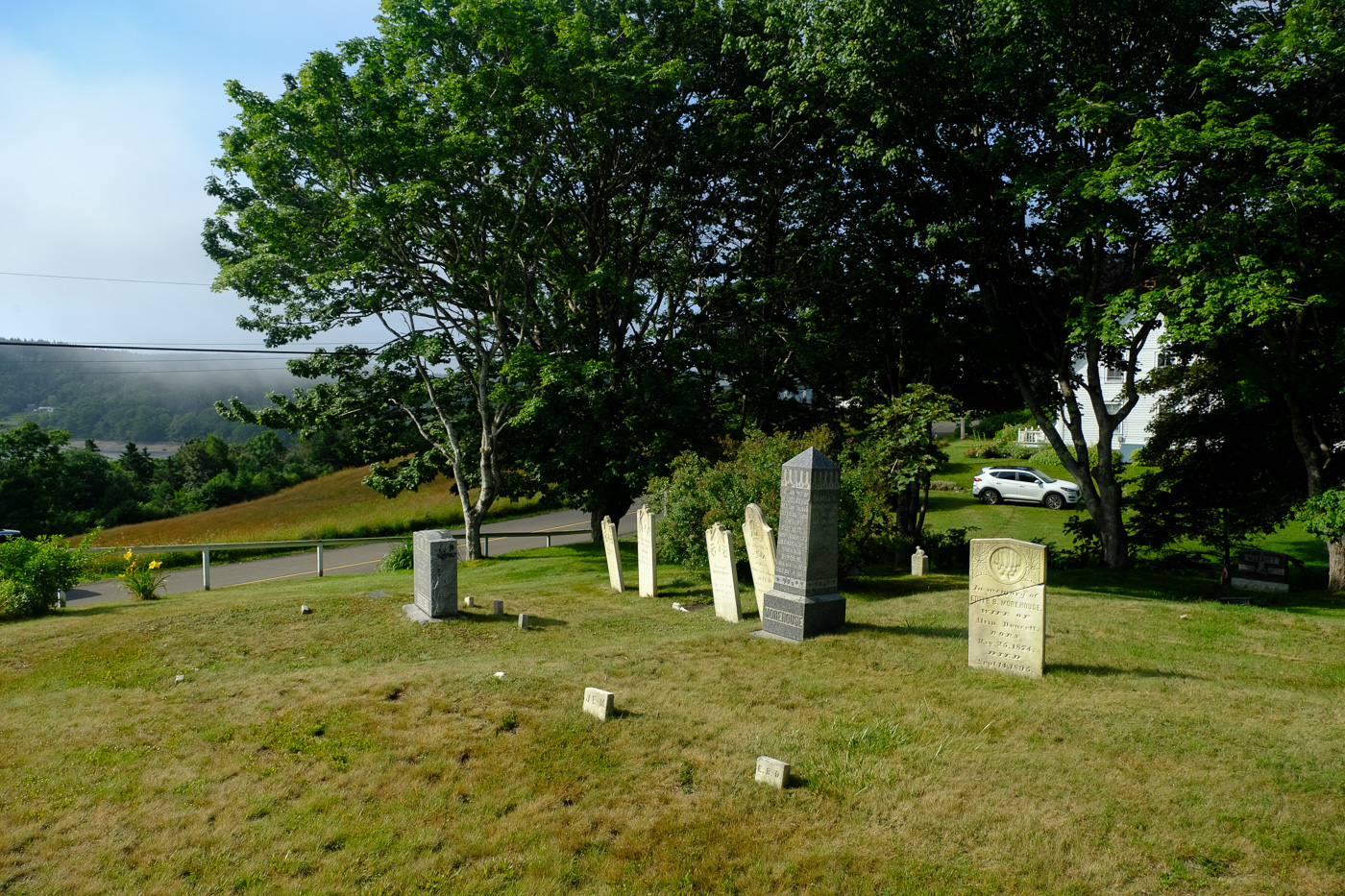
Thanks Church of the Nativity folks for your warm welcome. With no running water in the church there was no coffee time–congregants stood on the grass for some time afterwards and the congregation conversed and enjoyed their own unique community together.
 Take Note - Reflections on life, music, politics, retirement and more by Ken Gray
What an enjoyable post! Thank you!
LikeLike