I created this blog TAKE NOTE as a presentation space for a wide variety of topics: politics, culture, biography, future church, dogs (and their blogs), music, and photography amongst other interests. The latter has received short shrift, until today that is.
Now returned from two weeks in Nova Scotia, with camera firmly in hand I enjoyed daily access to multiple sites amidst between Halifax and Sandy Cove in Digby County. I posted a number of images on my SmugMug site that I am pleased to now share with some comment on both content, and photographic approach.
For the technically minded I use a Fuji XT4 body with an 18-135 Fujifilm lens, a great range for travel shooting. I love the Fuji image quality, great colour, contrast, bokeh (lens blur) and other effects. The XT4 viewfinder is great for my low vision needs and the camera can stand some rough and tumble handling. The combination is not too heavy though I sometimes wonder about an X-100 series body for travel.
I edit all images in Lightroom either on my desktop or laptop. Phone management is too difficult for me personally. Given my vision challenges—I see line, colour, shape, and form more than detail—I prefer subjects which don’t move—buildings or dead bodies—but not flying birds or sports action.
Photography helps me see the world in a way not possible for me in real space and time. Digital technology makes it all happen. I hope you enjoy the images and notes below.
The sun now shines, in Halifax
Despite many days of fog and significant amounts of rain, the sun did finally shine in Halifax. So flowers, cemetery plots, a beautiful downtown park, fountains, and historic architecture all became subjects for my lens. A visit to the Halifax Citidel on an extremely hot day presented challenges and opportunities. A fort which saw no actual battle though remained a significant defence bulwark until 1951 was fun to see—hosts appeared in period costume and we got to witness the noon day cannon blast; of course we couldn’t see the gun actually fire for safety reasons (unlike at Louisburg on earlier trips). Most interesting was the historic architecture, complete with a detailed explanation of how “dry” moats work. What I remember most was the pressing heat—I was so wet with sweat that Kathie bought me a replacement shirt; I hugged the shade as much as possible; my camera thankfully did not overheat though I watched it carefully.
Our next day was built around the Halifax Central Library, an architectural tour de force, a multi-level public space filled with books and other printed matter, likewise well equipped for connection with the global, digital world, a true people space for readers. My eye was initially drawn to the dynamic architecture, a collusion (or collision?) of lines and shapes on four levels, brightly lit by ample and well placed skylights. I shot up, over, down, and all around. It was easy to be inconspicuous which for me is great; I am actually very shy so “street” photography is challenging. I would love to return and create more human images but returning day after day would likely generate a call to local police. The building itself is art, and the space is given over in a significant way to the display of other art. One librarian friend commented: “It’s good to see libraries being used to showcase architectural art, not just a place to store books.”
With apologies to Leonard Bernstein, my gallery On the Waterfront celebrates the connection between Sandy Cove and the Atlantic Ocean. Given its long connection with the Lobster and Scallop fisheries the docks are busy through the changing seasons. (I was surprised to learn that the Lobster season runs January through May—not exactly friendly sailing weather!) Boats and their moorings are a constant source of inspiration for me as are the beautiful shore lines especially on the Bay of Fundy side where tidal variations are some of the largest in the world. As Kathie collected rocks I was so pleased we found times of day with less intense sun given my albino complexion.
Following two short ferry rides we found ourselves in Westport, a historic fishing community right in the heart of Acadian culture. From fishing stages along the shoreline, to bright coloured buoys and colourful people in the ferry lineup Westport did not disappoint. Sadly, our whale watching tour was cancelled due to poor weather. There were however other interesting things to do including a wonderful recently constructed bog trail walk. In processing these images I took considerable liberty with exposure, vivid colour management, selective cropping. In some cases I punched things up quite a bit; in others, I went for more muted effects. See what you think.
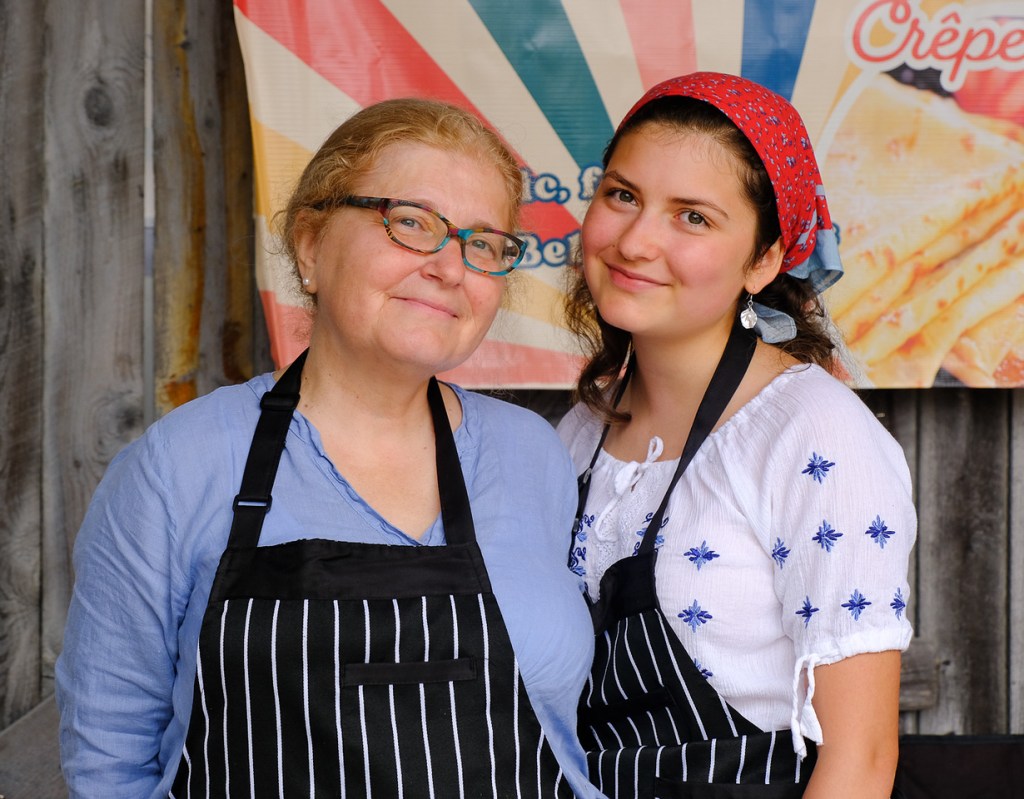
I love to photograph events, including markets, like the one we enjoyed at Annapolis Royal, one of Canada’s most historic towns. Ancient in new combine well there, especially on market day. The day we visited was also PRIDE day, a time for the community to openly celebrate the inclusion of all persons in community life. I spoke with a number of vendors who kindly agreed to be photographed. One person actually demanded that I take his picture; only one person demurred. I love creating informal portraits, keeping a focus on the person while including aspects of their surroundings. I have worked with lights in a studio setting, but find the street environment more accessible and enjoyable. I also like photographing musicians, my favourite here being the banjo blues guy with the dark shades. He was a fine player and performer. His day was shortened however as he broke a series of well worn strings.
Working our way back to towards Halifax though, still in Acadian Country, we did what we likely should have done first; we toured an Acadian cultural centre. Having learned much of the French, Catholic culture already we opted for the free grounds pass instead of touring the indoor exhibits. More interesting church architecture, some lively sculptures depicting the deportation, and some wonderful folk art in the welcome area. Line, colour, shape, and form all drew my photographic eye. Also some fun working in black and white with the human sculptures. I still love the B/W medium and have some software specially suited to adding and creating effects.
Given all of the above it must be clear that I love travel photography. Challenges do exist for sure. Light is always changing; you often cannot return for an extra shot; the needs of fellow travelers must be considered even when you might like to stay for an hour to work a subject fully; inclement weather, declining physical energy, cost and commitments must be respected if not embraced. If photography was first used by the Paris police to document the deaths of criminals, photography allows me to photograph the living, something I will likely continue till my dying day.
 Take Note - Reflections on life, music, politics, retirement and more by Ken Gray
Leave a comment