Another in the series: Stories from Somewhere, by Ken Gray
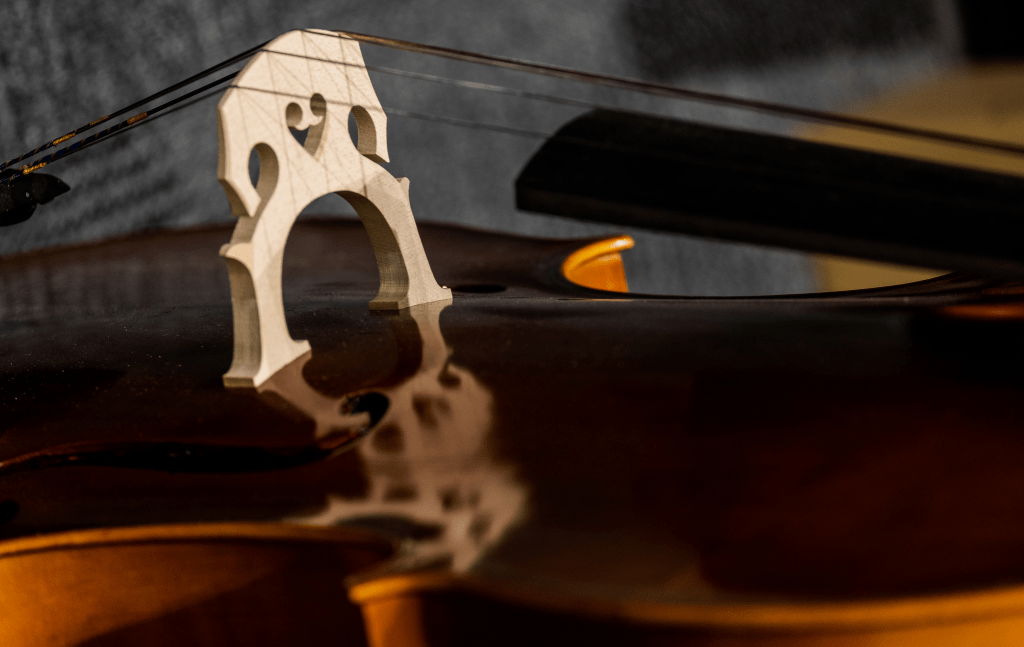
“I will trust, I will trust, I will trust in him”
—Stuart Townend
Walking downhill towards the church on a crisp autumn evening, the retreating western sun infusing fluffy clouds with shades of orange and yellow, I see the lights on in the church. Did I miss something? I wonder. As I draw closer, I hear music, a solitary violin adding its own graceful blessing to an early evening pastorale. The melody is familiar to me, Dvorak’s Humoresque, a lilting melody, a dance-like promenade, a fancy. It’s the sort of music that makes me smile.
So who’s playing? Gladys teaches piano, not string instruments, so it’s not her or one of her students. Not wanting to disturb the player I creep into the church as quietly as possible, though truthfully, there’s nowhere to hide in our little church building. To my surprise there’s Sam standing behind a music stand, violin tucked under her chin with bow in hand.
“Sorry to interrupt, Sam. Sounds lovely,” I say.
“Hi minister,” she smiles. “Thanks. I hope you don’t mind me practising in the church. It’s such a lovely room to rehearse in.”
“Not at all; please, keep playing. What are you rehearsing for?”
“Nothing in particular right now. I want to work up a half dozen or so tunes as, you know, party pieces.”
“I know the Dvorak; It’s a lovely, enchanting melody.”
“Yes. I love how it flips between major and minor keys. The mood switches back and forth delightfully. And thankfully, it’s not too hard to play.”
“It’s not to be rushed.”
“Definitely not.”
“Speaking of rushing, have you a minute to chat?
“Sure. What’s up?”
“I’m just curious. I notice you do a lot around here, at our little church. You are a quiet though essential behind-the-scenes worker for which I want to say ‘Thank You.’”
“You are most welcome. I do what I can. I manage the altar preparations, changing hangings as necessary. I check that the readings are marked for Sunday. I clean and organize the church and print the leaflets. I even fix the odd dripping tap.”
“What you do makes a difference. The impression I get when arriving is that the church is well cared for, and that someone, it must be you, and possibly others, makes the space beautiful, and functional. Visiting other churches, I know this is not always the case.”
Modestly, “Well, I do what I can, and I do love helping where I am able. I like things done properly. Isn’t that what servant ministry is all about?”
“I believe it is. You also sing in the choir; you are part of parish council; you help with special events. Maybe you should be the minister?”
“I really do prefer to stay in the background, but thanks for your confidence. I appreciate that.”
“What else are you working on musically?”
“I love the new version of Psalm 23 that Gladys introduced the other night. It also suits the violin well. I hope she might invite me to play when it pops up in church again. See what you think.”
Sam’s playing sounds good to me. Nobody sounds good when they first play a violin. Unlike guitars, violins don’t have frets: you have to find the notes by ear. Each and every note must be tuned. Sam plays clearly and accurately. Her phrasing is musical; she has obviously taken lessons at some time — At school? Here, or back home in the UK?
She’s a bit of a mystery woman, on her own, and for many years in our little town. She doesn’t crave attention, but I get the sense she has an interesting personal history. Not sure how she pays the bills; she doesn’t work outside the home to my knowledge. That’s her business of course, but yes, a bit mysterious. I wonder what goes through her head when the music repeats, “I will trust, I will trust, I will trust in him.”
Sam return to her stack of music.
“Sam, you have obviously been around these parts for a while. A penny for your thoughts on this war in the woods I hear so much about right now.”
Suddenly Sam is agitated: “It’s been a long time coming. Talk to some older loggers, those who remember simpler times, less competitive times, when locals owned their own lumber lots and mills, before the multi-nationals arrived — they will tell you — they should never have been allowed to take so much wood, so fast, and in such a reckless manner. Next time you drive north, look out your passenger side window. You will see hillside after hillside just stripped bare, clearcut, stripped of timber, like rashes on human skin, a wounded, blotchy, skin of the earth.”
“Aren’t companies required to re-plant what they take?”
“Sure, but to save money they plant only single species of trees which do not adequately replace the diversity of timber they replace. This is bad for all sorts of reasons — forest durability, soil management, erosion control — and let me ask you; how long do you think it takes to grow a tree?”
“I have no idea,” I admit.
“A bare minimum of fifty years, though one hundred is more likely necessary.”
“That’s a long time to regenerate a vital resource.”
“It sure is. But hello, we need wood. Look at this violin. It’s not plastic, thankfully. It’s no Stradivarius for sure, but where does this wood come from? And at what environmental expense?”
“I’ve been hearing a lot about the logger side of the situation. I think I need to investigate the environmental consequences now.”
“Probably a good idea. And let me know how I might help. So what’s your favourite piece of music? Maybe I can play it?”
After some thought, “How about ‘The Water Is Wide?’”
“O Waly Waly. I know it. Coming right up.”
As she raises her instrument to her shoulder, I also wonder what is coming right up.
For other chapters in the series go here
Visit the takenote.ca HOME page for a colourful display of hundreds of other blogs which may interest or inspire you
 Take Note - Reflections on life, music, politics, retirement and more by Ken Gray
Leave a comment