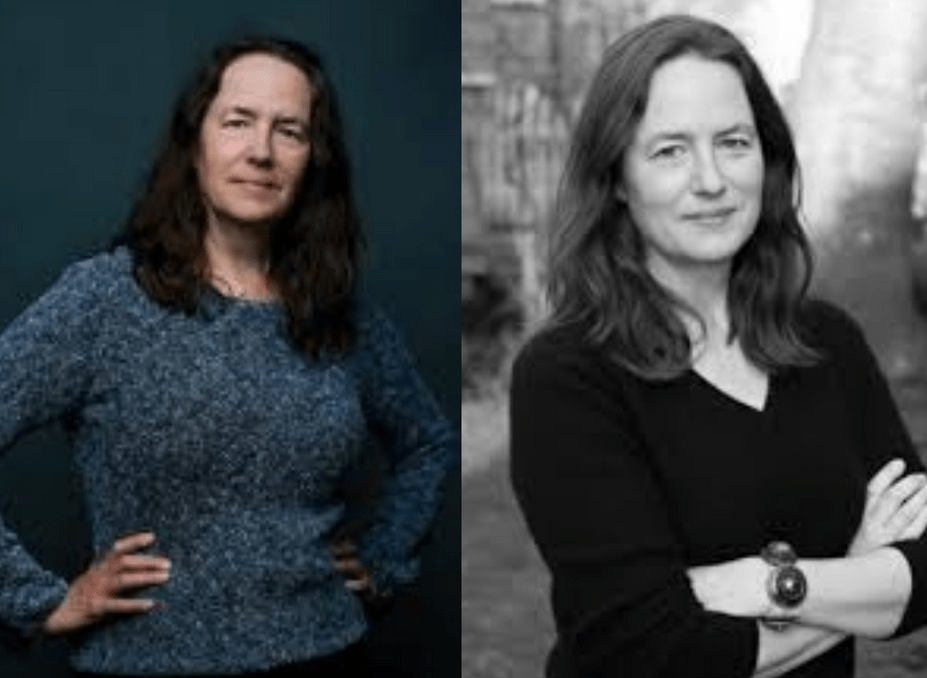
Every night, a history professor in Maine writes a newsletter explaining American politics. Over 2.6 million people read it daily. For many, her words feel like rescue from chaos.
Midcoastal Maine, sometime after dark. Heather Cox Richardson sits at her desk near the ocean. Outside, America is screaming. Breaking news alerts flood phones every few minutes. Cable news anchors shout over each other. Social media spirals into rage and panic. Democracy feels like it’s collapsing in real time, and nobody knows how to stop it.
Inside her home on ancestral land where her family has lived since the late 18th century, Heather opens her laptop and begins writing.
For over 2.6 million people, this moment is everything.
They’re scattered across cities and small towns, scrolling through phones with exhausted eyes and anxious hearts. Every headline feels like another crack in the foundation. Many feel powerless, terrified, unsure if the country they know will survive.
Then Heather’s words appear — calm, steady, contextual.
She’s not shouting. She’s not panicking. She’s not predicting apocalypse.
She’s remembering.
Heather Cox Richardson is a professor of 19th-century American history at Boston College. She’s spent decades studying the Civil War, Reconstruction, the American West—the moments when American democracy nearly died and somehow survived.
She’s read letters from frightened families watching their country fracture. She’s studied the speeches of demagogues who promised simple solutions to complex problems. She’s traced the slow steps that led nations toward collapse and the brave steps that pulled them back.
In 2019, during President Trump’s first impeachment inquiry, Heather started posting late-night Facebook updates, explaining the day’s political chaos through historical context.
People were desperate for her perspective. Not partisan spin. Not breathless outrage. Just clear-eyed analysis from someone who’d seen versions of this story before.
She pivoted to Substack, launching “Letters from an American“—a nightly newsletter that breaks down contemporary events by connecting them to historical patterns.
And something extraordinary happened.
By December 2020, Heather was the most successful individual author on Substack, on track to earn a million dollars annually. Boston Magazine gave her newsletter the “Best Pandemic Newsletter” award in 2021.
Today, she has over 2.6 million subscribers — more readers than most major newspapers reach daily. The New York Times has 10 million subscribers, but it employs over 1,700 journalists. Heather is one woman with a laptop, writing 1,200-word essays every night after teaching classes.
Her success isn’t about celebrity or controversy. It’s about something people are starving for: perspective.
When political chaos feels unprecedented, Heather reminds readers it’s not. When democracy seems doomed, she shows how it’s survived worse. When people feel powerless, she explains how ordinary citizens have always been the ones who saved it.
She doesn’t traffic in false optimism or naive hope. She’s a historian — she knows how badly things can go. She’s studied the moments when good people stayed silent and evil won.
But she also knows the moments when ordinary people refused to surrender.
Women weren’t handed voting rights—they starved, marched, and bled for them over decades. Civil rights weren’t gifted — they were demanded by tired feet and trembling voices, by people who were terrified but stood up anyway.
Those victories once seemed impossible. They happened because ordinary people refused to disappear.
Heather writes about 1859 — the year before the Civil War.
Imagine an ordinary American home. A mother folding laundry. A father reading by candlelight. Children laughing in the next room.
Outside, neighbors have stopped speaking. Friends avoid each other. Words have become weapons. Everyone senses something is wrong, but everyone hopes someone else will fix it.
Surely it won’t get worse, they think.
It did.
Heather has followed that story through archives and faded letters. She knows exactly where people could have turned back. She knows where courage failed and silence won.
That’s the burden of studying history—seeing every missed exit, every moment when things could have been different.
But she refuses to let that knowledge become despair.
“The past is finished,” she reminds readers. “The ink is dry. But tomorrow is still blank.”
Unlike those families in 1859, we’re not blind. We’ve seen what happens when hatred grows unchecked, when institutions weaken, when people are reduced to labels.
Democracy doesn’t usually die with a scream. It dies with a sigh. It dies when people say, “I’m too tired. It doesn’t matter what I do.”
It dies when good people stop believing they belong to the story.
Heather’s writing style is distinctive—conversational but substantive, accessible but never condescending. She cites sources. She provides context. She connects today’s political fights to similar battles from decades or centuries ago.
When readers see parallels to 1850s America or 1930s fascism, the comparison isn’t meant to terrify — it’s meant to show that people have faced these threats before and found ways through.
Her newsletter has become a ritual for millions. They wake up, make coffee, and read Heather’s analysis of yesterday’s chaos before facing today’s. It’s grounding. Clarifying. A reminder that history doesn’t move in straight lines and outcomes aren’t predetermined.
In 2023, she published “Democracy Awakening: Notes on the State of America,” examining how the Republican Party’s embrace of Christian nationalism, racism, and corporate interests over 70 years created conditions for Trump’s rise.
The book argues Trump wasn’t an outlier — he was inevitable given decades of groundwork. But it also argues that recognizing these patterns is the first step toward changing them.
Heather has interviewed President Biden. She co-hosted the podcast “Now & Then” with fellow historian Joanne B. Freeman. She’s been named to Time Magazine’s list of most influential creators.
But she hasn’t left Maine. She still lives on land that belonged to her ancestors. Her husband Buddy, a lobsterman, photographs the coast on her days off. She swims near a rock in the harbor named for her grandmother who learned to swim there in the late 19th century.
She could be anywhere —Boston, New York, Washington — but she chooses to stay rooted in a place where she can see the marks of those who came before.
Because that’s what her work is about: seeing the long arc, understanding that we’re all part of stories that started before us and will continue after we’re gone.
Every night, after teaching courses about the Civil War and Reconstruction, after reading the day’s political news, Heather sits down and writes.
She writes for people who feel small and scared. For people who worry democracy is dying and they’re powerless to stop it. For people who need to be reminded that citizens have always been the ones who saved democracy—not presidents or parties, but ordinary people making choices.
Her message is both sobering and hopeful: Nothing is inevitable. Yesterday is stone. Tomorrow is wet cement.
Every conversation we have, every time we show up or turn away, every moment we choose engagement over exhaustion — it all leaves marks.
From her home by the sea, while waves roll endlessly against Maine’s rocky coast, Heather keeps writing. Night after night, she gathers broken pieces of yesterday and hands them back as tools, not warnings.
She believes in the living. She believes in people who decide, even when scared, to stay engaged. To stay human. To stay hopeful.
And millions of people, scattered across a fractured nation, read her words each morning and remember: they’re not powerless. They’re not alone.
They’re part of a story that’s still being written. And the pen is in their hands.
Visit the takenote.ca HOME page for a colourful display of hundreds of other blogs which may interest or inspire you
 Take Note - Reflections on life, music, politics, retirement and more by Ken Gray
Leave a comment