Another in the series: “Stories from Somewhere” by Ken Gray
Barricade — (from French barrique ‘barrel’) is any object or structure that creates a barrier or obstacle to control, block passage or force the flow of traffic in the desired direction.
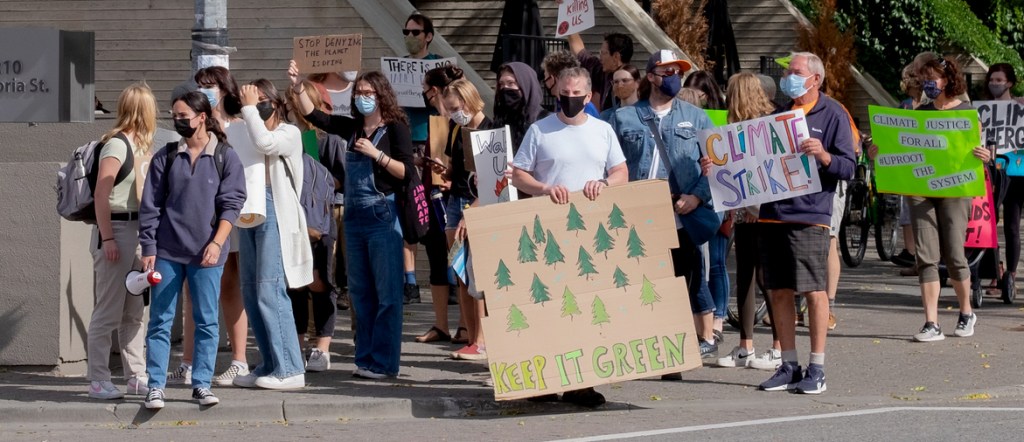
The day has finally arrived. After many weeks of planning, our small group of protesters is poised to launch an action, a disruption, a provocation, a barricade across the only road in and out of our little town, to draw attention to the crisis in the woods. We are frustrated that nudging government and the forest industry has not brought any substantial change of practice in the harvesting of trees in our forests. Enough is enough. Our request is now a demand.
I say “we,” with some reservation. I still feel both in, and out, of this group. While I do believe that forest harvesting practices must respect the life cycles of trees, I am not comfortable with protesting. I have never done this sort of thing before. What is proposed for today is illegal — obstructing public roads, intimidating neighbours, friends, and strangers alike. We could end up being fined, given a criminal record, possibly even spending a few days in jail. (How will my hair look in a mugshot, especially from the side? Time for another cut.)
Protesters in areas north of us have been charged with contempt of court. They have gotten away with community service following a court appearance and sentencing. I have not decided if I will stand on the road with other protesters. I have helped write, design, and produce pamphlets. I have spoken quietly with a few local business owners and other “friends of the woods.” Despite Ronni’s encouragement, I have not gone overtly public with my concerns. At least, not yet.
Today is the day. Ronni and Kevin have already started to assemble items with which to block the road: A couple of bikes; an awkward and very ugly love seat; a picnic table turned on its side; a half dozen or so few sawhorses. They are still looking for other pieces to strengthen the look of the barricade, our own visual salute to the French Revolution. The music rings in my ears: “Do You Hear the People Sing?” I am less sure that a local Napoleon will appear from a hilltop. Still, this is a ballsy move for sure.
We are a half-hour away from commencement. A few other protesters gather quietly. A few surprised residents and business owners watch curiously from a distance. A pickup truck approaches the growing barricade. In the cargo bay are two old washing machines. The driver and passenger exit the cab. Grunting and groaning, they shift the appliances toward the barricade, placing one at each end. “Our contribution,” they say. “Call us when you’re done,” the driver says. (They don’t leave their phone number.) Two women arrive carrying a couple of deckchairs. No idea who they are. Someone brings hot coffee in a black canister, with cream. So very thoughtful.
The crowd of onlookers numbers over thirty. The barricade now blocks the road completely. A car approaches, our first customer. I am curious to see how this goes. The plan is to stop vehicles, to greet and engage the driver, hand them our pamphlet (some call it a manifesto); attempt to continue a conversation; pull back a sawhorse and wish them on their way.
Our first visitor is a young mum with two kids in the her car. She seems okay with the protest, taking the literature with apparent interest. No further questions, and they’re on their way.
To my knowledge, no one has called 911, but two police officers have now arrived, one sergeant and a constable, both known to us. Sargeant Duncan and constable Will. Technically, they should shut us down immediately. Instead, they decide to observe cautiously.
Next comes Paula, who is part-owner the oceanside restaurant. Ronni and I had our first date there a few weeks ago. Paula is definitely not impressed with our protest. “My customers need to get to my restaurant. Your childish demonstration is not helpful; not in the least. Send your pamphlets in the mail; fine. Have a rally in the park; fine. This little publicity stunt is totally unacceptable.” Still furious, she throws the pamphlet back at Kevin and pushes through the saw horses with the nose of her Porsche and moves on. She quickly catches the attention of the police officers, audibly raising her voice in a vigorous complaint.
Sawhorses returned to position, Ronni and Kevin continue to take turns greeting drivers and passengers. Most are respectful; some encourage them and even donate some money to the cause. A few quite angry loggers feel unfairly singled out. “We all need lumber and a vibrant forest industry,” they say. “How will you build houses and furniture without wood?” they complain.
I watch from the sidelines until I spot a red Toyota half-ton pickup truck. I recognize the driver. It’s Neil, a quiet, thoughtful and kind member of our early morning congregation. Unsure of his response, I decide to enter the fray. I put my clergy collar on and walk towards the barricade. I hear Neil and Ronni’s conversation:
“I understand what you are trying to do, and why you are concerned. I share your concern about logging the woods. I don’t think, however, this sort of protest is justified or helpful,” he says.
“All we are trying to do is to explain what’s going on in the woods and how better practices will lead to better outcomes for everyone,” Ronni says.
I join the conversation beside the truck. Neil does not expect to see me here. He looks tense.
“And what are you doing here, Minister. It looks like you are dragging politics into church again. I can live with that, most of the time. This silly protest, however, is unacceptable,” he blusters. “We all do our best to participate in beautiful worship services; we read our bibles; we pray. But we don’t disturb our community and upset our neighbours, especially those who depend on the forest for employment. Politics and Church should not be mixed other than in prayer for peace in the world.”
“Peace is important for sure,” I stammer. “But how does peace appear? Through what means?”
Looking down at his lap, Neil says, “I am sorry, but I will inform others of what you are doing here.”
“Neil, I appreciate your concern. I hope we can find time to work through some of these concerns in the next few days. For now, please, take the pamphlet home and consider our requests,” I say. There, I have said it, out loud. Our requests. I have publicly jumped off the side of the road (just like Robbie Parson did at the peace march a few weeks ago). Time to be counted, and too late to run back and hide.
“I tend to agree with you, Neil,” a third voice interjects. Quietly, Don has quietly sidled up to the truck, listening to our conversation. Don, the logger’s logger, the voice of the worker, the one I expect to amplify Neil’s anxiety. But he continues in an unexpected direction.
“Our minister, and Ronni, and their group do have a point. We cannot continue to log the woods as we have in the past, especially in recent years,” he says. “These multi-national corporations are overly concerned with high resource yield and maximum profit. They contribute little to our local communities. Shareholders first; workers second; local residents, well ‘too bad, so sad’ is what I hear,” he says.
To say I am flabbergasted understates my surprise. Way to go Don, I silently whoop. Wow. A lineup of cars builds behind Neil’s truck. Someone snaps a few photographs. Our little party grows larger with the addition now of the two police officers. The sergeant, Don, takes the lead.
“Afternoon everyone. Lovely day . . . but not for a road obstruction. I could make this just a warning, but I expect you will go away only to return in an hour or so and do it all again. So I am going to make an arrest now. Let’s get this over with,” he says.
Ronni, Kevin, and you, Minister. I am arresting you three for causing a public disturbance, for blocking a public roadway, and for interfering with the good order of our community. I need you to accompany me back to the detachment to make statements. I will read your Miranda rights there. Don and Neil, please also report to the detachment within the next twenty-four hours to give your own statements.”
The other police officer, Will, jumps in. “I will help the rest of you to disassemble the barricade. Who owns the bikes? Where do they belong? And the sawhorses? And what in heaven’s name do we do with the washing machines? Where do they belong?”
Indeed, where do we all belong?
Other chapters in the series Stories from Somewhere, fictional reflections of an unidentified place at an unknown time. Other chapters are listed here.
Visit the takenote.ca HOME page for a colourful display of hundreds of other blogs which may interest or inspire you
 Take Note - Reflections on life, music, politics, retirement and more by Ken Gray
Leave a comment