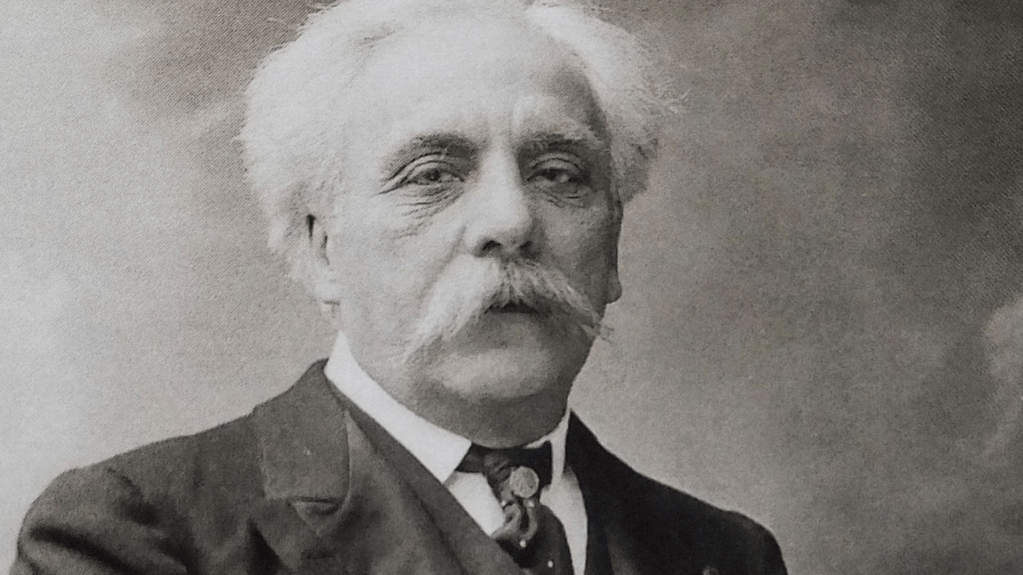
I have a long relationship with the Requiem by French composer Gabriel Faure. Unlike the bombastic operatic showpiece by Verdi, the intensely dramatic rendering by Mozart, or the massive work by Benjamin Britten, Faure’s Requiem is intimate, melodic, of small scale, and sublime. It whispers, though never shouts.
Surely we all want to drift off accompanied by the tones of the final movement, In Paradisum. Certainly, the late David Wilcocks told us chorus members at London’s Royal College of Music in 1978 his own plans for memorial remembrance. Singing the Faure under his direction was a highlight of my RCM years. His own version with the Choir of Kings College, Cambridge, earned the work almost universal appeal.
I directed a number of performances over the years myself. The work was small enough to accommodate limited numbers and abilities of singers available to me; my modest abilities were well matched to its directorial demands. Just days ago as the choir’s founding director, I helped Musaic Vocal Ensemble based here in Summerland celebrate thirty years of making music together. Our first project brought together thirteen singers for thirteen rehearsals of the Faure. Other projects followed soon after.
And the melodies . . . especially the lilting Agnus Dei, the pulsating Libera Me, and the aforementioned In Paradisum delights singers and audiences alike. It even appears in films and television.
In The Perfect Storm, a film about tragedy in an American seafaring community Wolfgang Petersen uses Fauré-inspired motifs, culminating in the ‘In Paradisum’ during the final eulogy. The inclusion of the Requiem in the memorial scene was intended to provide a ‘secular sanctity’ to the fishermen’s death.
In the final episode of the television series Inspector Morse, the murderer is the soloist in the Libera Me in an Oxford College chapel. He deserved a more violent end; instead, he got a sweet exit. The Morse character also died in the episode and the Actor, John Thaw, a few months later.
A social media post at History of Music offers an historical overview:
When Gabriel Fauré composed his Requiem, he didn’t do so in response to a personal tragedy, as many assumed. In fact, when asked about its origins, he simply said, “My Requiem wasn’t written for anything but for pleasure, if I may say so!”
This was an unusual statement for a composer writing a mass for the dead, especially one as serene and tender as his. Fauré began the piece in 1887, before his mother’s death and two years after his father’s passing. Unlike the dramatic requiems of Verdi or Mozart, his was understated, almost comforting—more of a lullaby for the afterlife than a lament.
The first version premiered at a funeral in 1888, with only a small choir and orchestra. Over time, he expanded it, refining its delicate textures until its final version emerged in 1900.
Today, Fauré’s Requiem is one of the most beloved choral works ever written, known for its gentle, otherworldly beauty. Though he claimed it had no specific inspiration, its quiet radiance feels deeply personal —perhaps reflecting Fauré’s own view of death as “a happy deliverance, an aspiration towards happiness above.”
Thank You Gabriel Faure for leaving us with such a beautiful legacy. As noted above, you are on my funeral playlist.
Visit the takenote.ca HOME page for a colourful display of hundreds of other blogs which may interest or inspire you
 Take Note - Reflections on life, music, politics, retirement and more by Ken Gray
Leave a comment