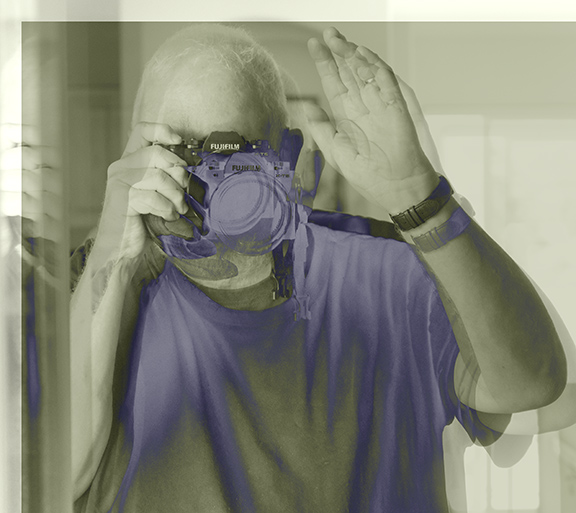
So great to find an article recently on Photoblogger.com about low-vision photography. With other “legally blind” photographers, (<20/200, uncorrectable) I am not alone in facing challenges using my digital mirrorless camera (Fuji XT-5), a machine designed with fully sighted photographers in mind, though increasingly responding to the needs of us living with sight challenges.
Chris Gampat helpfully lists his own experience working with digital cameras.
He initially names the biggest frustration of all, the plight of all photographers including me who cannot drive. So arriving at a site always requires special planning and a patient spouse or friend behind the wheel. Digital technology adds nothing to this fundamental need. In other ways, however, vision-challenged photographers enjoy many advantages over previous generations of photo artists.
1) There is so much information available now online, resources that combine well with an intelligent and sensitive camera store advisor.
2) My camera finally provides for large scale text sizes in the viewfinder providing shutter speed and aperture readings in real time; For me, this is huge.
3) My camera has metal dials on top with textured numbering which is easy to read. The LCD monitor on the back of the camera is sharp with excellent contrast and colour. You can zoom in and out using its touch screen; also brilliant.
4) On the downside, my Fuji XT-5 is blessed/cursed with a huge number of menu screens. The features are great, but easy access requires careful study and the setting-up of short cuts. All good, but takes some careful organization before field use.
5) Focus is a challenge for all photographers, but especially for us low-vision folks. Back in the film days, pre-auto-focus, half my images were out of focus. I have now developed my own workflow using locked-in focus points which serves me well; very well most of the time.
6) Beyond equipment, I have learned to accept my limitations and strengths. No more sports, birds, and fast moving subjects. Architecture, flowers (watch your shutter speed on windy days), and still life are a joy I must say. I get as much detail in-camera, though correct as necessary in Lightroom.
7) Portraits can be challenging. I cannot see if a subject’s eyes are open or not. Group shots are problematic. So, take lots of frames.
8) Chris Gampat named something I had not considered until now: “Walk slower. When you walk slower, you actively also lower the cortisol in your system and your stress hormones calm down. This is pretty essential to making better images with more impact.” My family would want me to add that I am prone to falls and trips — over low bollards, sidewalk edges, and uneven ground at water’s edge. Point taken.
9) following on the above tip — having known this for years I must say: “Consider setting up with a tripod. Using a tripod forces you to slow down. And sometimes, you really need to do that and think more critically about how you make images instead of trying to always be so blazing fast.
10) Chris Gampat concludes hopefully: “Being low vision means that you’ll end up making images that other photographers don’t necessarily make. And that’s exactly what we need these days.” Years ago, I produced a business card that read: “Legally Blind Photography: We see what others miss.” Hopefully, for me at least, this is true.
Thanks Chris Gampat for your thoughtful encouragement.
Visit the takenote.ca HOME page for a colourful display of hundreds of other blogs which may interest or inspire you


Leave a comment