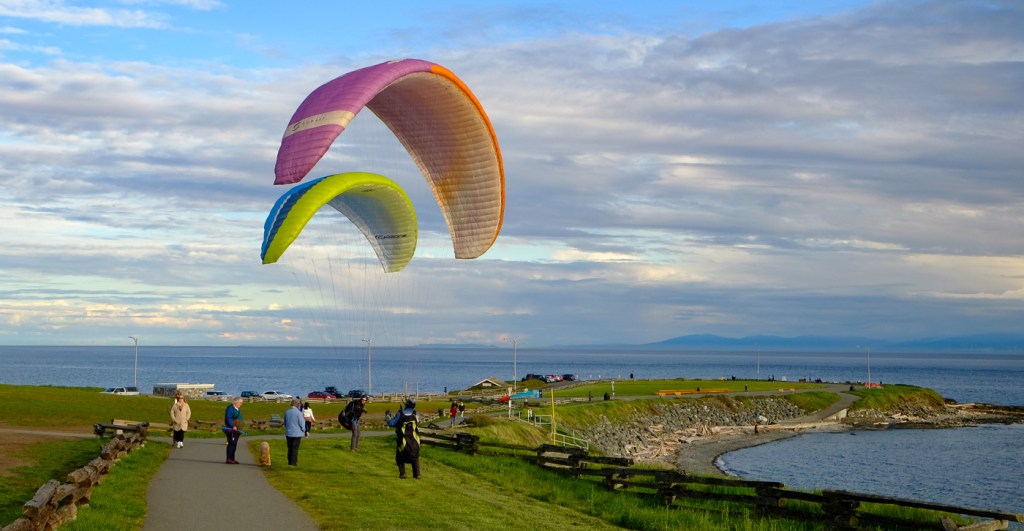
When visiting Victoria recently I finally had the opportunity to watch and photograph parasailers. At other times, driving by Clover Point on Dallas Road, I would often glimpse brightly coloured sails that looked like miniature parachutes, a semi-circular chair cum hammock for an airborne sailor. As we were always going somewhere else and there was no time to stay and watch, or when there was insufficient wind so no parasailers were active, I am pleased to report that finally, my parasail photographic ambition is now accomplished.
Staying with some friends, our host, Harald, was a passionate parasailor who keeps in touch with other enthusiasts who share daily weather and condition reports by texting. He knows when to make the trek from his Gordon Head home to Dallas Road to enjoy his passion, sometimes twice daily.
From the ground up, parasailing is a beautiful thing to behold. Parasailors are not dropped from planes; they are not towed behind motor vehicles or boats. The procedure looks teasingly simple. It’s not however, and the phrase “fools rush in” deserves respect.
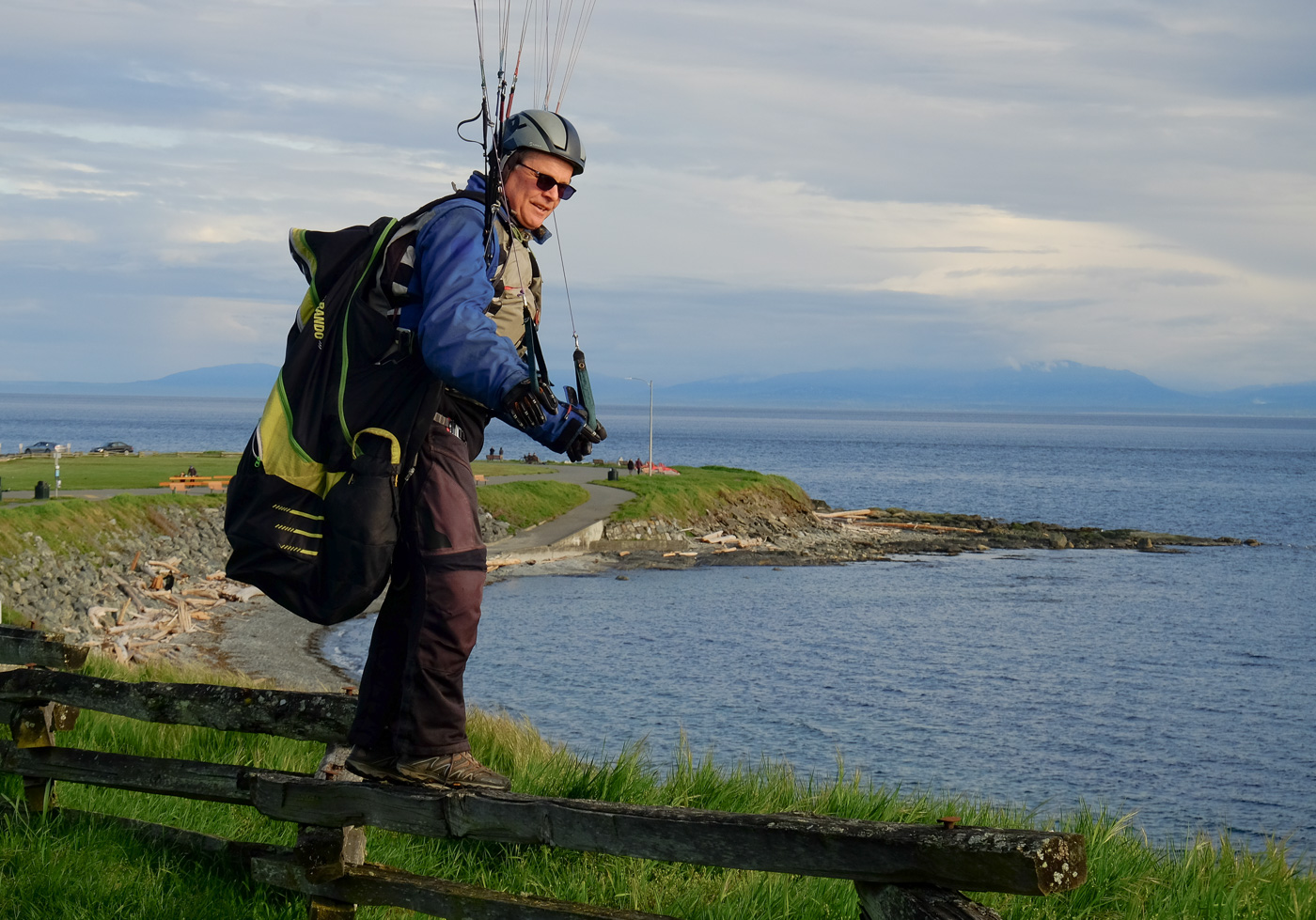
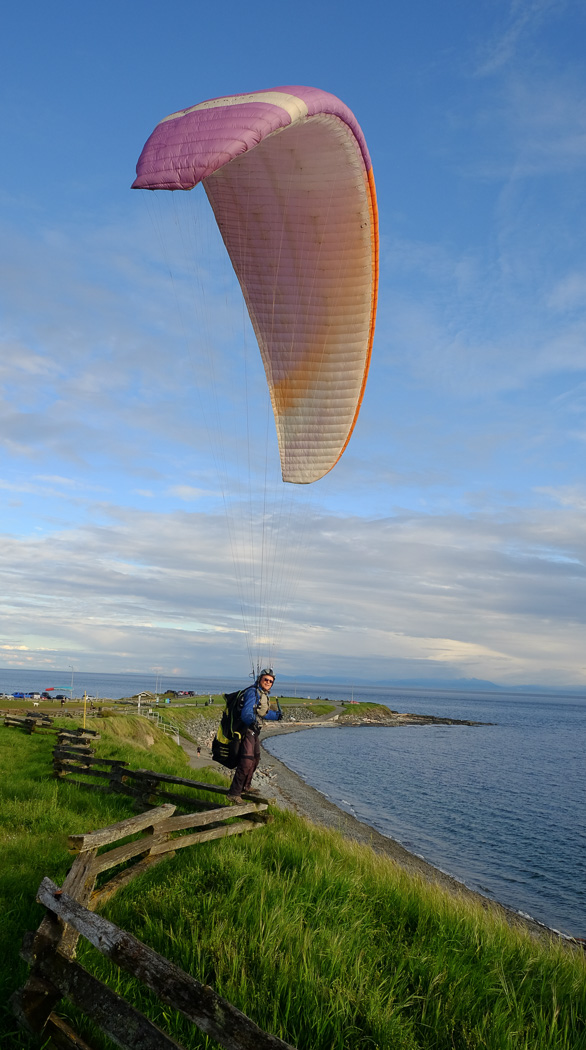
So how does it work? The parasailer arrives on the banks of small cliffs at any number of Vancouver Island locations. You lay out your gear on the ground in a direction aligned into the wind. Your gear includes the sail, a harness comprised of many light control wires, and a portable cockpit carried on your back in which the parasailer reclines in aviatory comfort once airborne.
You need proper clothing, even on hot summer days. You need safety equipment including your helmet and a mobile phone. (You may end up some distance from your take-off location and require a ride.) Experienced parasailers are often aloft for 30-45 minutes. You should avoid flying over water as that complicates things significantly; a trip along the water’s edge however is a thing to behold. Watch out for wires on power poles, and of course, other parasailers. One must always be aware of light commercial air travel including Harbour Air.
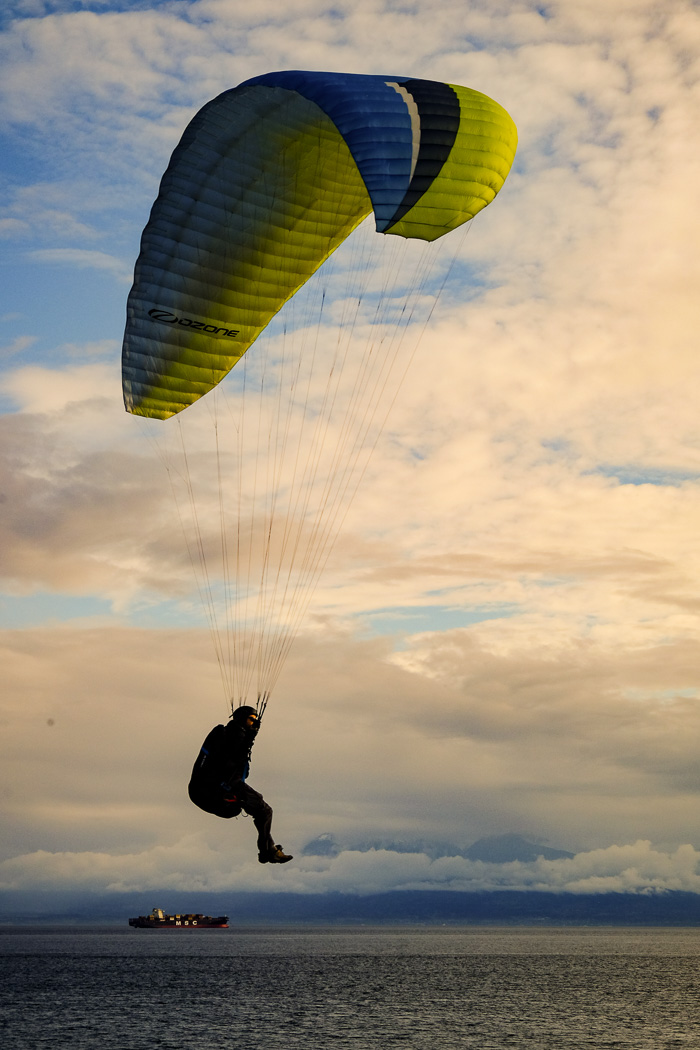
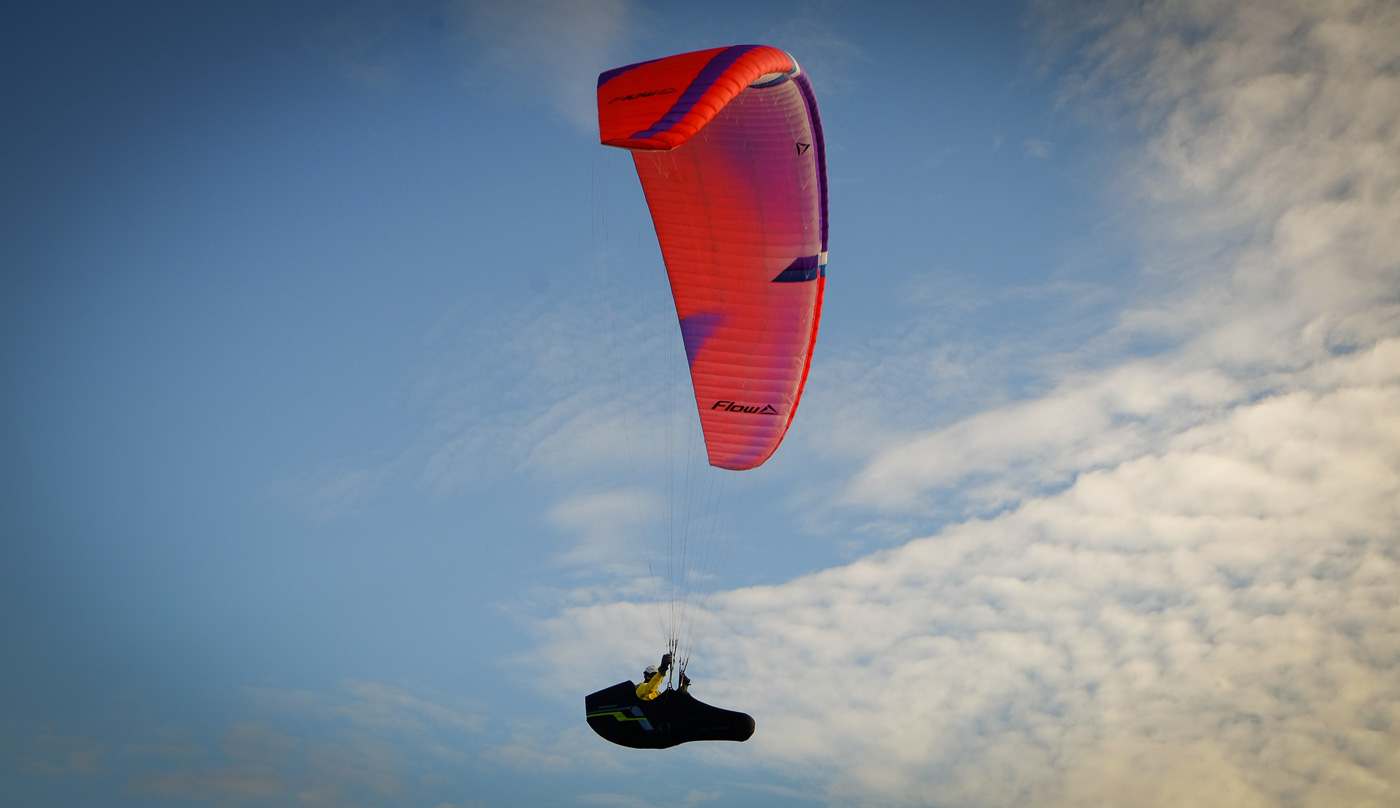
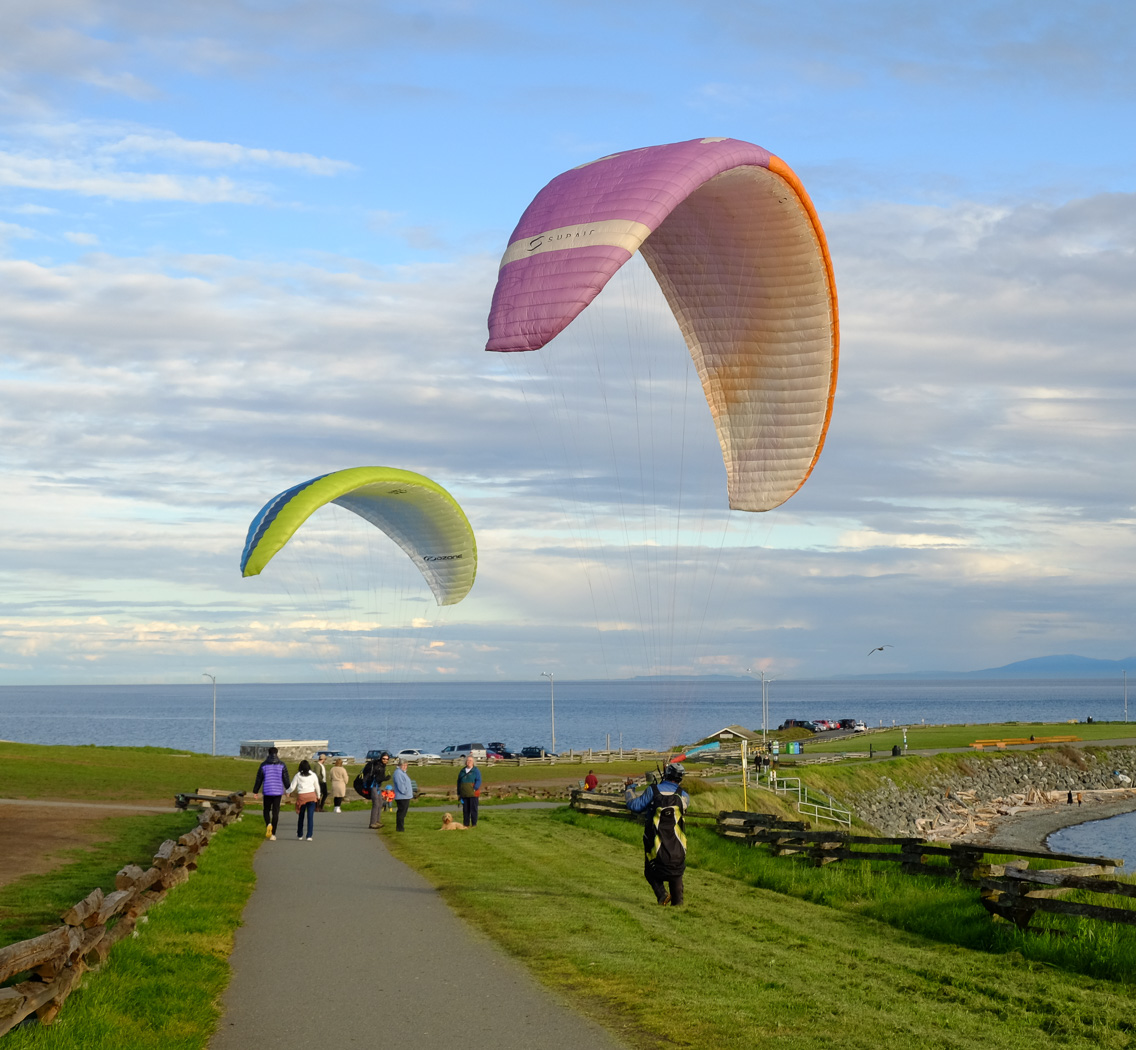
Parasailing is graceful to watch; colourful, and clearly a passion for participants. From my vantage point on the ground, and given calm conditions it didn’t look like an “extreme” sport. This video however suggests otherwise. Actionsporter.com describes the sport in these words:
Paragliding is an intimidating extreme sport to get into for several reasons. Solo paragliding requires expensive gear and lessons that are necessary to safely fly alone.
Parasailing is still cheaper than owning and operating a plane, but there is a cost which can be significant. (Costs here are likely in USD.)
It costs $1,000 to obtain a solo paragliding license and another $3,000-$5,000 for the gear. Solo flights are free if you are licensed and have a paraglider rig. Tandem paragliding only costs $100-$180 per flight and doesn’t require a license. Licensed paragliders can rent gear for $200 per day or $700 per week for a solo flight.
As with other pastimes, careful preparation for the right sort of adventurous soul may yield enjoyable results. Be warned however, that the people who I watched last week made it look easy. Buyer beware! And if you are wondering, I have no intention of kicking my feet off the ground. I remain earthbound, with confidence and a smile, and my camera.
Thanks Harald for my introduction to your favourite sport. I will give the last word (well actually song) to Frank.
Come fly with me, let’s fly, let’s fly away . . .
Once I get you up there, where the air is rarefied
We’ll just glide, starry-eyed . . .


Leave a Reply