I return to these words often: “Finally, be strong in the Lord and in his mighty power. Put on the full armor of God, so that you can take your stand against the devil’s schemes. For our struggle is not against flesh and blood, but against the rulers, against the authorities, against the powers of this dark world and against the spiritual forces of evil in the heavenly realms.” EPHESIANS 6:10-12
I would have loved to expound on these words last Sunday, but I was otherwise involved. They express so much of my vocation and living out of Christian faith. For whatever reason, I find myself to be a fighter, one who simply cannot accept the environmental, social and societal status quo—a supposed equilibrium between power and need, between the rights and responsibilities of both the poor and wealthy, a balanced social and ecological equation that smooths all differences between everyone and everything. All of these are fallacies, though most of us, much of the time, believe they could or should be a truthful estimate of how things really are.
If we all pay attention to what we see and hear, if we do not run from injustice or inequality, if we admit to the presence of violence locally and globally, if we work to understand our complicity in the failures of love, then we will encounter struggle; it’s inevitable. Comfort is not the goal, though many think it so; truth is the destination and justice is the means. I do not suggest that struggle itself is a goal; but I find myself struggling as I attend to more of what I experience all around me.
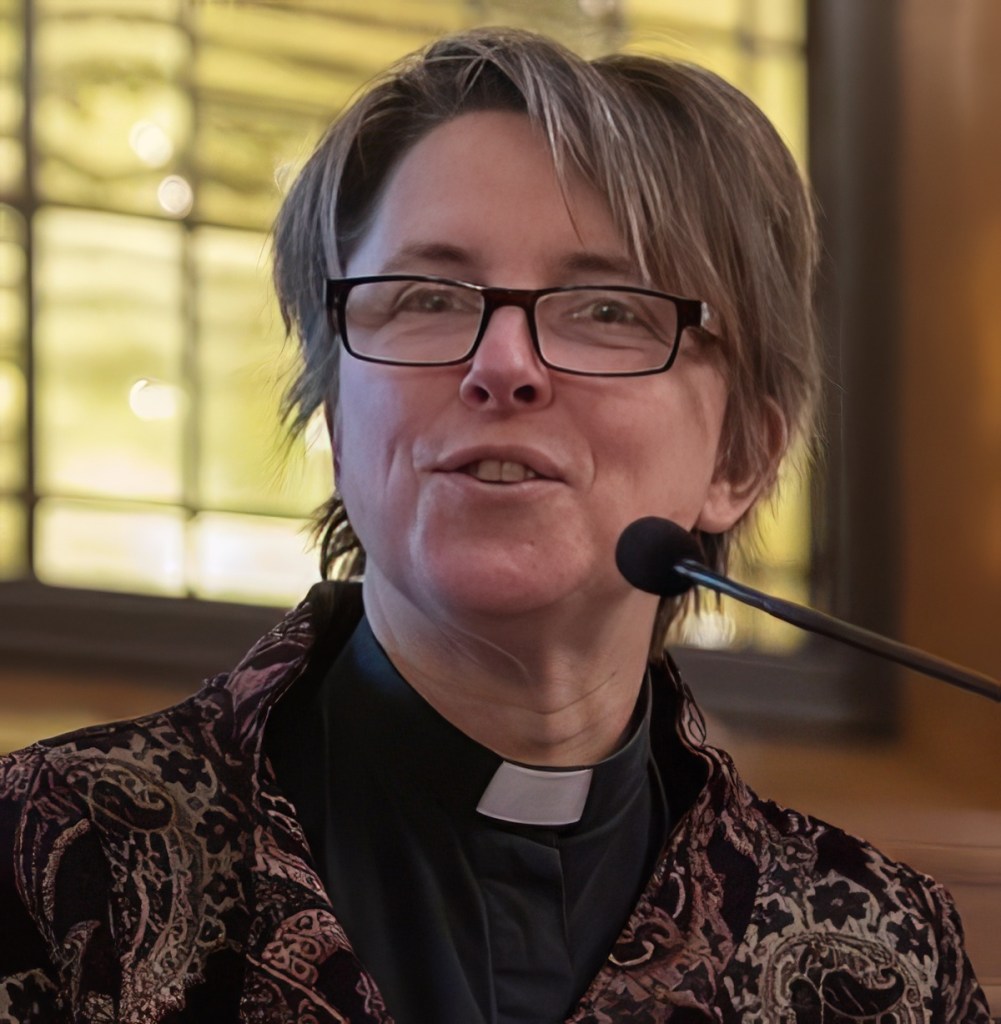
One person who knows struggle well, the Rector of St. James Piccadilly in Central London, the Rev. Lucy Winkett, first came to prominence in the 1990s when as the first female minor canon (priest) of St. Paul’s Cathedral in London bore a pioneer’s weight of criticism and rejection. Many parishioners refused to accept communion from her hand. Colleagues found ways to disassociate themselves from her ministry and presence. The sexism was abominable then, and it seems some of that same force remains today.
I stumbled across a powerful sermon this past week, where she draws on the Ephesians text cited above to respond to a recent initiative from three evangelical churches in the city of London who refuse to embrace decisions from the Church of England General Synod regarding those in same-sex relationships.
St Helens Bishopsgate and All Souls Langham Place have already held services to commission men (a few women are promised, eventually) as leaders in a separate church structure, which they claim is necessary because Church of England bishops have abandoned biblical teachings. Holy Trinity Brompton (originator of the Alpha program) has also expressed support for the creation of an alternative structure with different bishops.
In her sermon, she declared: “We cannot, we must not remain politely silent in the face of this.” She argued that such actions would institutionalize inequality and injustice within church structures, excluding women from leadership and isolating those who love someone of the same gender.
She warned: “If we don’t find a way to embed and strengthen the values of inclusive Christianity . . . we will have been guilty of the most terrible complacency in our generation, where prejudice and division grow and embed, not only in the violence of the streets, but in the character of our church.
As a member of All Souls Langham Place from 1977-1979 I am saddened—though I guess not surprised—to learn of this initiative which some suggest may lead to a breakaway from the Church of England while others suggest is not such a big deal. While at All Souls, I benefited from brilliant and enjoyable preaching, from amazing congregational music, and from interaction with evangelical Christians from many parts of the world. I walked home to my college past speakers corner and through Hyde Park with a spring in my step and in high spirits.
It was an exciting spiritual time for me, though simultaneously I was involved with very liberal and politically active university chaplaincies. With one foot in two very different theological worlds, I was stretched, though blessed, through both communities.
In later years my view of God, creation, scripture, history, and ethics has broadened considerably. My lifelong learning continues apace, so it is a bit shocking to learn of the intentions of these three storied parishes who seem, to me, to be resolutely stuck in their refusal to at least consider a more inclusive Gospel appeal. Their appeal is to the text of scripture, itself inspired by God—the Holy Spirit, who stretched me emotionally and theologically in the past, an exercise which continues today. That same Spirit has shown me a broader and more inclusive view of the Gospel.
We have been through this very conversation here in Canada a decade or so ahead of the Church of England. Our General Synod of 2019 moved our Canadian church through a watershed moment, where sufficient space was found for inclusive reform in most places in our church. Sure, some have moved away to other denominational pastures. And yes, our church struggles to find new ways of being, influenced by factors well beyond diversity conversations. Here in Canada we are resolved to study scripture, to incorporate scientific knowledge, and to actively seek the wisdom of the Spirit.
Some years ago, in an address to clergy in the Diocese of BC (now the Diocese of Islands and Inlets) the late John Polkinghorne noted two profound matters for us to consider. The first, the mysteries of human sexuality and of human relations; and the second, interfaith sharing. I believe he was right on both counts. The former, he suggested would likely take a decade; and the latter, a century. For these three parishes in central London, sadly, for both it may take even longer.
 Take Note - Reflections on life, music, politics, retirement and more by Ken Gray
Thank you for this. It is soul-cleansing to read. We might suspect in Canada that our peculiar and particular and inveterate and beautiful thorn in the flesh of the Body of Christ is the insistent voice of our Indigenous Peoples who have out of necessity had to put on their full armour of God to enlarge, remind, reprove and improve us to become better than we are, and in so doing aid us to be more inclusive in all other ways as well.
LikeLiked by 1 person