
Dear reader, I am honestly trying to do something different here; I promise. I am struggling to put aside my obsession with US presidential race memes (go here if you have not seen my growing collection). While thinking to myself recently, lo and behold, almost immediately, the image above landed in my social media feed.
I thought, what? Is this some sort of AI-generated redux? Is this a model reconstruction for a grade eight science project? What’s going on. Following some research I discovered that in the early days of photography, and especially in the history of the Eastman Kodak Company, large versions of early consumer cameras were driven all over New York State on trucks and wagons—to trade fairs, to conventions, and to meetings of camera and photographic enthusiasts—they were part of one of the greatest advertising campaigns ever, an early product of Madison Avenue promotional ingenuity.

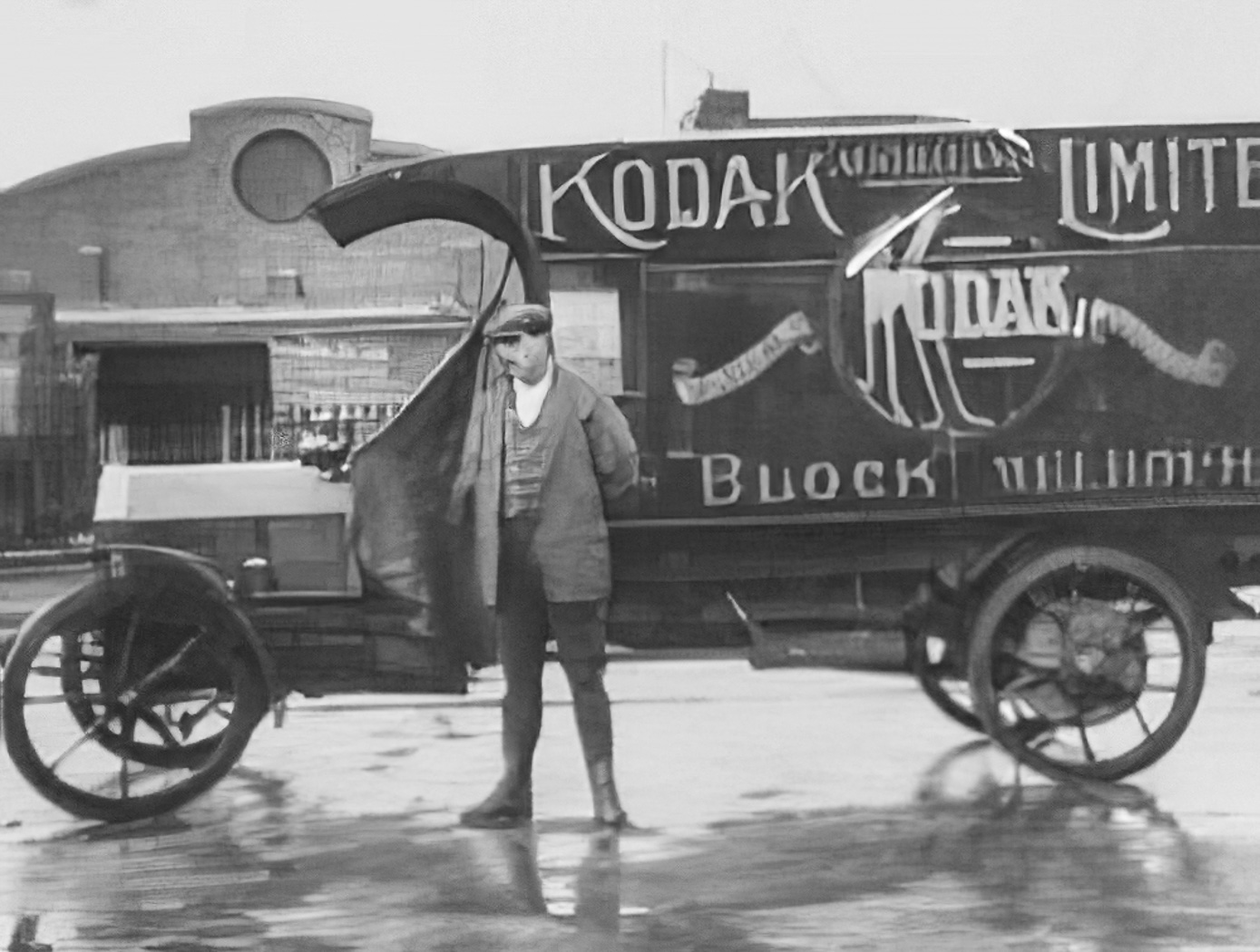
Can you imagine, if the 2024 Democratic and Republican electoral teams developed similar strategies? Massive caricatures of Harris and Don-Old, trolling opposite sides of every city street where you live? Maybe blimps or satellites could join the fray. Sky writing be damned; how about a SpaceX promotional launch. (Never say never, where Musk is involved!)
Anyway, back to my story, the story of Kodak advertising, and the story of the rise and fall of Kodak itself. It’s the stuff of commercial legend. Given my personal interest in photography, and the connection Kodak has had with literally millions of consumers worldwide for most of the 20th century—we know the name (which actually stands for nothing—George Eastman simply liked the letter “K” and thought the name unique and easy to spell and to remember—we know the colour, and we remember the product.
The name Kodak, the colour scheme, and the various brand images through the years found their way into our homes in one way through the world of children’s toys. If you want parents to pay attention to your product, hook the adults through the kids. I am not aware that Kodak images appeared on milk cartons or on cereal boxes. But even today, collectors snatch up Kodak car and truck models at every opportunity.
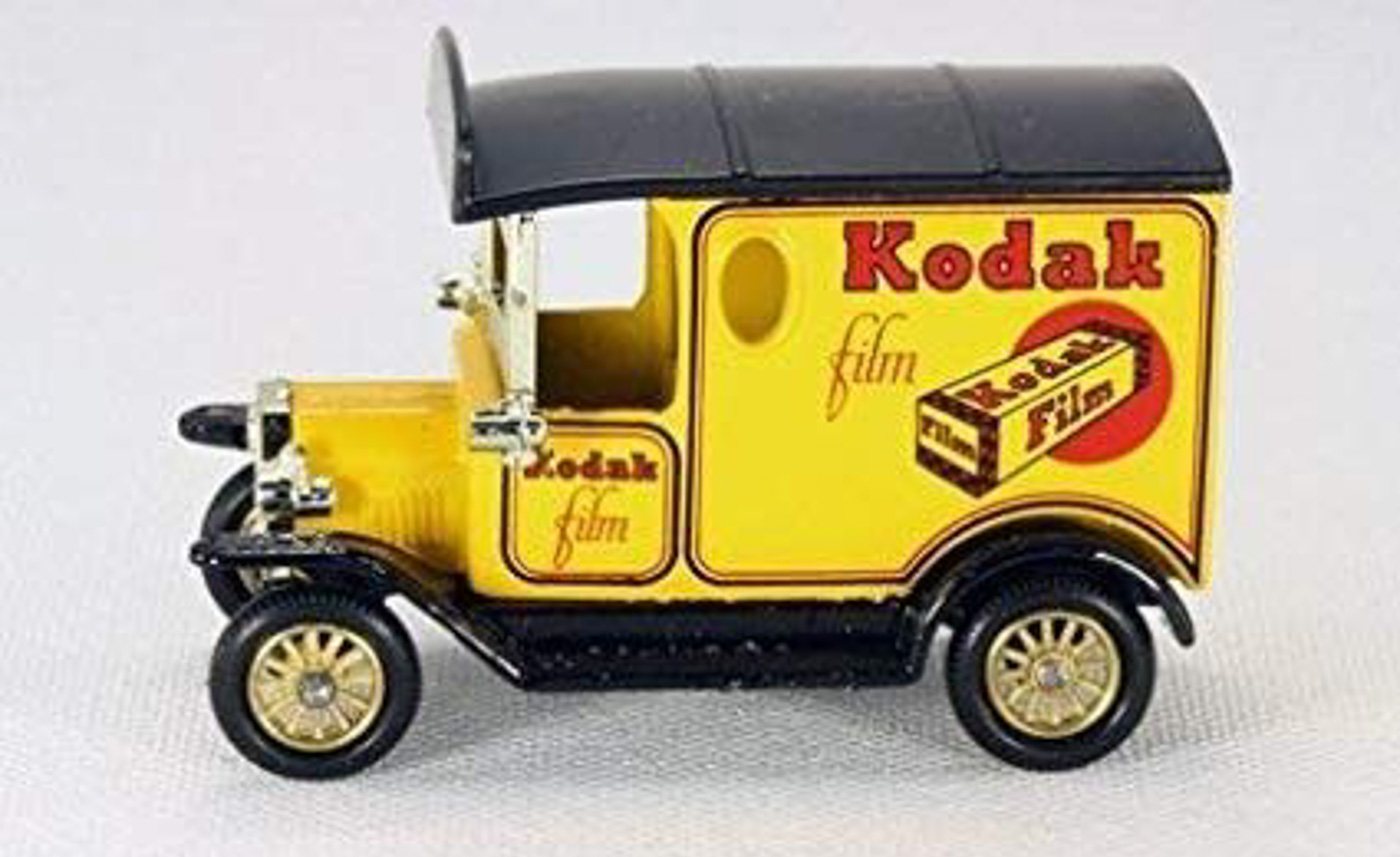
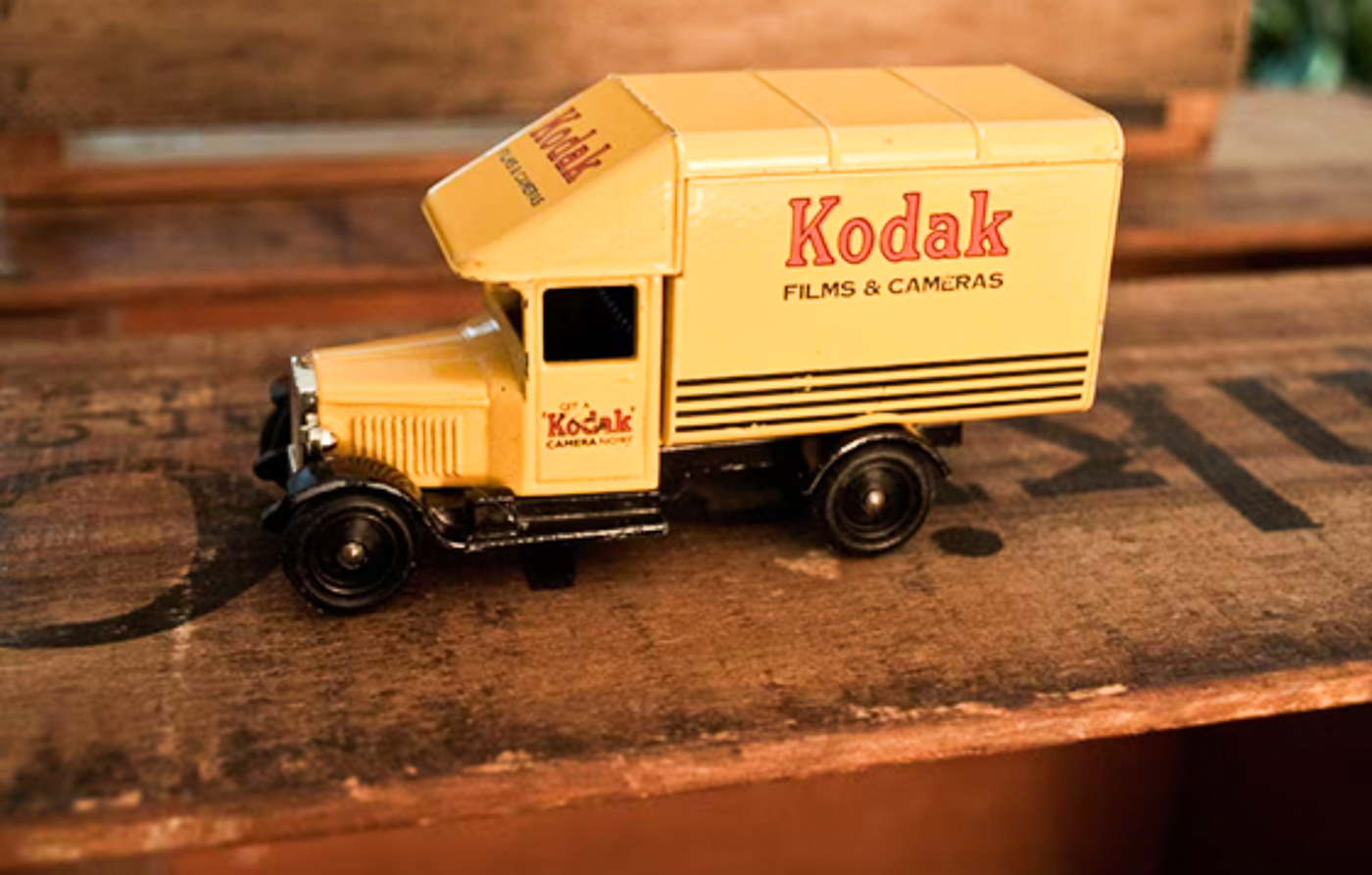
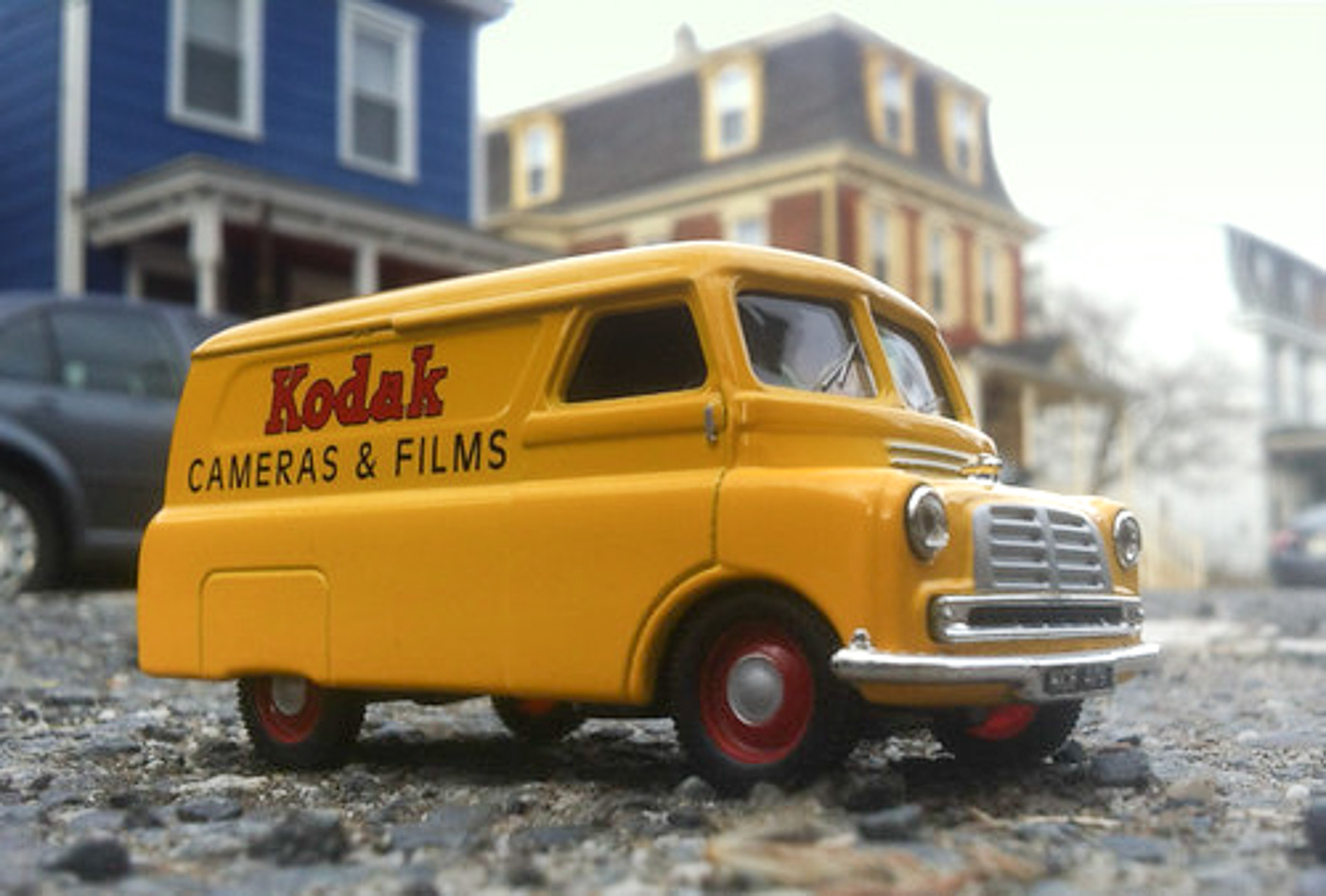
Through many different means, Kodak put photography into the hands of everyone. From affordable cameras, to the invention of roll film canisters complete with processing technology, well it all came together in the slogan: “You take the picture: We do the rest.” So user-friendly; so brilliant.

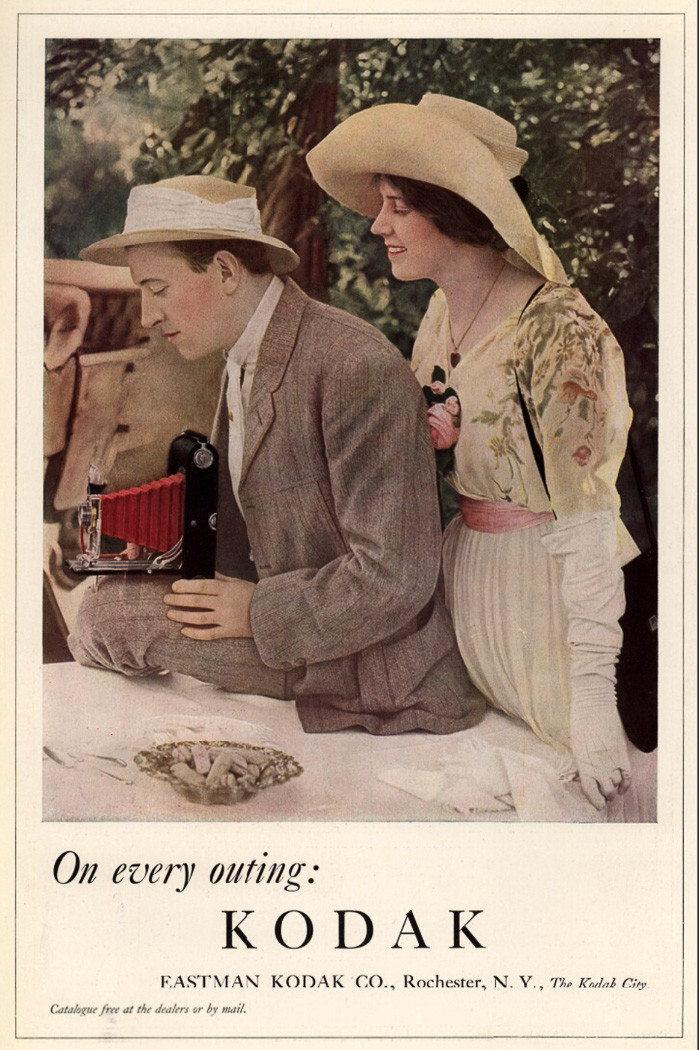

The innovation did not stop there however. Remember “Kodak moments?” And how about “Kodak Picture Spots?” You help people take and enjoy pictures; you next suggest where and when to take pictures; you follow this up with increasing miniaturization (not unlike mobile phone technology in our own day); in the end you build a global industry; and everyone wins.
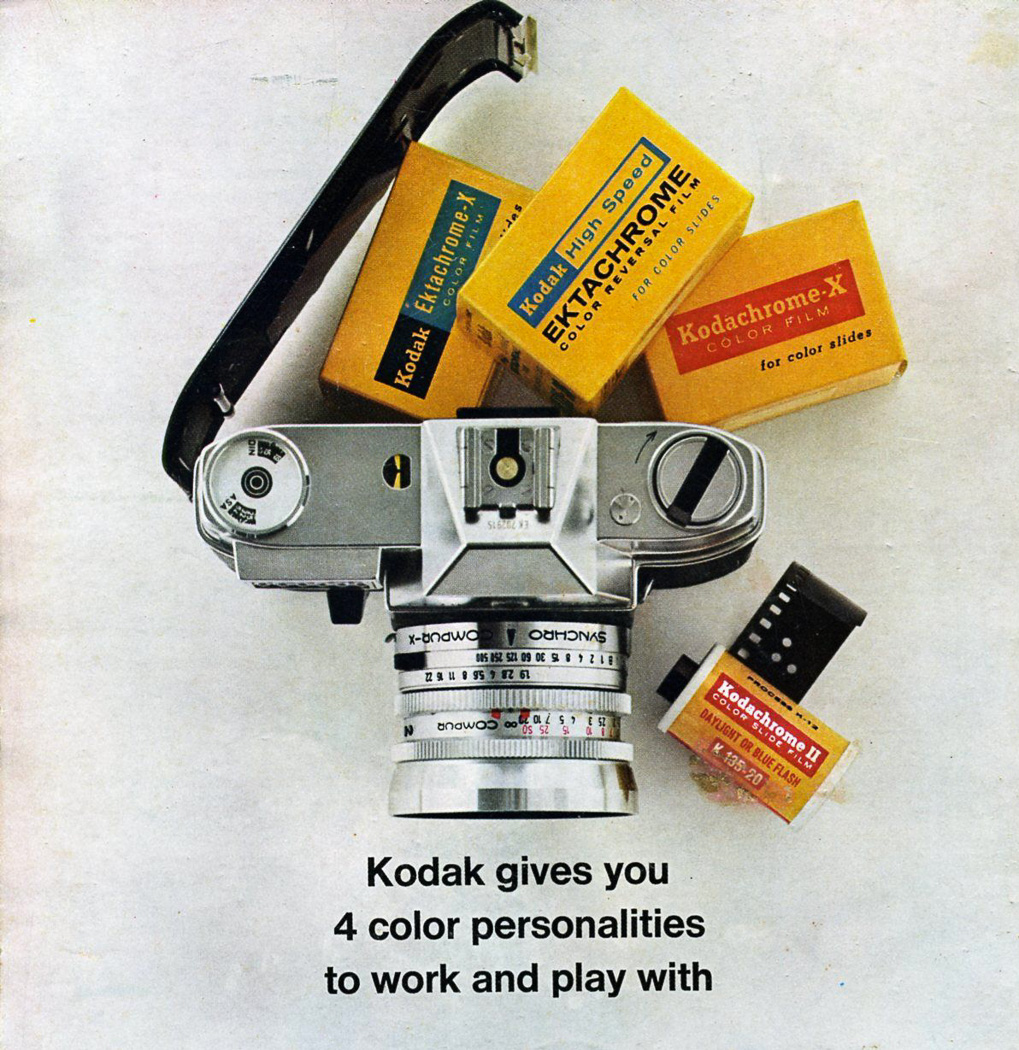
So I ask you, dear reader, where were you when you received your first Kodak camera? Mine was the Instamatic 104 which came with a four-shot revolving flash cube on top. Man I thought I worked for the New York Times with that portable beast. I remember taking pictures of the Apollo 8 exhibition at the Vancouver Planetarium with that little cartridge camera—the film came with a mail-in bag as the cost of processing was at that time included with the film purchase). Life was sweet for us budding journalists. Kodak helped us live life to the full, in prints or in slides—Kodachrome (remember the song?).

So I must ask the inevitable question; why did everything come tumbling down? Why did Kodak go bankrupt in 2012? The video here attempts a nuanced answer. Certainly while Kodak INVENTED the first digital camera in 1972, they did not pay enough attention to its creation. They sat on it; possibly they hoped the threat to film and to everything they had created would quietly disappear. History has proved otherwise. Film development and even printing itself has all but disappeared except in artistic centres where young photographers crave chemical darkroom experience after years of digital COVID captivity.

The infographic above tells the story in the same way that an Orthodox Icon describes the faith. It all comes together, though with Kodak, there’s a definite beginning and an end. It’s almost biblical.
As for how the US presidential election ends, it will be up to the electoral college. I will continue however to monitor and share how imagery plays out its own roll, no longer with trucks on city streets, but through the miraculous and messed-up media available to us today. So how about Trump emblazoned on a Space-X rocket. Maybe he’ll take a trip, and never return.

 Take Note - Reflections on life, music, politics, retirement and more by Ken Gray
I grew up in Rochester, N.Y., the home of Eastman Kodak, with its distinctive Kodak building rising over the Genesee River. The name was chosen because George wanted a name which was pronounceable and written the same in every country and language. His home features a pipe organ he had built, and his philanthropy built and maintained the famous Eastman School of Music, one of whose students was my piano teacher. It wasn’t a one industry city (it was also the home of Xerox and Bausch and Lomb), but many of my schoolmates’ fathers worked there. You could also tell who they were in the classroom due to how well they were dressed. Working for Kodak was to be gifted with ‘the golden handcuffs’, meaning the company did everything in its power to make its employees so happy they wouldn’t even dream of unionizing. So they had their own employee automobile repair bays where you could do whatever to your vehicle, gyms, pensions, you name it.
My best friend in elementary school was Janie Urbach whose house I’d go to after school to play because Janie had her very own TV in her bedroom (unheard of in 1955), and really nice toys. Her parents were older, her father very deaf and white haired. Both spoke in a thick German accent, and had a very nice house and car and loved having me there to play with Janie. She and I ate Swanson TV Dinners watching Howdy Doody while they ate by candlelight in the dining room, speaking in low, serious tones in Viennese German. After dinner, her father sat at the piano composing terribly modern pieces ala Hindemith, which sounded atonal and awful to my Bach-loving young ears. I later learned they were Jews rescued in the nick of time in 1939 from Nazi-held Vienna by Princeton University due to how both her parents were noted physicists. He was snatched up by Kodak to develop their night vision lenses for anti-aircraft weaponries used against Hitler as the war reached its zenith.
George Eastman lavished Rochester with a rich cultural and educational bounty, making the University of Rochester and R. I. T. formidable and noteable in their influence and importance in America and the world. And, as tragic as the company’s downfall was/is, there are still very famous filmmakers like Martin Scorsese and Quentin Tarantino who were instrumental in pressuring major studios to commit to buying Kodak film stock to keep the company’s film production going. As those old slides of ours demonstrate, there’s nothing quite like the warm, almost delicious tones of Kodak colours that no digital device can duplicate–and even still there is a raging debate amongst filmmakers over digital vs. film, with many preferring the grain structure and tonality Kodak is famous for.
It’s lovely finding a post like this which heralds a storied company whose reputation remains as golden as their product. Thank you for letting me add to it!
LikeLike