A Sermon for the Second Sunday in Lent for the congregation of St. Saviour Anglican Church, Penticton BC — The Very Rev. Ken Gray
I confess, I am a WORDLE addict. I begin each day with the immensely popular New York Times online game, a game I originally panned as a colossal waste of time but have now incorporated it into my daily routine. I presently have solved the puzzle 56 days in a row and at one time have reached 84 consecutive wins. A friend in OK Falls has over 1,000 consecutive wins — he has no other life it seems.
The challenge is to find a good start word containing at least three vowels, definitely an “a” and an “e” and possibly an “i.” I have a number of starting words including: ARISE; RAISE; ADIEU; and AISLE. The other day, and as part of today’s sermon preparation, I tried AGONY — an “a” and an “o.” For that day (last Thursday) it made for a poor start. I barely managed to solve the puzzle at the 6th attempt; phew. I used AGONY for another reason. You see, I was reading today’s Gospel, thinking of Jesus overlooking Jerusalem, in AGONY.
“Jerusalem, Jerusalem, the city that kills the prophets and stones those who are sent to it! How often have I desired to gather your children together as a hen gathers her brood under her wings, and you were not willing! See, your house is left to you. And I tell you, you will not see me until the time comes when you say, ‘Blessed is the one who comes in the name of the Lord.'” (LUKE 13:31-35)
Jesus looks on the city he loves, in agony. He knows its history and reality. The city itself is a case study in moral failure. In contrast, He knows the will and generosity of God whom he calls “Father.” In Jerusalem, He sees God’s Grace refused, disfigured, misunderstood, ignored, manipulated, and profaned through the blasphemous behaviour of generations of leaders. His human heart aches at the vista before him; as God incarnate, he grieves even more deeply. The One who views rejection, is Himself rejected.
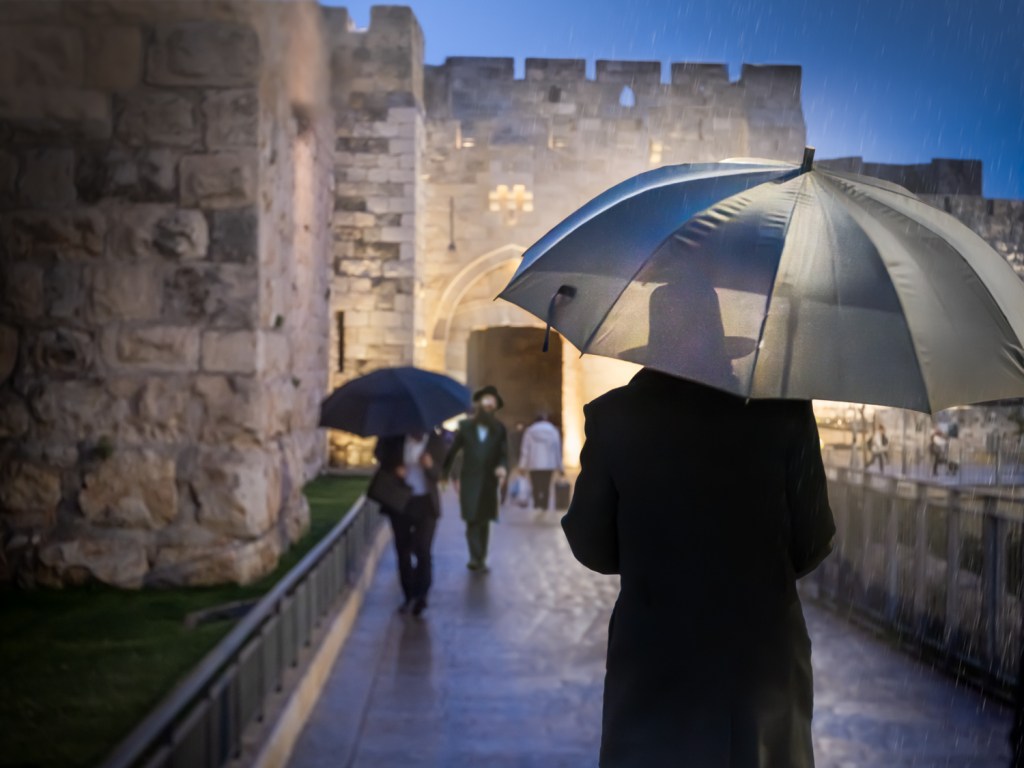
As a first century Jew, Jerusalem was a place of regular pilgrimage for Jesus and his family; it’s a national, cultural, and religious centre, a place to engage with God of the covenant with other pilgrims who visit the icons and sacred sites of their living faith. For Jesus and other devout Jews, “Jerusalem was the center of the world. The center of the world was in the Temple, which was in Jerusalem, and the precise center was the Holy of Holies.” Jesus describes Jerusalem as the place where prophets are killed. In the same breath, and as Luke describes things from his own life setting late in the first century following the Roman sack of Jerusalem around 70 CE, Jesus and Luke together grieve for the city they loved and seem to have lost.
For Christians, Jews, and Muslims, Jerusalem is more than just a place, a location, a physical space. Jerusalem is a gathering space for the history and an expectant future for all three ancient monotheistic religions. It is a place of contradictions—between violence and love, between trust and insecurity, between religious and secular, between hopeful vision and stark reality, between Jew and Arab with Christians caught in the mix. One writer describes Jerusalem as “a place of tangled juxtapositions.”
Today is a good time for us to refresh our connections with Jerusalem, a place geographically remote from us, a place fixed in our memories and imaginations through Holy Scripture and also in and through the ministry of the Episcopal Diocese of Jerusalem and the Middle East. From their website we hear this description of what Anglicans see as they also watch over their sacred city:
“The Episcopal Diocese of Jerusalem is home to about 7000 Anglicans worshiping within twenty-eight different congregations. It is also responsible for more than thirty institutions, including hospitals, schools, clinics, rehabilitation centers, guesthouses, and retirement homes. Archbishop Hosam oversees all of these parishes and institutions, which are scattered across five separate countries or territories: Jordan, Palestine, Lebanon, Syria, and Israel. This geographic spread adds innumerable complications to the work of the Diocese due to the many borders, checkpoints, and national governments involved. In particular, the divergent laws and politics of each region make the administration of these ministries exceedingly challenging.”
In many ways our contexts are totally different; History for them is over twenty centuries old; our history in western Canada stretches back barely one century. They are at the crossroads of history; we live closer to its sidelines, though it must be said that we now inhabit a potential war zone. As Anglicans, our two dioceses are identical given our connection with scripture, tradition, and reason. Jerusalem Anglicans stare down history every single day. With the Diocese of Jerusalem our church population is diminishing rapidly, though for very different reasons:
“Because of political strife and lack of economic opportunity, the Christian population west of the Jordan river has dwindled from more than 25% a century ago to less than 2% today.” That said, “in the face of this diminishing Christian presence, our diocesan ministries sustain and strengthen our witness, shining the light of Christ into areas of darkness, and offering hope to those otherwise living in despair.
Church here . . . and Church there. Some agony; much beauty; God’s Grace.
I recently connected on social media with CBC correspondent Saša Petricic who for four years was CBC Middle Eastern correspondent living in Jerusalem. He recently posted a lovely and poignant view of Jerusalem.
“As night falls and Shabbat ends, the stream of Jewish worshippers flowing into the old city grows. The centre of the Jewish universe gets more crowded. Prayers at the Western Wall — once known as the Wailing Wall — get louder. These stacked stones are what little is left of the revered Jewish Second Temple, which stood on the mount above in the days of Jesus Christ.
It’s hard to imagine Jerusalem becoming MORE religious, this Holy City at the intersection of three faiths.
And yet, it certainly has.
In the decade since I moved from here in 2015. Jerusalem’s Jewish population has grown bigger and more orthodox, ultra-religious Jews now making up a full third of the city’s population of a million (helped by a surging birth rate).
Their political voice is also louder on issues they embrace — resistance to having their sons drafted, for instance, even in the middle of war. The drive to annex settlements in the occupied West Bank. And for many, a desire to empty Gaza of Palestinians… just like US President Donald Trump has proposed.
“God will make sure that everything that happens, will be for the good,” says Ori Brook just outside the old city, as he pats his kippah. “If now Trump will succeed, it’s going to be for the best.”
Most Israelis may not be as religious, but it’s this increasingly messianic Jerusalem that seems to have the ear of Israel’s leaders… significantly more so than the tens of thousands who fill the streets in protest against the continuation of the Gaza war.”
As Billy Joel sings, “and so it goes” on, and on, and on.
 Take Note - Reflections on life, music, politics, retirement and more by Ken Gray
Leave a comment