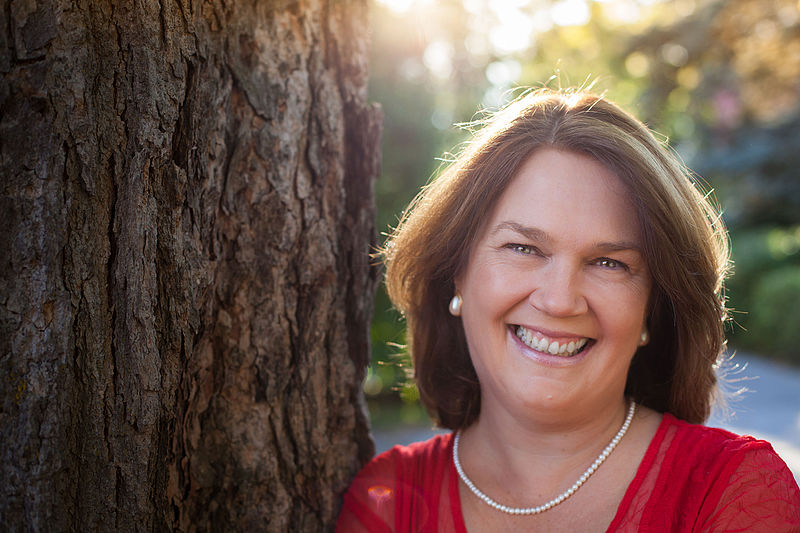
Spirituality and Health Care: An interview with Dr. Jane Philpott
[Ken Gray] I first became aware of Dr. Jane Philpott as she stood beside Jody Wilson-Raybould, then Minister of Justice and Attorney-General, both eventually fired from the Liberal cabinet of the day by Justin Trudeau. They took their stand on principle as the most significant bribery and corruption trial in Canadian business, the 2019 SNC-Lavalin Affair, was exposed.
Interviewed here by veteran journalist Lorna Dueck for the Canadian Bible Society, Dr. Jane Philpott, is best known for her time in the Canadian government from 2015 to 2019, where she served as federal minister of health and several other portfolios. Dr. Philpott is currently the Dean of the Faculty of Health Sciences and Director of the School of Medicine at Queen’s University, and she’s also the CEO of the Southeastern Ontario Academic Medical Organization.
In this episode of “Scripture Untangled,” Jane Philpott speaks about her Christian faith and about her new book, Health for All, a doctor’s prescription for a healthier Canada. Extracts have been edited for length and clarity. I highly recommend that readers watch the full interview (35 mins.) here. Well worth your time. Kudos to the Canadian Bible Society for making this project available in many accessible formats.
[Jane Philpott] “The health sector is big and complex, and you can analyze it from a whole bunch of different angles. I chose four in particular. I start with the clinical perspective on health; the social determinants of health, the political determinants of health, and finally, I consider the spiritual determinants of health. It’s an area that I don’t think very many health policy books have written about. At the end of the day, it’s about our spirits or our souls; if people are not well in their souls, they actually aren’t healthy.
“My dad was a Presbyterian pastor. I grew up in a home where church was a part of our culture and a part of who we were as a family. But it wasn’t until I got to university, where, you know, young people are exploring all kinds of new ideas, I spent a lot of time memorizing Scripture in medical school. I found that it was a really good way to be able to really understand what Scripture was about. So, I would, for example, memorize the whole book of Philippians and, you know, several chapters of Romans. Paul’s way of thinking and his teaching through Scripture really become part of my psyche and a part of how I think and see the world.
In my book I use a framework about spiritual wellness that was taught to me by Indigenous peoples. It’s called the First Nations Mental Wellness Continuum Framework. With other First Nations leaders, I came to the conclusion that at the center of our mental wellness are the concepts of hope, belonging, meaning, and purpose. And so, I used that as a framework to talk about mental wellness and specifically on the matter of hope.”
[Speaking of hope, Dr. Philpott and husband, Pep, went to work at a mission hospital in Niger in 1990. During that time their two-year-old daughter died tragically and unnecessarily.]
[Jane Philpott] “Our beautiful little two-and-a-half-year-old daughter, Emily, woke up one morning with fever and vomiting. We were living in Niger in West Africa, where things like malaria and other infectious illnesses are very common. It turns out what she had was something called meningococcemia, which is very rare in Canada, but still, unfortunately, is not rare in places like Niger. In a shocking way, she ended up dying as we were enroute to the hospital.
“One of the things that allowed me to get perspective and to go on was recognizing that we weren’t alone in our grief. We were surrounded, in fact, by people who had experienced what we had experienced and then some. The Nigerians, the people in the villages, everyone knew what it was like to lose a child. Then, and now, “what I want to do is to be able to somehow make the world more fair, to try to help create the conditions that, as much as possible, toddlers won’t die of treatable infectious diseases.
[Back in Canada as a family doctor in 2011 she first entered federal politics.]
[Jane Philpott] “The link from medicine to politics is not as big of a leap as some people might imagine. Medicine is all about healing and taking care of people, one by one. The longer I went on in medicine, the more I realized that systemic issues that were making people sick or making people well. Eventually, I found my way to the Liberal government cabinet table as Minister of Health where we dealt with such issues as Medical Assistance in Dying and drug policy.
[Jane Philpott] Concerning Drug policy, “you know, there are a lot of people who think we should just, you know, throw the throw the book of the law at people who are caught using substances. Because of my experience with patients and getting to know individuals, I brought a compassionate approach to drug policy. I’ve known many, many people, mostly patients, who are dependent on substances, who through no fault of their own, through the traumas that they’ve experienced in life.
In such conversations “I think about what I would want if this addicted person who was my sister, or my child, or my parent, I would want them to stay alive, most of all, and to hope that things will get better for them. That’s what I want for every single person in this country who struggles with addiction, is to be able to have people treat them with compassion as human beings, and to believe that their life is of sacred value.
[Jane Philpott speaks openly about her struggles around what we now call (MAID. She later speaks openly about the cost of truth-telling through the SNC-Lavalin crisis.]
[Jane Philpott] “The values of integrity that were instilled in me, in part by my faith, but also through the influence of my father, these sustained me through many difficult times.’ ‘It can be hard to stick to your principles; for such, you do pay a price.’
[When asked if the Bible addresses health care as she imagines it in health for all? She replies:
[Jane Philpott] “For sure it does. The Bible is all about learning who God is, how much he loves us, how much he values us, how much he wants the best for the children of creation. And health care is about that. And so, I think the Bible teaches us the sacred value of every single human being, teaches us about how to work together and love one another. Jesus teaches us more than anyone in the Bible about how to care for the needs of the vulnerable, those who are left as orphans or widows. And those are ultimately the values of health care that we continue to teach to our doctors and nurses of today.”
 Take Note - Reflections on life, music, politics, retirement and more by Ken Gray
Thanks for this, ken. Very moving. Peggy
On Tue, Mar 18, 2025, 2:49 p.m. Take Note – Reflections on life, music,
LikeLike