
Canadian religious leaders are finding their voice on climate justice issues.
In a joint statement in advance of Earth Day Lutheran bishop Susan Johnson, Interim Anglican Primate (senior bishop) Anne Germond, and Indigenous Anglican Bishop Chris Harper have issued a strong statement connecting faith with the climate crisis as a matter of importance for members of both denominations.
“The calling of disciples to love the earth and to address the climate crisis is rooted in God’s intimate act of creating a beautiful, diverse, life-giving, life-sustaining world—a world that is full of the breath of God. It is also rooted in the Easter story. Jesus is buried in the earth and rises from the ground. Jesus is buried for the sake of love and rises to renew all our relationships.”
I am encouraged to hear supportive voices of denominational leaders of our churches. Through my own involvement with international, national, and local projects over many years I have often felt abandoned by those “at the top” of our churches. So the bishops’ message shows common cause with my work trying to unite ecojustice perspective with the life of my (Anglican) church working in tandem with the broader ecumenical and secular community.
Part of my work with the Anglican Communion Environmental Network (ACEN) involves publishing a bi-weekly digest of Anglican ecojustice activity worldwide. I send this publication to about 930 recipients; some read the whole thing; others might just read one article while others might look at the pictures. Either way, readers enjoy learning how other persons of Christian faith engage with the climate crisis.
Not everyone, however, is happy with what I produce. A colleague recently noted that two bishops have unsubscribed from our list. And they are both from Canada.
Really?
Well you can’t please everyone, and sometimes I do speak bluntly on particular matters which upsets some folks. This last issue however was mostly “butterflies and flowers.” No hard-sell on fossil fuel boycotts. Maybe these bishops are too busy; we all are, and there is competition for attention amongst so many good causes; I get that. I also understand that raising our voices environmentally means critiquing status quo economics which thrive on fossil fuel extraction, refining, transmission, and combustion. Unless this process is significantly interrupted our planet will continue its path towards destruction.
I also understand that the trend towards an increasingly fragile and injured planet continues unabated. My children will not experience the world in which I grew up. I am convinced that some elements of creation despoilation are already irreversible—rising salt water levels; atmospheric-altering pollution; degradation of fresh water; food security and agricultural challenges. So many physical consequences have already passed their respective tipping points.
That said, Christians have a scriptural and ethical mandate to cherish and preserve what has been shared with us by Creator God. In the US, the Trump administration feels it can ignore the courts of law; we Christians cannot however ignore the mandate given us by Divine graciousness. As baptized Anglicans we commit ourselves “To strive to safeguard the integrity of creation, and sustain and renew the life of the earth.” [Marks of Mission of the Anglican Communion]
Many church leaders in the US are very reluctant to speak about creation care as a matter of faith and urgency. An article by Chris Eyte in Christian Daily International, Apr 15, 2025 clearly states:
“Most U.S. church leaders believe in human-caused climate change, few regularly discuss the issue with their congregations . . . Most Christian American religious leaders silently believe in climate change, and [that] informing their congregation can help open dialogue.”
The article continues:
“The research showed that 90% of U.S. Christian leaders accept the scientific consensus on “anthropogenic climate change,” the view—considered controversial by some—that human activity is the primary cause . . . Yet only half of the respondents reported discussing climate change with their churches, and just one-quarter said they had ‘mentioned it more than once or twice.’”
The refusal to speak up and lead is not however universal. Writing in the Catholic Register, NCR environment correspondent Brian Roewe describes how some catholic groups, especially members of female religious orders have blasted US Environmental Protection Agency (EPA) rollback plans.
“Faith groups sharply denounced sweeping deregulation plans for the U.S. Environmental Protection Agency as “morally depraved” and prioritizing polluters over public health and nature.”
Catholics have been at the forefront of climate change education and climate crisis mitigation, some for decades. Their energy (!) is presently kindled by the Trump administration’s re-purposing of the Environmental Protection Agency, a body charged with the protection of the environment since the days of the Nixon administration. EPA mandate and practice has changed quickly and drastically. It is now charged with implementing “drill baby drill.”
Carol Zinn, executive director of the Leadership Conference of Women Religious, said that “the actions being taken in the reversal of policies in protection of our common home, Earth, stand in contradiction to the values we support and the work we have long done on behalf of God’s people.”
Enter Greenfaith whose members “create communities to transform ourselves, our spiritual institutions, and society to protect the planet and create a compassionate, loving and just world.”
“More than anything, a loud and forceful faith voice is necessary, said the Rev. Fletcher Harper, an Episcopal/Anglican priest and executive director of GreenFaith, who called the potential tidal wave of deregulation “evil” and “morally depraved.”
“This is a moment where the future of millions of lives are at stake, and silence is absolutely not an option,” Harper said. “Religious communities need to be educated about this. They need to speak out.”
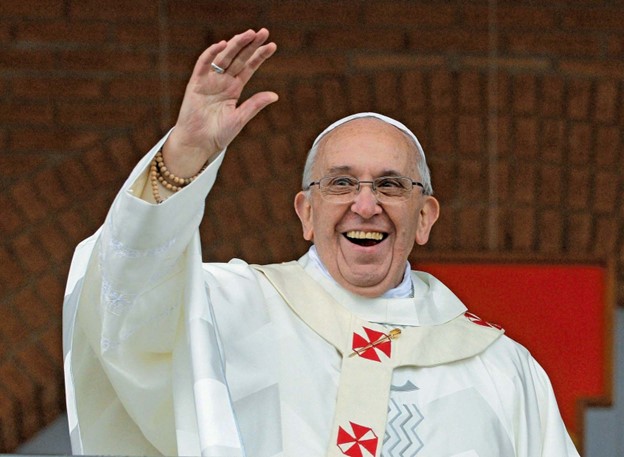
One who has spoken out forcefully and deeply now for decades is the late Pope Francis who died this Easter Monday. History will remember Francis as the most focused and tenacious advocate for creation and for the poor. he well embodied the passion of his thirteenth century namesake, St. Francis. His master work Laudato si’ and other related proclamations remain the standard for creation care and climate justice witness. He will be remembered as a church reformer, as a voice for the voiceless, as one who cared deeply for his Church while at the same time exposing its historic errors and present-day flaws. Any voice I find draws inspiration and courage from his trenchant witness. Rest well ++Francis; it’s over to us now.
 Take Note - Reflections on life, music, politics, retirement and more by Ken Gray
Leave a comment