Friends,
As we struggle to make sense of all that is going on in our world and communities right now, I have increasingly been remembering familial stories about living with atrocities. Both of my parents were born during the Second World War, and stories about those years shaped my imagination growing up. These were stories about resistance, stories about creatively managing to live under occupation, and stories about finding ways to protect and treat with dignity those whom the authorities were seeking to destroy.
The point isn’t the haircuts so much as the need to think about the gifts that we have and press them into service in a way that undermines the exclusion and the rhetoric of hate. Certainly that will be calling out our government and protesting. But it will also mean looking around at those most vulnerable in our midst and finding ways to practice embrace instead of exclusion, whether that be offering protection, providing financial support, taking people into our homes and communities, or offering our seemingly mundane gifts in their service. My grandfather could cut hair. In offering up that gift he provided care and hope in the midst of horror.
And, of course, for my grandparents on both sides of the family, rooted their own action in the biblical story, that older and deeper tale about how to live into God’s healing and redemption in the midst of oppression and violence.
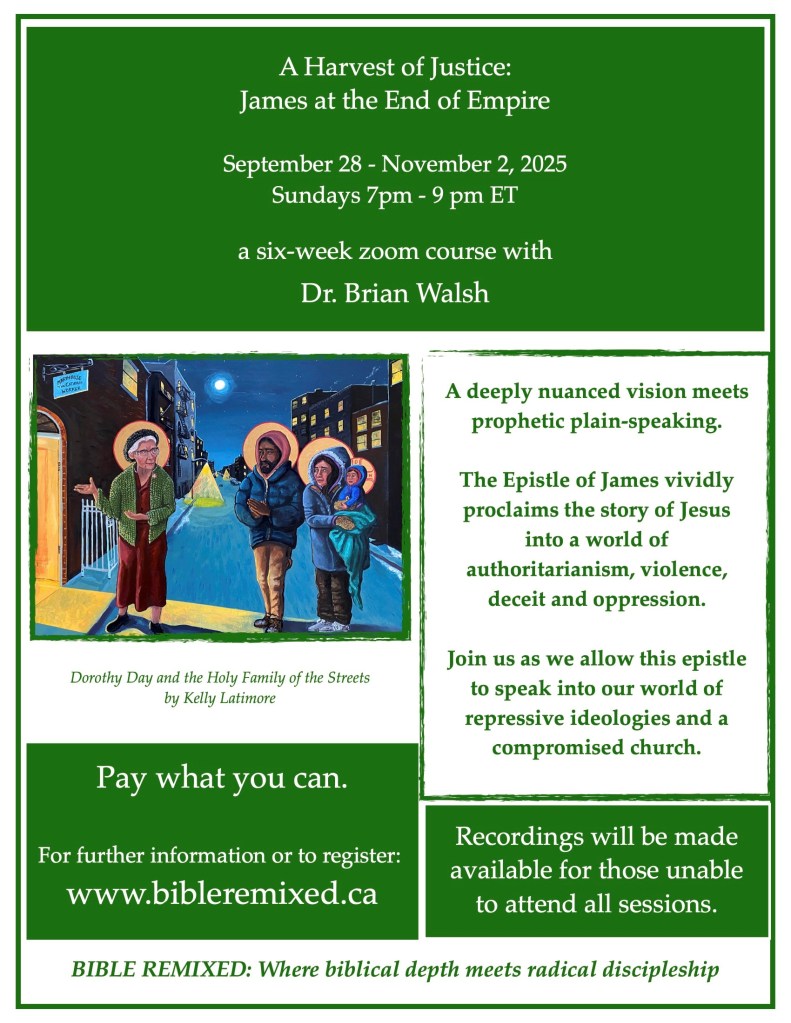
This fall we are offering two courses that draw on that much older story. The first, “A Harvest of Empire: James at the End of Empire” explores the epistle of James, written at a time that easily mirrors the violence and exclusion of our own time. What does this epistle have to teach us about how to live with hope and faith in such a context?
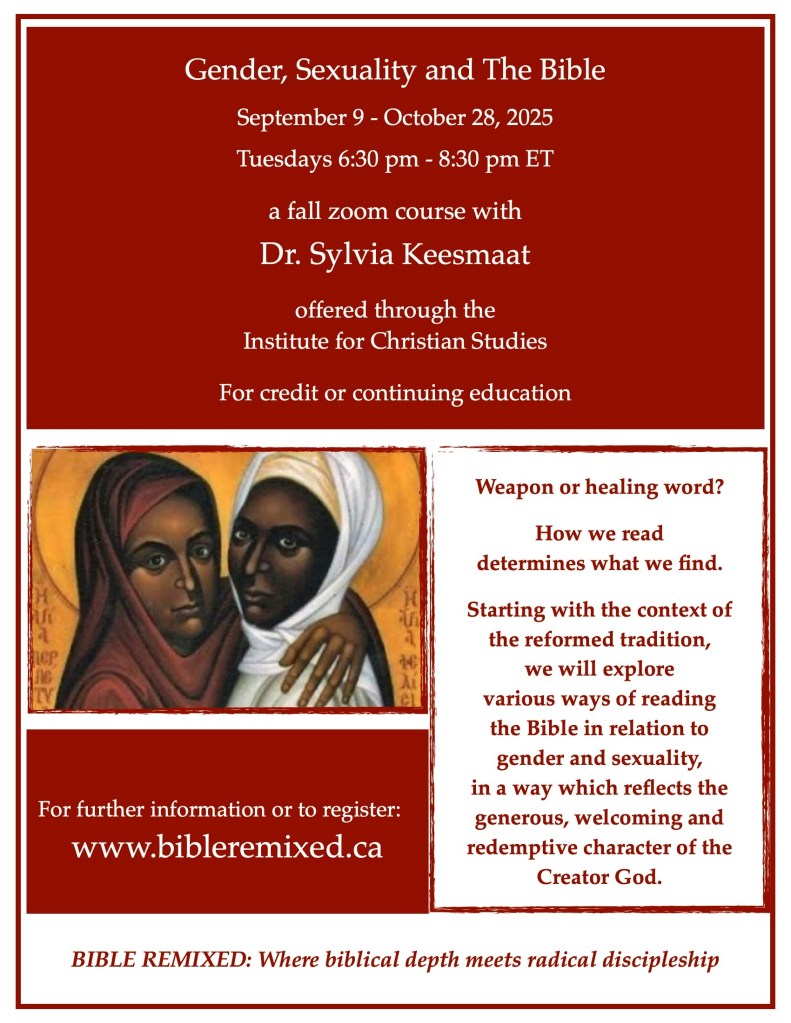
The second course, “Gender, Sexuality, and the Bible” engages directly with how we read the biblical story in relation to a community that is increasingly being targeted with hate and violence. By using one denomination as a case study, we will enter into the issues of interpretation around reading the biblical text: is this a text of exclusion or embrace?
And perhaps, in both courses, we will find ways to enter creatively into resistance in the places we find ourselves.
Information about both courses can be found at www.bibleremixed.ca. I hope you will join us.
In hope, Sylvia
Visit the takenote.ca HOME page for a colourful display of hundreds of other blogs which may interest or inspire you.
 Take Note - Reflections on life, music, politics, retirement and more by Ken Gray
Leave a comment