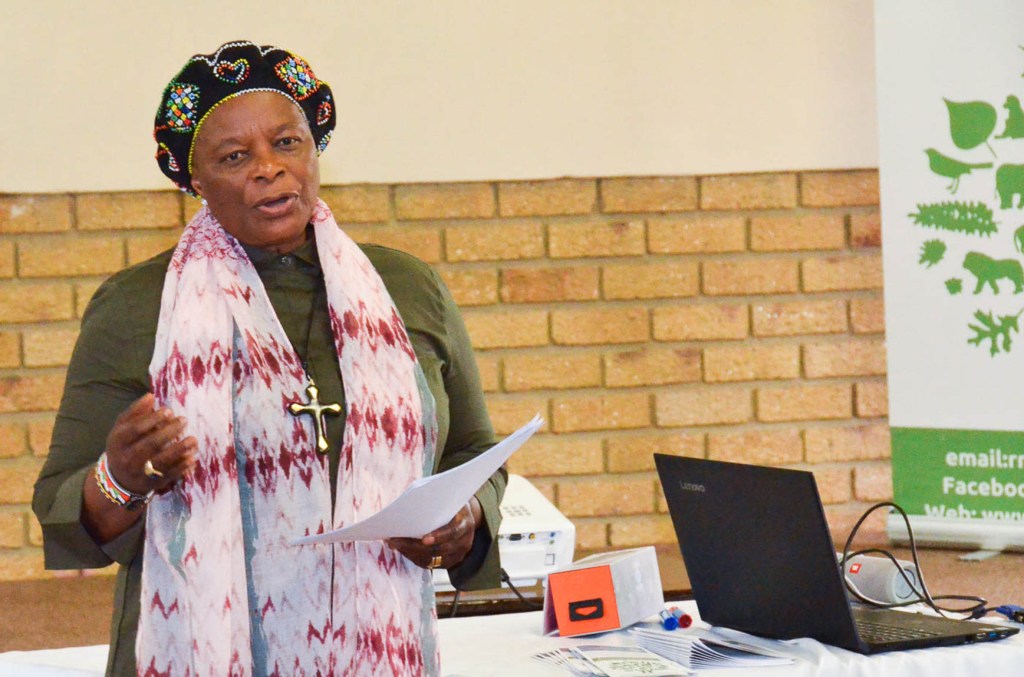
I have always loved preaching, both as a listener and a presenter. As a young adult I read books by British preachers Martyn Lloyd Jones and John Stott, both in the evangelical tradition, with great interest. As a music student in London I attended All Souls, Langham place, the flagship of British Evangelicalism in the late 1970s where John Stott was Rector Emeritus and a regular preacher. With 17,000 others I fed on the his words as he addressed the Inter Varsity Christian Fellowship Urbanna 1981 conference. Strangely, throughout all my schooling I was never drawn to lectures or class presentations; but there was something about scriptural proclamation in religious settings which drew my attention. I guess I was, and still am to some extent, called to preach.
Given the homiletical biography above I was intrigued by a recent article in the UK Church Times “Word on a wing” (25 September 2026) by the Rev, Dr. Colin Heber-Percy. The entire article is worth a careful read. That said, here are a few extracts:
“I write stuff down. I’ve always done it. For me, writing was — and still is — never a matter of ‘expressing myself,’ but of somehow making things real.
“Are writing and preaching somehow antithetical or even mutually exclusive? My friend Gary, an exemplary priest in many ways, walks into the vestry on a Sunday morning, half an hour before the service is due to start. He scans the lectionary, reads to himself the passages set, thinks, prays, and then steps out to lead the service, preaching from the heart, without notes, his words, never committed to paper, coming out on a wing and a prayer.
“There is something undeniably powerful about witnessing someone fluently and freely expressing themselves theologically in public without recourse to notes or a text.”
My own first sermons were preached while a missionary in Northeastern BC from 1982-84. In these pre-seminary years I shudder to think what I wrote and spoke. I do remember making some notes but would often “trust in the spirit.” Such trust was likely misplaced; but hey, I was “on fire for the Lord,” and my reading in those days was pretty simplistic and my experience naïve. I have always been able to think on my feet so an extemporaneous style felt easy and good. Over the years, however, my preparation and presentation have varied greatly. In his CT article, Heber-Percy prefers a more disciplined style of preaching:
“I confess: I worry about what I am to say, and I write my sermons out, word for word. And I feel vaguely guilty about it, as though my doing so constituted a lack of trust on my part in the Holy Spirit, an infringement of Jesus’s advice to the disciples.”
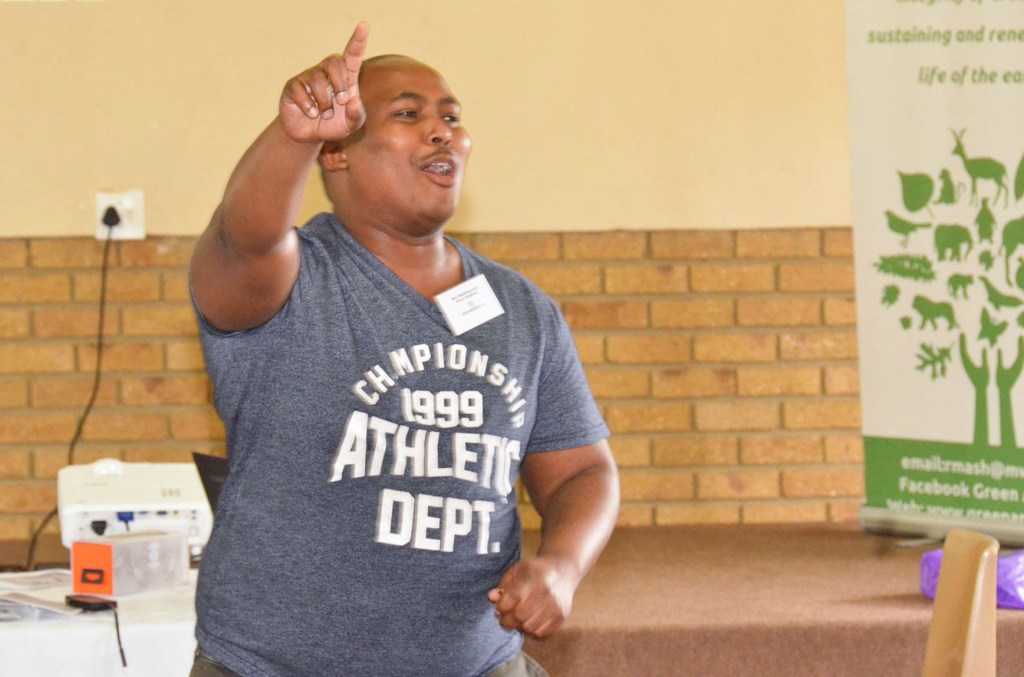
While at Seminary, we enjoyed presentations by the late Rev. Dr. Thomas Troeger, Methodist minister, theologian, musician, poet, composer, and dapper dresser. Tom maintained total control over his text at all times. He wrote everything out and presented it verbatim. His disciplined precision was invisible to us listeners; we could not tell he was reading anything. His thoughts were profound, contextually relevant, and his sensitivity to the human journey was remarkable.
For my part I have often presented prepared texts. Given my sight challenges, however, such a delivery feels wooden and awkward. At one point, I ensured I had a written text prepared a few days prior to Sunday. I would next highlight phrases in yellow and improvise from the highlighted notes. On other occasions I would simply prepare a set of cues and improvise upon them. This has always been a risky practice for me as my mind is typically flooded with new ideas once I “go live.” I would try to prevent such indulgence by preparing rigorously prior to the service, a practice which makes me quite nervous.
Now in retirement, though preaching at least 2-3 times each month, and seeking to avoid the nervousness, I now produce a full text — which doubles as a blog post through which I reach at least ten times more hearers than I do in church — such a practice allows for editing and polishing which I enjoy.
Dr. Heber-Percy poses an interesting question: Where does the sermon exist? In our heart or in our head? Does it result from fears, frustrations, or ambitions? (Many of mine do this very thing.) Does our sermon reflect something we have heard and remembered? The question sounds a bit ridiculous, even arcane, but hear him, and me out:
“We naturally associate authenticity with spontaneity. So, the crafting and composing and writing down of a sermon surely undermine the possibility of the sermon’s ever being free and honest and authentic? Do away with spontaneity, and you do away with authenticity [. . .] Socrates’ questioning of his interlocutors in the agora at Athens depends on the presumption on our part, and theirs: that the truth is somehow on the tip of our tongues, that the “unthought-through” is where the truth really lies [. . .] “The truth is raw. So, don’t cook your sermons.”
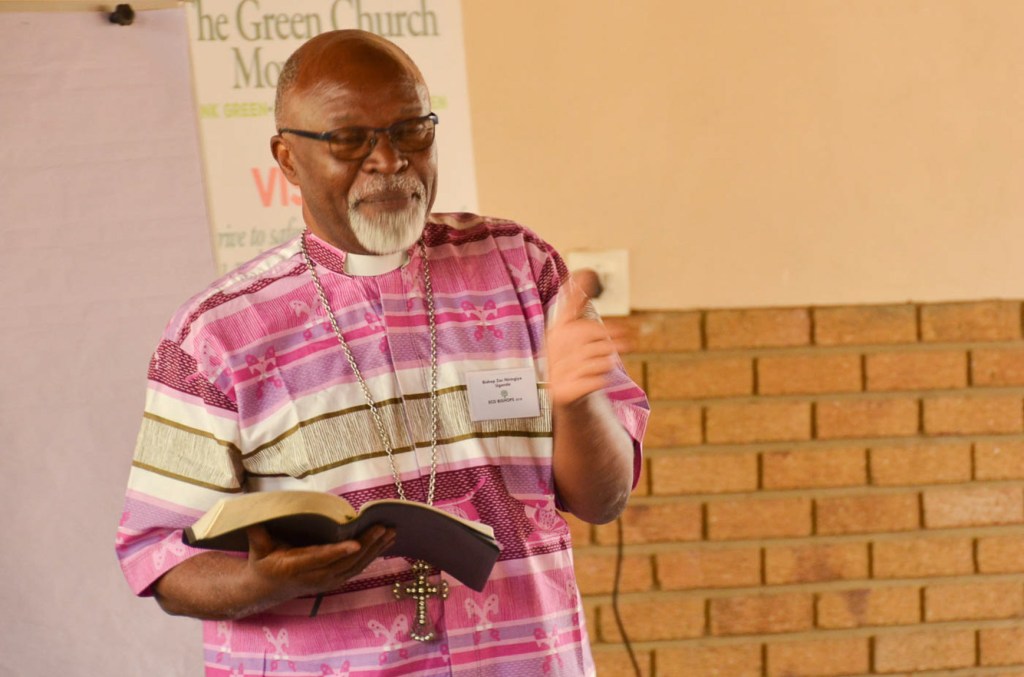
Here is the crux of the matter for me. Any sermon that relies on scriptural texts (an ancient and relatively static source), which is taken up by the preacher (who lives in the present moment (the contemporary zeitgeist), itself shaped by the memory and reception of history (the record of humanity within the crucible of creation) presents a marvellous opportunity to be both focused (precision) and open to possibilities (imagination). Such is the landscape through which the Holy Spirit journeys with us.
Years ago I had a wonderful lay preacher assist me in leading parish worship. She was well educated, poised, and articulate; she knew life’s challenges from deep personal experience; she operated very well in public settings. What puzzled me, however, is that she had a set of sermons for many Sundays of the three-year lectionary cycle which she drew upon regularly. How, I wondered, could she just go back, dust off a text and repeat it, often many years later. I tried once to re-cycle a sermon; The experiment failed miserably. Too much time had past since its first outing. I had changed; the world had changed. It just didn’t work. Heber-Percy confesses:
“When pressed for time, I have recycled sermons — and I feel a bit cheap about it. I scroll back, guiltily, through the “Sermons” folder on my laptop, scanning dates for the last time I preached on this particular text. Sometimes, on reading through the sermon, I find there isn’t a great deal I feel minded to change. Other times, I wonder what on earth I was thinking, and start from scratch.”
He leaves us with a final question, to which I invite my preacher colleagues to weigh in:
After all, the truth cannot be rehearsed, let alone rehashed, can it?
There’s more in the original article here
And in an audio recording of the live presentation go here
Visit the takenote.ca HOME page for a colourful display of hundreds of other blogs which may interest or inspire you


My cardinal rule in my ten years in the pulpit was to stick with one point and not go beyond 13 minutes. My father was a minister, and that’s why the 13 minute rule. After 13 listening minutes in the pew, I wanted it to be over. I know how many double spaced pages are 13 minutes, and if typing beyond them, I knew there had to be editing done to tighten things up. At Knox College, TST at UofT, preaching was paramount and students of the other six seminaries at TST came to Knox for that class. I gratefully won the preaching award twice in my three years there.
Thirteen minutes.
Congregants are beyond grateful when sticking to one point and limiting that one point to what the human ear can endure while in a pew before starting to think about what to serve as a side to the roast for Sunday dinner.
LikeLike