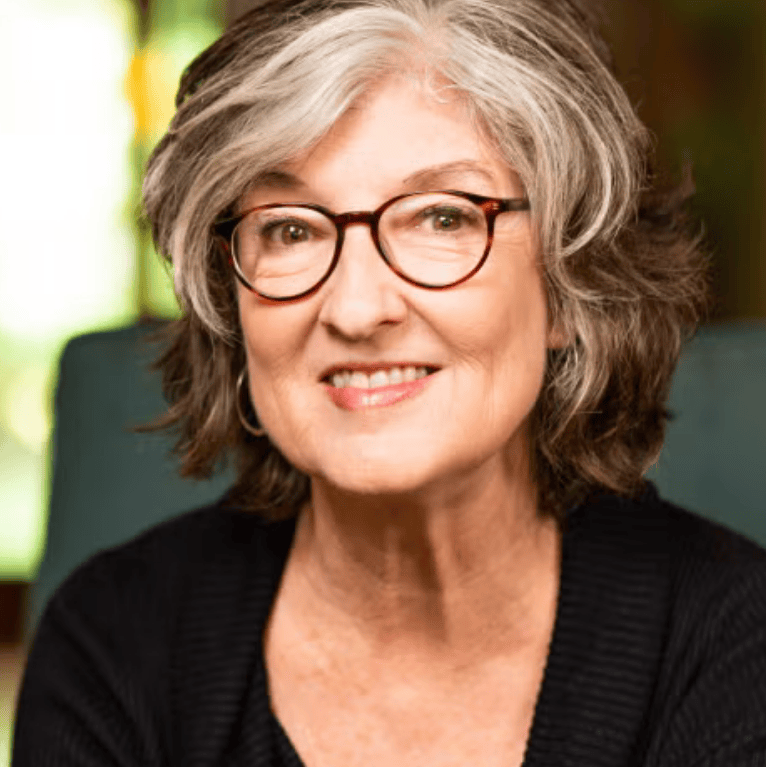
Both authors, Louise Penny and Barbara Kingsolver, are doing the rounds of book festivals and online broadcasts presently. I will say something about Louise Penny later, but for now, my focus is on Barbara Kingsolver whose recent novel, Partita intrigues and delights me. A classically trained pianist herself, Kingsolver opens up the world of aspiring professional performers, a world I once inhabited myself until life went in another direction — and my limited ability caught up with me.
In reading Partita, what grips me most is meeting the tangled web of ambitions and aspirations which battle with social, political, and fiscal realities. Kingsolver made her own choices; I made mine; her character, Livia learns to live with hers albeit slowly and with difficulty.
In Partita we have before us a suite of love stories, some healthy, others not. Without spoiling, music students who spend a lot of time in small practice cubicles will never enter such rooms the same way after reading a sex scene set to the music of Ravel’s Gaspard de la nuit. Move over Bolero . . . Scarbo is coming for you.
Barbara Kingsolver on the Choices That Make a Life
The two-time Oprah’s Book Club author talks about the pressure to follow up Demon Copperhead and why she feels like she’s finally in her creative prime.
By Charley Burlock First published: Oct 06, 2026 here
For decades, Barbara Kingsolver delivered acclaimed bestseller after acclaimed bestseller without letting the pressure of readers’ mounting expectations get to her. All that changed with Demon Copperhead. Oprah selected the novel as her 98th Book Club pick in 2022. In 2023, it won the Pulitzer. In 2024, The New York Times readers crowned it the number one Best Book of the 21st Century.
Even after publishing 18 books and raking in at least as many literary prizes, Kingsolver felt overwhelmed by the “level of attention” Demon Copperhead drew—and intimidated by the expectations that came with it. When she returned to the blank page, “I had a sense of people looking over my shoulder,” she admits, and decided that the only way forward was to “write something so different it couldn’t be compared.” She set out to write “a little love story…and then it grew.”
Partita, out today from Harper, captures one woman in two radically different periods of life: as an ascendant concert pianist whose carefully orchestrated future is upturned by an all-consuming college romance and as a middle-aged farmer’s wife whose hard-won peace is shattered by a surprise call from that same magnetically meddling man.
Readers expecting a “little love story,” be warned: This book delivers some swoon-worthy scenes, but it also packs brutal gut punches. To Kingsolver, that pain is the point, whether we recognize it or not. “When we go to literature, we might think we’re just looking for a few hours of escape or entertainment. But ultimately, we’re looking for wisdom,” she says. Like scar tissue, wisdom only grows in response to damage and survival, and at age 71, Kingsolver says she’s accumulated plenty. “It’s great to be a writer of a certain age, because I feel like I have more to give at this point in my life than I ever did before,” she reflects with genuine glee. “And I’m just so glad that I get to keep writing.”
In a conversation with Oprah Daily, Kingsolver shared why she doesn’t consider her writing activism, why she wouldn’t bother advising her 20-year-old self, and what she hopes young people today will figure out for themselves.
How did you find your way into this novel?
In the beginning, I was thinking of this character, Livia, who’s a young musician with this whole future in her heart she’s reaching for, and then she has this really intense love affair that changes everything for her.
As I was looking back through my own life to remember what it’s like to fall in love for the first time—the intensity of it, the insanity of it, because it really does take us over in irrational ways—I was conscious that I was looking at this first-love experience through all these layers of love that I have come to understand since I was 20 years old myself. I was thinking a lot about what love can come to be in the middle of your life. There should always be that sense of compulsion: of wanting to make someone happy and wanting to feel happy with another person. But in the later years of your life, it’s always mixed with these layers of accommodation, compromise, acceptance, and forgiveness—as well as self-forgiveness. I thought it would be really interesting to contrast those two kinds of love.
Young love gets a lot of airtime in our culture because it’s exciting and sexy. Do you think there’s something more romantic about later-in-life love that often gets missed?
Mature love will go the distance. I just did this Q&A for The Guardian. It’s kind of like a dating profile; they ask famous people these 50 questions. What makes you happy? What’s the last lie you told? And one of the questions is, What does love feel like? And the answer that just kind of popped out of me is, At 17, it feels like breaking the speed limit. Many years later, it feels like a warm bath. If you really think about it, one of those is sustainable, and one is not. Ultimately, you do have to get out of the bathtub too, but it’s a feeling you can carry with you, not an overextension of all of your sensory systems that’s going to burn you out.
This book begins with the protagonist reflecting on her brother’s decision to end his life at 17 years old, which did not set me up to expect a love story! You’ve said that the first paragraph of a novel makes a promise that the rest of the book has to keep. What is the promise Partita makes to its readers?
Actually, the promise appears on the page before that opening scene in the [epigraph] quote from Toni Morrison, which I think is probably the wisest two sentences I’ve ever read about the human condition. She didn’t write it; she said it in an interview, and I’m so glad that it’s preserved: “Sometimes you don’t survive whole, you just survive in part. But the grandeur of life is that attempt.”
In a way, the book has three openings. It opens first with this trauma Livia suffers as a child and this question she asks in the first sentence: “How does a person step in front of a train?” We begin with a life that is broken from safety to precarity—at 11 years old.
The hardest and most valuable thing to learn is how to love what we already have.
We begin again with the phone call she receives in midlife that ruptures her precarious contentment with this life that she might have just settled for. She’s never really asked herself, Did I want this, or did it just happen? So there’s a second breakage, of her peace.
And the third opening is when she looks across the campus at age 20 and sees this man. Her downfall begins when she sees that guy. It’s another breaking point.
The book is about lives that get broken into parts and how we put them back together again. That, I hope, is a question that every single person can understand.
There are some striking similarities between your invented 20-year-old protagonist and the real 20-year-old Barbara Kingsolver. You both grew up in Appalachian farm country; you both went to college in Indiana on a piano scholarship. How much of your own experience did you lend to this character?
I certainly had my share of crazy love affairs and unwise decisions, but I’m happy to say that there was no Sigurd who walked into my life and wrecked it.
I did spend one semester in the music school at DePauw University, but I very quickly figured out that life was not for me; I didn’t enjoy the narrowness of it. To be a musician, you have to spend half your life in a practice room and the other half of your waking hours with other people who think and speak and breathe nothing but music, and that rankled me.
So fundamentally, I am not Livia. I have not had her life or her dedication. But focusing on that sort of dedication added a third layer to the love story, which is this internal love affair that humans have with art and beauty. I thought it would be an interesting project to ask these questions: What is art good for? Why do we need it? What does it do for us? These are timely questions. Not just in this country, but globally, as people are feeling less economically secure and resources are being cut from the arts at every level, from the National Endowment for the Humanities all the way down to first-grade music classes. Those cuts reflect the sense that art is something we don’t really need. I disagree with that.
Your writing has often been described as a form of activism. Do you see it that way?
I don’t. I am an activist in other parts of my life. I’ll go to the board of supervisors meeting. I will get out on the streets on a particular day. I’ll write a letter to the editor.
Those are ways of directly influencing people. The job of literature is not to tell you what to think. That would be bad literature, frankly, and I like to think I’m better than that. I try to invite readers into large questions—questions as big as why do we need the arts?
But activism would be me going to a PTA meeting and arguing in favor of restoring the music program. This is a really different business.
If you could go back and tell your 20-year-old self one thing, what would it be?
Well, I wouldn’t tell her anything because she wouldn’t listen. She was very headstrong and pretty much thought she knew what she was doing, and she had to make her own mistakes. And yet, when we’re young, we fret a whole lot about making the right decision. If we’re lucky enough to have a lot of doors available to us, we worry so much about opening the right one.
With time, I have understood that there are many right options. The hardest and most valuable thing to learn is how to love what we already have instead of wishing for what we don’t have. And no matter which door you open along the way, that’s going to be your journey: to figure out that what you need is here.
What’s a lesson you had to learn later in your life, perhaps in your 40s?
I would back it up to my 30s, when I was raising my kids. I think every working mother, regardless of her job, has these feelings that she is losing herself.
I can remember one time when, for whatever reason, I was going to be at home alone for the whole day without my husband or my children. And at first I thought, Oh my god, a whole day to myself! And my second thought was, What in the heck am I going to do? I’ve forgotten what I like to do when I get to choose.
So I think that what I would tell her is: It will be okay. You really aren’t lost. You’re still in there, and it will come back. Just survive, and it will all add up to a richer version of yourself.
Your protagonist has a very fraught relationship with her mother. What inspired you to explore the complexity of the mother-daughter bond, particularly through the lens of a woman in midlife?
When I write a love story, I guess I go all in. The most primal love story is between a mother and her child. And since we were discussing broken parts: Poor Livia, I gave her the worst broken part of all, which is a mother who somehow couldn’t find it in her heart to love her. We don’t know exactly why, but without spoiling anything, I will say that I was interested in exploring a common pattern of resentment.
I’m of the first generation of women who really got to have choices as adults. My mother did not. My mother was a really smart woman who could have had a really interesting career in various fields. Instead, she had to be a housewife. She absolutely had no choice. She came of age in the nadir of female opportunity in this country.
The entire culture of the nation was focused on getting women out of the factories—where they had gotten the taste of productivity in World War II—and getting them back into the home so those jobs would be available to men. And those women raised daughters who came of age in the ’70s and ’80s, in the era of Gloria Steinem and second-wave feminism. I’ve thought a lot about how it would have felt to be one of those mothers watching your daughter get to do things you never did, to take opportunities that absolutely weren’t allowed to you.
What advice would you give people coming of age today?
Don’t get lost in the American dogma of efficiency and productivity. You’re still productive when you’re reading a book. You’re building a better person inside yourself.
No matter what you need to do to keep a roof over your head, you can still expand yourself. Not everybody gets the opportunity to study in college, but every one of us lives near a library or has some way to access literature and music.
A lot of people feel intimidated by classical music, and that’s part of what this novel is about: class barriers. A lot of us who didn’t grow up going to concert halls or art museums might feel like we are not welcome in those worlds. I want to say that we do belong. I want to say that one of the beautiful things about music is you don’t have to know how to make it to appreciate it and to let it come into your ears and be beautiful in your mind. It’s really one of the most passive of all art forms. You really don’t have to know what goes into it to feel what’s coming out of it.
But I also want to point out that you can appreciate Moby-Dick without ever having harpooned a whale. That’s really one of the best things that fiction does for us: It takes us into worlds that are completely new to us and helps us feel at home.
Visit the takenote.ca HOME page for a colourful display of hundreds of other blogs which may interest or inspire you


Leave a Reply