
A prophet cannot know that all will be well, that those in power will wake up and mend the damage they have caused, and that peace will prevail. The mystic can never be certain that union with God will be the outcome of longing for God. They must rest in unknowing. Unknowing is not always comfortable. In fact, it can feel a lot like grief.
A repost from the Centre for Action and Contemplation today, Friday, March 7, 2025.
[Introduction and connection, Ken Gray]
We stand on the shoulders of giants, of persons and personalities who have resisted injustice throughout history and especially here in North America. To many who resisted the draft in the US in the 1960s and 1970s the names of the Berrigan brothers remain familiar and inspirational. A common, and it seems misguided view, is that they were always upbeat, always vocally courageous, and sufficiently confident in Victory. The revelations from Mirabai Starr below suggest otherwise.
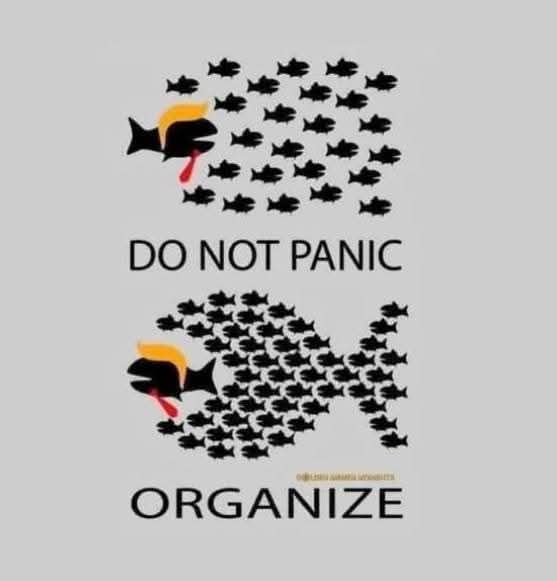
In the present moment, despite a growing US and Canadian resistance , the way forward remains tough, and most days, is fraught with anxiety and for some, utter despair. It is hard to know what “a win” looks like. On my social media many are saying “take him [Trump] out.” Even if that were possible, let alone ethically responsible, then you’d have Vance and the entire GOP maniacal machine behind him. That is hardly a win.
We have much to learn from those who have walked a similar path before us. Some days, it is hard to see how this stupid and strategically-challenged administrative chaos will end, if it ever will. As one Canadian diplomat recently said, we can no longer trust the United States, now, and possibly ever.
So Canadians must remain resolute in our offense, resilient in our defence, truthful in our speech, and in our mood—with Berrigan and so many others it seems—sometimes disconsolate. Such is the mood and messiness of our times.
As we now say in Canada, remembering the late, great Gordie Howe, “elbows up!”
[Centre for Action and Contemplation]
Mirabai Starr shares what she learned about the nonviolent direct actions of Jesuit peace activist Father Daniel Berrigan (1921–2016). Inspired by conversations with her friend and iconographer Father William (Bill) McNichols, she reflects:
What many of his followers may not have known was that Daniel Berrigan was inconsolable. As a champion for nonviolence, Dan did not see a lot of evidence that the culture of war would ever wane. Nevertheless, he persevered. What else can a true prophet do? “One is called to live nonviolently,” he said, “even if the change one works for seems impossible. It may or may not be possible to turn the United States around through nonviolent revolution. But one thing favors such an attempt: the total inability of violence to change anything for the better.” He also said, “Peacemaking goes nowhere and yet it must be done.”
As a young Jesuit, Fr. Bill lived in a communal house with Dan Berrigan in New York City. Sometimes, when Dan did not come down for dinner, Bill would go upstairs and knock on his door. “He’d look like he’d been assaulted,” Fr. Bill told me. It wasn’t the criticism he received that burdened him, because when Bill asked him what it was like to be continuously attacked, he answered, “I think I must be doing something right.” It was more about what Fr. Bill describes as “taking on God’s anguish for the world and walking around with it.” Fr. Bill says that in these moments, he was so deeply moved by Dan’s sorrow that all he could do was to sit quietly beside him. “It was like visiting Job,” he told me.…
A prophet cannot know that all will be well, that those in power will wake up and mend the damage they have caused, and that peace will prevail. The mystic can never be certain that union with God will be the outcome of longing for God. They must rest in unknowing. Unknowing is not always comfortable. In fact, it can feel a lot like grief.
And yet that emptiness, that waiting, that liminal space is sacred. It’s what distinguishes a prophet-mystic from a self-righteous activist or a spiritual narcissist. It is in the interior desert, where the landscape appears barren, that patience reveals the miracle of life teeming just below the surface. The more we mindfully observe what is, the more beauty comes into focus. There is nothing broken here, nothing to fix. Rather, the prophet-mystic practices sitting with reality as it is. From that space of quiet listening, we may perceive what is ours to do and tap into the vitality we need to do it. We take up our birthright of belonging and, in the spirit of the mystical Jewish teaching of tikkun olam, we mend the broken world and restore wholeness to the web of interbeing.
 Take Note - Reflections on life, music, politics, retirement and more by Ken Gray
Leave a comment