By Michael Shapcott
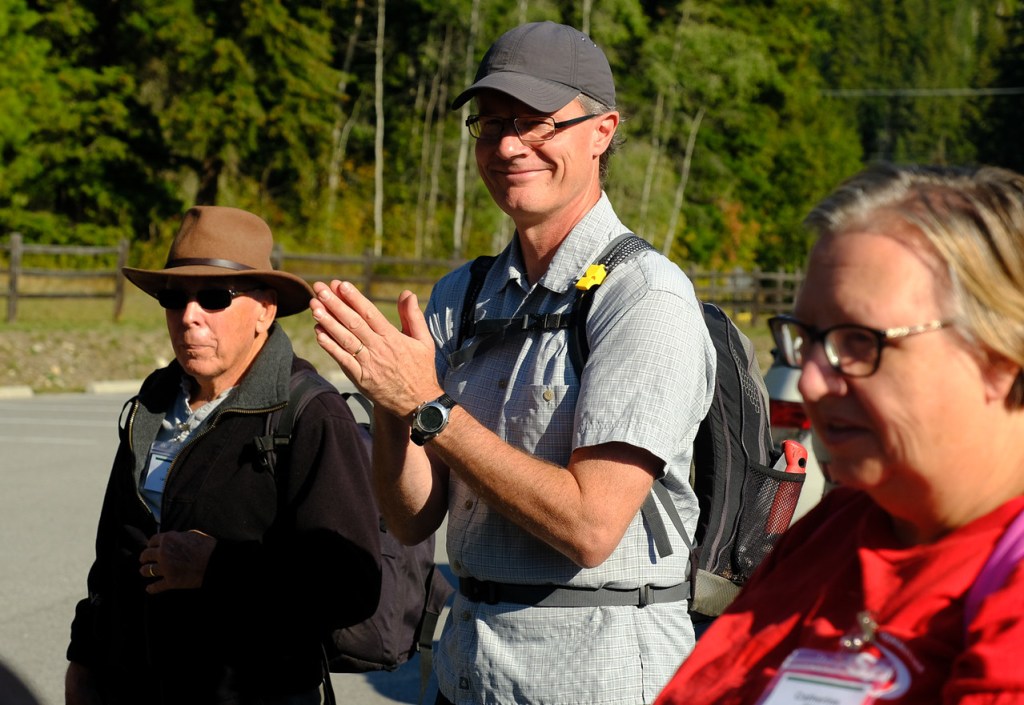
Phil McIntyre-Paul is practically royalty in the beautiful Shuswap in the central interior of British Columbia. He helped create the Shuswap Trail Alliance more than two decades ago. Over that time, he has helped nurture more than 350 greenway trail projects – drawing in fifteen Indigenous and non-Indigenous communities, three levels of government, community groups and businesses. His trail-blazing work draws on four values: proactive collaboration, cultural respect, community building and care for the land.
Phil is not just about “walking the walk.” A former staff member of Sorrento Centre, Phil has returned year-after-year, decade-after-decade to lead groups of people on week-long pilgrimages along Shuswap trails called “walking on sacred ground.” His pockets stuffed with inspirational sayings, Phil engages body, mind and spirit in a literal and spiritual journey.
So, it is hardly surprising that our own Shuswap royalty would be awarded the King Charles III Coronation Medal at a recent ceremony with Mel Arnold, Member of Parliament on March 07, 2025. The medals have been presented to worthy persons across Canada, Great Britain, Australia, and New Zealand to honour distinguished public service and commemorate the coronation of King Charles III in 2023.
“I was very honoured and overwhelmed,” says Phil, recalling the phone call he received just days before the official presentation ceremony. In typically humble fashion, he immediately adds that “all of that work [with the trail alliance], it has been a team effort.” It’s true that most everything in life that is of enduring value is the collaborative work of many, and it is also true that even the best of teams requires lively and wise and spirited leadership.
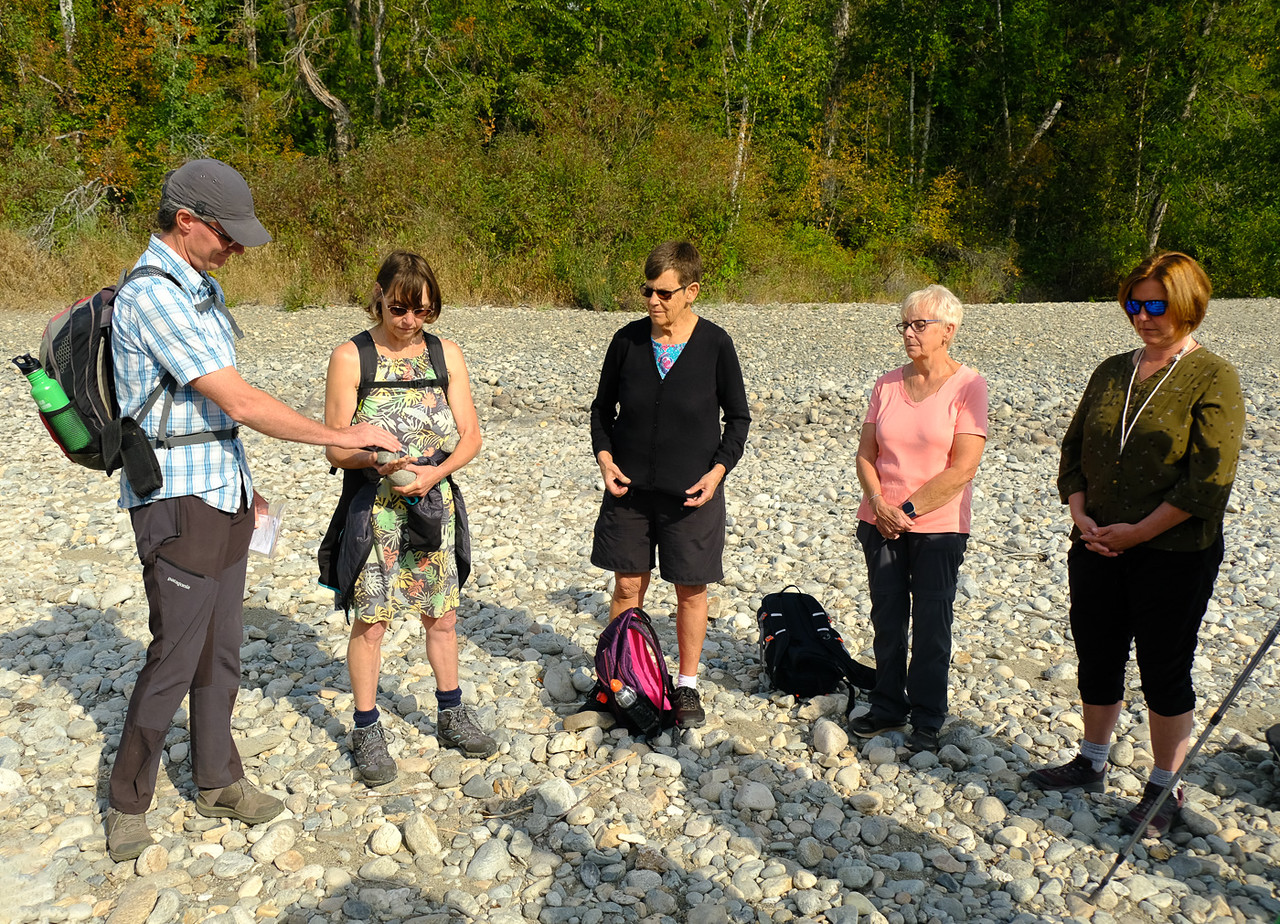

Phil boils down decades of action and leadership into a few, deceptively simple phrases: “recognizing our kinship with the world”; “getting people on their feet, walking, moving, engaging”; “taking care of each other in this place where we live”; and “taking care, so that generations can live here for a long, long time.”
His words bring to mind some words from Harmony: A New Way of Looking at the World, a book written by King Charles III when he was still known as HRH The Prince of Wales. The Prince describes his book as “being aware and alive in this extraordinary universe” as he covers an extraordinary range of topics from climate change to human culture to the mating habits of the albatross. The book’s unifying thread is the need to abandon a soulless modernity for a traditional spirituality,” according one Guardian reviewer.
Reading this book is like taking a hike with Phil as he reaches into his pocket and pulls out a gem of wisdom, holds it up and allows the sunlight to glint upon it. The Prince (now King Charles III, whose coronation led to the commemorative medal presented to many worthy people, including Phil) offers these words in the closing chapter of his book:
“The better, if not the only, effective course we can take is to see that we are part of the Natural order rather than isolated from it, and to appreciate Nature as a profoundly beautiful world of complexity. This world operates according to an organic grammar of harmony and is informed by the awareness of its own being, making Nature anchored by consciousness. In this way of understanding, life is seen as an interconnected, interdependent function of creation.”
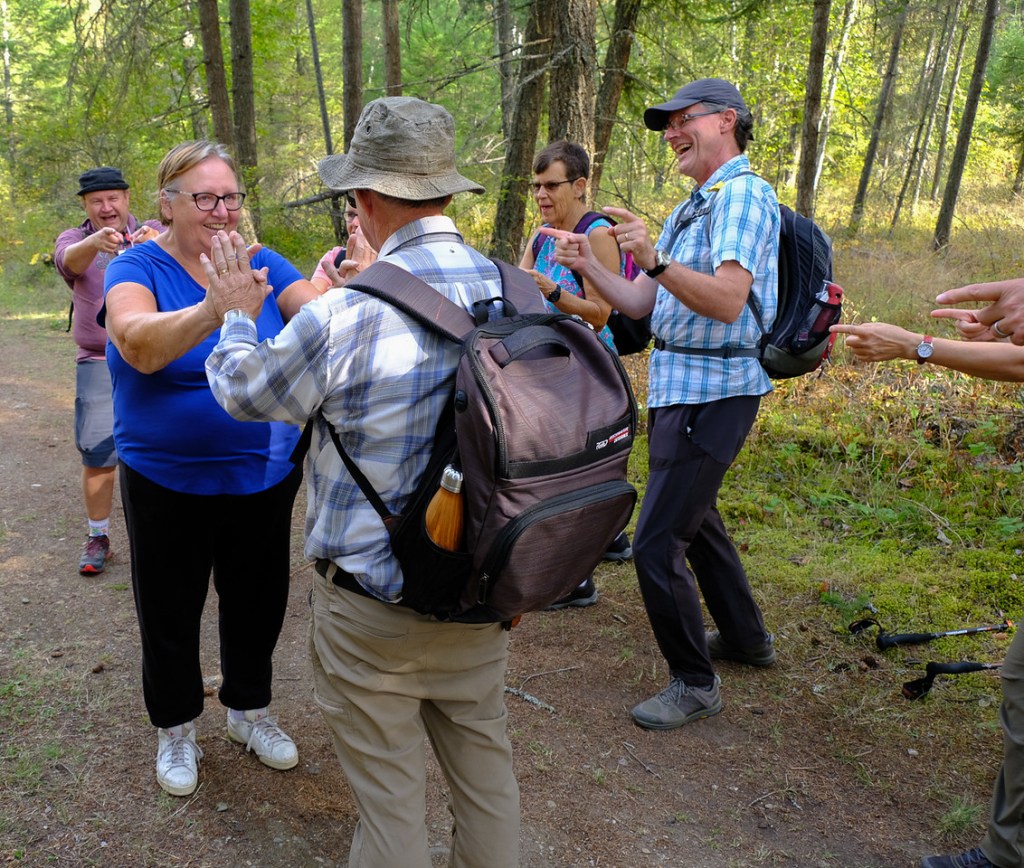
Phil says of his guided hiking events: “This idea of our walking in the land is a way of entering it and moving into a closer relationship with each other, and also with the landscape and the land.” He fuses the physical act of movement with the spiritual act of contemplation. He points to the labyrinth on the grounds of Sorrento Centre as an example of the weaving together of action and contemplation, “back-and-forth between the cerebral and the contemplative.” Put most succinctly, Phil says the work of the trail alliance and of his own guided hikes is a call to action: “Let’s take this time to pay attention.”
Fear of climate change and anger at the other – these are two powerful motivating forces in our world today. And with them, comes an urge to withdraw from the world and from each other. But there is another way to engage with each other, with the Divine and with the entire natural world, says Phil. “The point of life is not about retreating from the world, it’s about paying attention to the very place that your feet place you.”
Sometimes, in the moment, that place is not pleasant. Phil recalls a contemplative canoe retreat with the wonderful Cynthia Bourgeault that started with an infestation of mosquitoes. “Of course, it’s really hard to get into the mosquitoes,” says Phil. As the days passed, people on retreat became more comfortable with the bugs: “everyone’s just become quite comfortable with that as part of this reality, as part of this ecosystem.” And, as the week ends, participants experience a sense of sadness as they prepare to leave each other, their wilderness experience and even the mosquitoes. The closeness of the experience, and the openness of each person to the other, created powerful connections.
“I remember someone saying, I don’t know how I will find time to pay attention as closely, with this kind of openness, because, you know, I’m busy… I’ll be back home with the kids and everything else again” recalls Phil. “Cynthia would say the invitation here is not to retreat, it is not an invitation to withdraw from the world we live in, but to pay attention to that world. This approach is a way of paying attention to the world that you are in.” The physical, mental, social, and health benefits of paying real and deep attention, of living deeply into each moment, are substantial. And so too, are the spiritual benefits, says Phil.
He emphasizes that this way of living in the world, of walking along the trails and paying attention to the realities of the moment, is not about retreating from the issues and challenges of the world. It’s not about contemplation as one way of living, and action as an entirely separate and different way of living. “It’s not about retreat; it’s about a complete entering and an offering,” says Phil.
“Good trail designers create a pathway to guide your attention away from your feet and to the landscape that’s around you, so you become aware of where you are.” “That way you’ll start to appreciate the place. and maybe fall in love with it a little bit and be ready to do something when something is needed,” he says.
“So, even in planning a trail, at it’s very core, we’re trying to design an invitation to pay attention and fall in love with the planet so that we can learn to take better care of it and of each other,” says Phil.

The Rev’d Michael Shapcott is honoured to be a friend and colleague of Phil McIntyre-Paul. He serves as Executive Director of Sorrento Centre, an Anglican retreat and conference centre in the South Shuswap region of British Columbia.
 Take Note - Reflections on life, music, politics, retirement and more by Ken Gray
Leave a comment