A sermon for the congregation of St. Saviour Anglican Church, Penticton BC on the fifth Sunday in Lent, April 6th, 2025 — The Very Rev. Ken Gray
It is said by those who teach writing that every paragraph should start with a strong opening sentence. In A Tale of Two Cities, Charles Dickens opens with “It was the best of times, it was the worst of times, it was the age of wisdom, it was the age of foolishness, it was the epoch of belief, it was the epoch of incredulity . . .” Joseph Heller opens Catch 22 with “It was love at first sight. The first time Yossarian saw the chaplain he fell madly in love with him.” In today’s Gospel passage, Luke begins his narrative with these evocative words:
“Six days before the Passover Jesus came to Bethany, the home of Lazarus, whom he had raised from the dead. There they gave a dinner for him.” (Luke 12:1-11)
In the space of a few lines we learn of place, time, event, personality, and community. Our story returns us to Bethany, a small Judean village close to Jerusalem, the home of Martha, Mary, and Lazarus (who died but has recently been restored to life by Jesus). Bethany is the setting for several biblical events: The interrogation of John the Baptist by the pharisees (John 1-19-46); The raising of Lazarus from the dead (John 11:1-46); The entry of Jesus into Jerusalem on Palm Sunday, which Jesus begins near Bethany (Mark 11:1); The lodging of Jesus in Bethany during the following week (Matthew 21:17); The dinner in the house of Simon the Leper, at which Jesus was anointed (Matthew 26:6-13); and finally, Before the Ascension of Jesus into heaven (Luke 24:50).
Bethany stands at the crossroads of the unfolding Gospel story, more often and significantly than I initially realized. It is a place of retreat for Jesus, a place of significant scriptural witness, a place of special and intimate community distinct from the fellowship of the disciples and other followers. For us readers and hearers as we continue through our Lenten journey it is a place of rest, of breath-taking prior to the events of Palm Sunday and Holy Week.
“Martha served, and Lazarus was one of those at the table with him. Mary took a pound of costly perfume made of pure nard, anointed Jesus’ feet, and wiped them with her hair. The house was filled with the fragrance of the perfume.”
If it is sometimes suggested that the “devil is in the details” I suggest that sometimes grace is found there also. Today we learn in detail about the wiping of Jesus’ feet, a lovely, intimate gesture, not with water as on Maundy Thursday, but with costly perfume of pure nard” — Nard, a perfume or scented oil derived from the spikenard plant that was used for anointing and burial rituals in biblical times — a pre-meditated physical offering of comfort, respect, and as Luke understands it, a pre-burial ritual.
This particular olfactory detail got me thinking, or more properly, sniffing around. “The house was filled with the fragrance of the perfume” To me, it’s an important detail. It was a blessing not just for Jesus, but for all those in the house at the time.
Throughout history we Christians have spent a lot of time describing what we see, what we hear, what we can touch, what we feel. We spend less time on what we can smell — there are however, exceptions.
Elsewhere in John’s Gospel, again at Bethany, Lazarus had died and was sealed in the tomb for days. Standing outside the tomb Jesus asks that the stone be rolled away. Quoting the King James text (as it has a particular linguistic punch to it): “Jesus . . . groaning in himself cometh to the grave. It was a cave, and a stone lay upon it. Jesus said, Take ye away the stone. Martha, the sister of him that was dead, saith unto him, Lord, by this time he stinketh: for he hath been dead four days.” (John 11:38-39)
We often refer to smells when they are bad — consider reports of mass deaths in disaster or war zones. What about smells during experiences of great pleasure, even beauty. As Kathie and I drove into the parking lot at Sunoka Beach the other day there was a beautiful, lingering odour wafting through the trees. I thought, maybe it’s a peat bog, or poorly managed compost. Well, you can guess . . . it was Marijuana.
We don’t use “weed” in church, at least not here in Penticton. As I understand it, worship at St. Saviour’s rests comfortably within broad-church Anglican tradition. I suspect that former rectors named Peter, Randy, and Nick may have wished to move liturgical practice a little “higher,” that is incorporating “bells and smells” within worship. This is not my tradition, and frankly incense drives my allergies berserk. Having visited Africa however I have experienced the very best of bells and smells (abbreviated “BS” by some critics).
We protestants, myself included, in our public worship have tended to rely on text, speech, and vocal expressions of the Gospel, accompanied by visual imagery and the sounds of beautiful music in many styles. In some places we have incorporated physical gestures (fortunately most people have by now recovered from the shock of the “passing of the peace”). We have not explored the sensation of smell however, except in a limited way. Maybe we should . . .
One year, while still working at St. Paul’s Cathedral in Kamloops we could not find any holy oil in the vestry for use in the evening liturgy’s anointing rite. The bishop ran over to the drug store and found some Lavander oil. She quickly blessed it, and we were in business. The smell passed gently through the evening air, a richly present blessing to all. “The place was filled with the fragrance of the perfume.”
Concerning end-of-life rituals, knowing that the first sense to depart from the nearly-departed is hunger and appetite, such a loss is likely triggered by the loss of a sense of smell.
Long-COVID sufferers often report the loss of both taste and smell as enduring symptoms. Try eating your roast beef and Yorkshire pudding and gravy without taste and smell. It’s like watching someone eat a sandwich on Zoom.
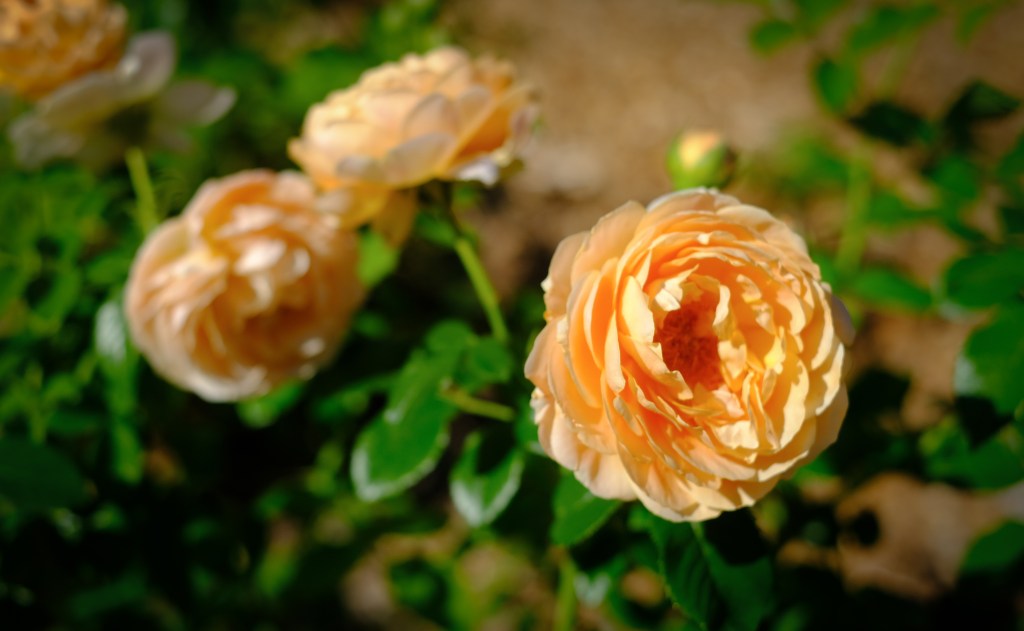
In a more positive sense, the season of Spring is fast approaching. Despite my allergies (no Easter lilies for me please), I love nothing more than to smell the springtime forest. On the coast, I love the smell of the ocean beaches — waterlogged drift wood and drying salted kelp. And of course, you should all travel up to Summerland to the research station ornamental gardens where you will soon be able to “stop, and smell the roses.” The image can be taken both literally and figuratively.
This popular phrase translates well into Jesus’ words to Mary. Regardless of circumstance, history, current events, life-opportunities, “You always have the poor with you, but you do not always have me.” Jesus claims a place in our love, in our longing, and in our lives, in our laying back and our lunging forward. May the fragrance of love soothe and strengthen us, now and always especially in today’s chaotic times.
May we never forget to stop, and to smell the roses — of love, and truth, and compassion. Amen.
 Take Note - Reflections on life, music, politics, retirement and more by Ken Gray
Great way to begin the day….thanks Ken.
LikeLike