Poems are part of me, when I can remember them. As I age I find it harder to remember texts whether longer or shorter. Some years ago I used to proclaim the Christmas Gospel (John 1:1-14) while processing through the church, reciting from memory. It was an excellent discipline with a particular dramatic effect. Can’t do it now, without potentially blasphemous errors.
Writing in the New York Times a few days ago, Melissa Kirsch describes her own experience of memorizing poetry.
“Perhaps because I started memorizing poems early, before I was forced to do so in school, I never perceived the process as onerous, but rather as a fun challenge, a way to take something I loved and make it a part of me.”
I think she’s on to something. I have previously written that poems deserve to be performed to be fully appreciated. Now I would add how memory enhances the experience at least for the poet or performer.
Attending a small boys school in Victoria from grade three until grade seven, each Wednesday afternoon after lunch we had Repetition class. We were each charged with standing up front of the class to recite from memory a short poem or passage. For the life of me I cannot remember what I recited but through Repetition I was introduced to a wide variety of serious classics and humorous ditties. For instance:
The Walrus and the Carpenter
Were walking close at hand;
They wept like anything to see
Such quantities of sand:
If this were only cleared away,’
They said, it would be grand!’
The Walrus and the Carpenter — Lewis Carroll
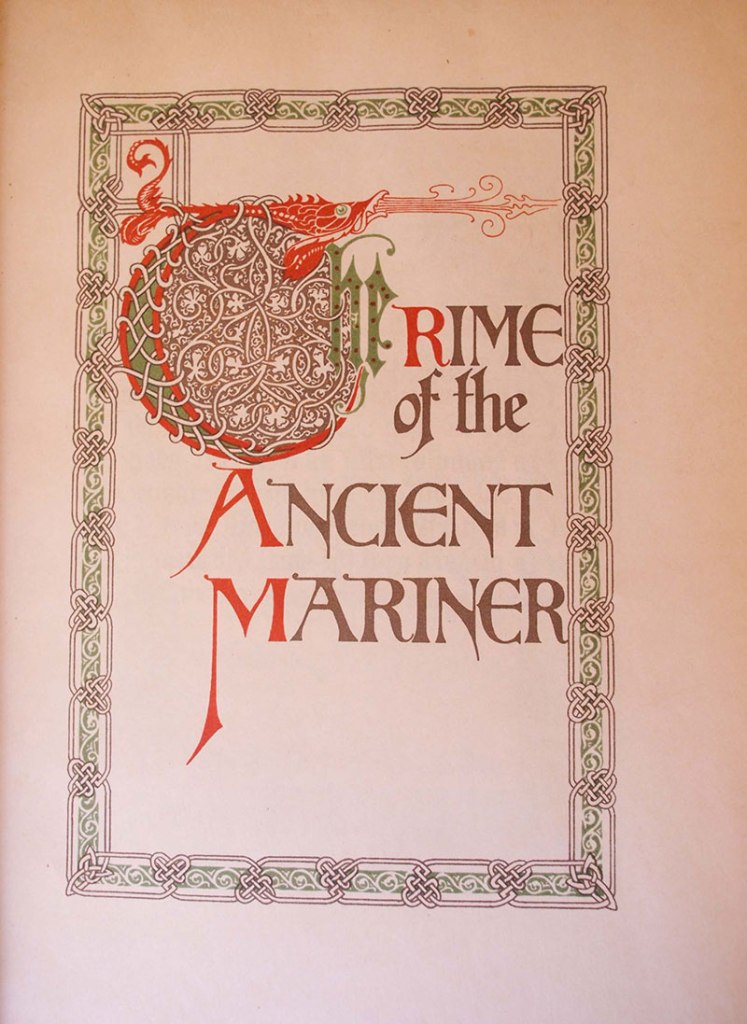
Possibly ambitious for young boys to master, some did attempt portions of the Rime of the Ancient Mariner.
It is an ancient Mariner,
And he stoppeth one of three.
‘By thy long grey beard and glittering eye,
Now wherefore stopp’st thou me? . . .
He holds him with his skinny hand,
‘There was a ship,’ quoth he
‘Hold off! unhand me, grey-beard loon!’
Eftsoons his hand dropt he.
Rime of the Ancient Mariner — Samuel Taylor Coleridge
At countless church variety nights in many places through many years persons would often stand up and recite their personal favourites:
There’s a famous seaside place called Blackpool,
That’s noted for fresh air and fun,
And Mr and Mrs Ramsbottom
Went there with young Albert, their son.
A grand little lad was young Albert,
All dressed in his best; quite a swell
With a stick with an ‘orse’s ‘ead ‘andle,
The finest that Woolworth’s could sell.
Albert and the Lion — Marriott Edgar (Popularized by the British humorist Stanley Holloway)
Living at one time in Northern BC and Yukon Territory myself, I always enjoy the poems of Robert Service:
There are strange things done in the midnight sun
By the men who moil for gold;
The Arctic trails have their secret tales
That would make your blood run cold;
The Northern Lights have seen queer sights,
But the queerest they ever did see
Was that night on the marge of Lake Lebarge
I cremated Sam McGee.
The Cremation of Sam McGee — Robert Service
More formal texts appear in church liturgies. Only yesterday I was stopped cold by these lovely words:
Life-imparting heav’nly Manna,
stricken Rock, with streaming side,
heav’n and earth with loud hosanna
worship Thee, the Lamb who died.
Hallelujah! Hallelujah!
Ris’n, ascended, glorified!
(Lord enthroned in heaven’ly splendour – COMMON PRAISE 84 – Final stanza)
To me, this text is hugely evocative and brilliantly expressed. It works so well when accompanied by the tune ST OSMUND. This coming week I will preach on the theme of “Lamb” and will definitely include the following:
Little Lamb who made thee
Dost thou know who made thee
Gave thee life & bid thee feed.
By the stream & o’er the mead;
Gave thee clothing of delight,
Softest clothing wooly bright;
Gave thee such a tender voice,
Making all the vales rejoice!
William Blake
There is certainly no shortage of texts which deserve respect, memorization, and performance. We just have to do our bit — engage the text, memorize it, and take it inside us. In these still early days of the 21st century, we are constantly bombarded with so much information, opinion, invective, and manipulation. We would do well to find ways to slow down. Poetry may provide a welcome relief, an opportunity to fill our personal hard-drives with truly life-giving data and delight. Melissa Kirsch continues:
“I love that, amid the practical information and persistent worries and memories good and bad, my mind’s archive contains these bits of beauty, lyrics that float up into consciousness, lovely echoes.”
A final word then, from Dr. Seuss:
You have brains in your head.
You have feet in your shoes.
You can steer yourself
Any direction you choose.
You’re on your own. And
you know what you know.
And YOU are the [one] who’ll
decide where to go.
 Take Note - Reflections on life, music, politics, retirement and more by Ken Gray
Love this! Memorization was such an important part of life when I was growing up … from youngest childhood at home, at church, and then at school. Spoken, in songs, written … And when my kids were growing up, it seemed I had a rhyme for every event … which as they grew older, the kids found somewhat embarrassing, LOL! Now, in my older age when I too often tend to wake in the wee hours of the morning, I find reciting (silently) poetry and Bible verses and song lyrics and such to be a good way to drift off to sleep again! A story about childhood memorization even made it into my book, A Summerland Stories Scrapbook 🙂
LikeLike