The Road to Santa Marta, by Emile Theresa Smith – Mad Love for the World
Daniel Maestre invites me to sit across from him beneath a giant mango tree. The wide branches above shade the whole area beside the kankurua, the sacred house. Three months ago, arsonists destroyed the original kankurua. The new house is almost finished; Daniel and his companions have framed the circular structure and built the rafters. In a few days they will thatch the roof and fill in the walls with mud.
Under the thick tree, with the occasional thud of a falling fruit, we say two prayers: the first to release all the harm and hurt we may carry: fears, resentments, anger. We turn and leave these in the earth. Then we call up the memory of our ancestors. All those named and unnamed, human and other, who have come before us, those who stood on this holy land, cared for its waters and its living beings, fast and slow. From insect to ancient stone, everyone is noted.
Only then we pray for those about to gather — government officials, religious and community leaders, environmental activists. The city of Santa Marta is around the other side of these tall, snow-tipped mountains. The Sierra Nevada, so called by the Spanish invaders 500 years ago, is the last reach of the spine of Abya Yala, the northern-most tip of the southern continent. This place is known to the Kankuamo, the Wiwa, the Arhuaco and the Kogui, the four Indigenous nations who have lived here forever, as the Heart of the World. In a few days 55 countries and 1500 people will come for the first conference planning the transition away from fossil fuels. The world is burning. The seas are rising. The ice is melting. Life is dying.
“To end the wars, to end the greed, the violence, the suffering, we need to go and do ceremony in all the sites of wrongdoing,” says Daniel, who is from the Kankuamo nation. I nod. I’m not sure I understand everything he is saying, but there is something deeply right. How many meetings have there been? COPs and others, how many studies, campaigns, conferences —and still the destruction carries on? Can we do a ceremony of healing and repentance: in the Niger delta, in the Ecuadorian Amazon, in the reeking tar sands in northern Alberta? His words root in my heart. I give thanks, as I take my leave from him, his wife Cenexan, their children, the community on the banks of the Rio Seco. The giant mango trees, the well-cared for dogs, the angry duck with a red bill. The kankurua under reconstruction.
Early the next day I leave Valledupar (which I discovered to my surprise is the accordion capital of the world) to circle the mountains heading to Santa Marta. I take the wrong bus and find myself on a local chiva, going to Santa Marta indeed, but roaring then stopping for again and again from place to place. Instead of four hours it takes almost eight. We visit every little dusty town and wander up the plastic-littered road through the banana plantations. Ordinarily I would have loved this: eating snacks sold on the side of the slow highway, spending time chatting with folks, bumping along, seeing things. But my team is waiting for me in Santa Marta, and my phone is dead. I cause some considerable distress for which I am sorry.
These are anxious days in Colombia, one month out from presidential elections. Colombians will decide: stay with the current government, the Pacto Historico, and keep on this path, healing deep hurts and overturning traditional power. Or back to the strutting, the threats, and the violence of the strongmen that held power for decades (centuries) before.
Dusk settles. My bumbling bus skirts Colombia’s largest coal export terminal, then at last we arrive at the station in Santa Marta. Right away I am in a cab off to the planning meeting. An ever-growing group of us, from many international and local faith networks, have been working for months to create this event to run alongside the governments conference: an inter-faith gathering for the just transition away from fossil fuels. It hasn’t been easy. Many, many zoom meetings. Missed communications, confusions, misunderstandings. Details. How to bring us all together? Where to hold it? Who to invite? Who will catch the costs? But in the end, it works. Seven or eight of us key organizers are here the night before. Our conference will have Catholics, Protestants, Buddhists, Jews, Muslims, Indigenous and Afro-traditions all saying what matters most is being together to fight the root causes of the climate crisis.
The View from Faith
This is about change at the cosmological level. How do we see ourselves as human beings in the universe, and how are we going to act? Nothing less. Christian organizations and networks, from the Catholic Church to the ecumenical World Council of Churches, the World Lutheran Federation, in addition to representatives from a wide range of faith traditions, have been going to international gatherings, the COPs and beyond, declaring that we have something particular to say, something to add to the discussion, or even to provoke the discussion to go further.
The irrefutable science is here: human actions are causing the climate crisis. The technology exists to transform our way of living on the earth. What then still needs to happen? Political will? A wider consensus? The catastrophe that is upon us is one of human decision, driven by a tiny groups’ insatiable greed. All faith traditions are unified in our challenge: human lust for material accumulation must not be the driving principle of our species. We will vigorously and directly challenge this cornerstone of our current global culture.
Pope Francis’ encyclical, Laudato Si’, came out in 2015. It was an offering — a radical shift for the church, inviting Roman Catholics — and all of us — to transform our way of relating to the created world. Laudato Si’ names the Earth as our Common Home, a living communion emanating from the love of God. Francis declared what Indigenous communities have known forever: the earth is not a product to be bought, sold, carved up, exploited. The whole of creation is sacrament.
In further meetings, particularly the Synod on the Amazon in 2019 (which I attended, as an observer), Pope Francis invited to world to fall in love again with the wonder of our world, its waterways, and its peoples. His second creation encyclical, Laudate Deum, published just before the Amazon Synod, declared the climate emergency the result of structural and planetary sin. A kaleidoscope of crises caused by human actions. Fossil fuel production, and consumption, are the main drivers (!) of climate change.
In the decade since its launching, Laudato Si’ has moved off the page from a document to a movement. Other movements have taken up the call: the World Council of Churches, in 2025 declared a decade for climate action, the Tapiri gathering at COP-30 in Belem, Brazil, centred the voices of those who have pushed to the edge. Communities of faith have put the fight for the life of our common home at the heart of our vision.
One Day in Santa Marta — and then More
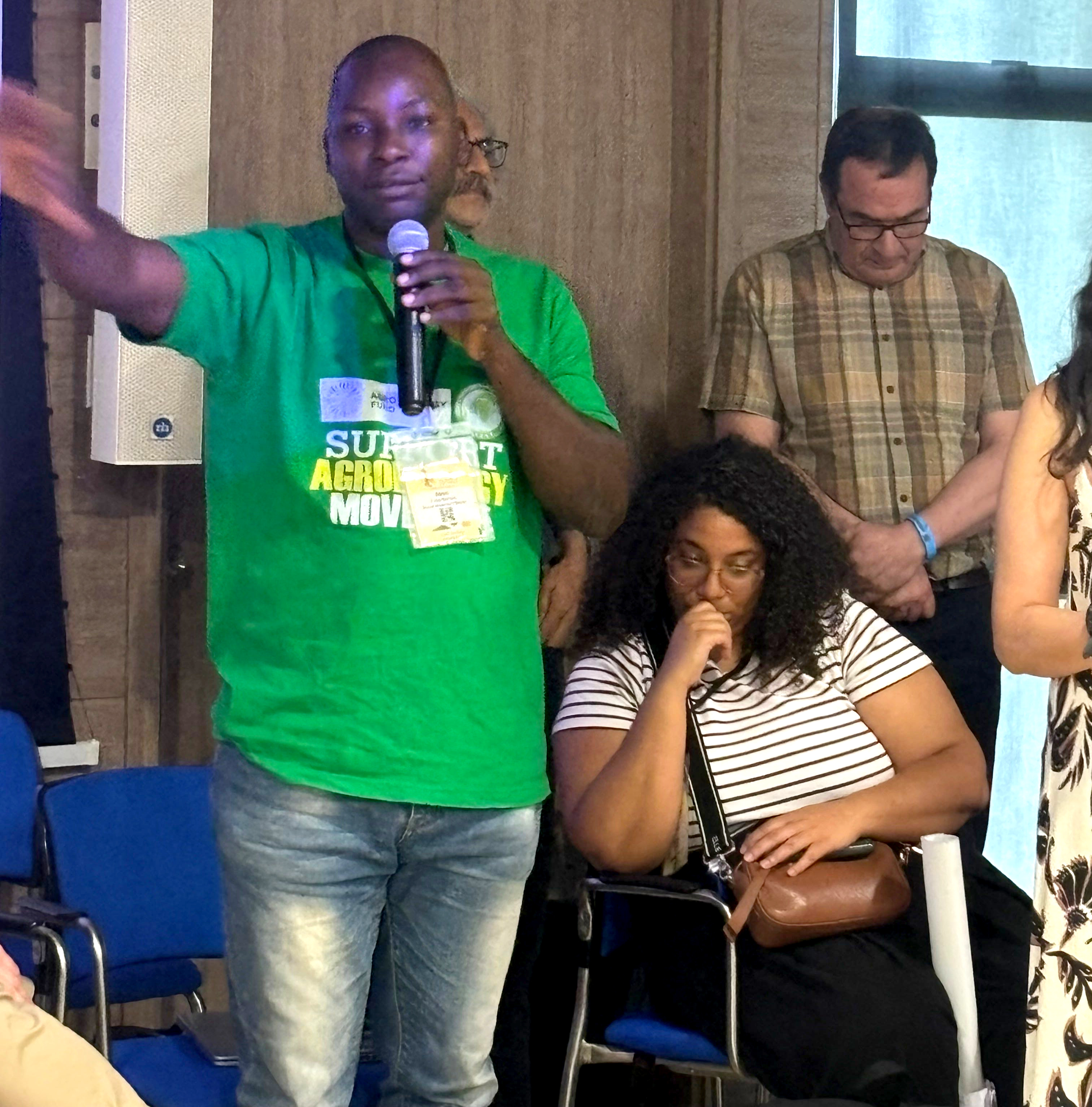
In Santa Marta our one day gathering brings together the voices of youth, elders, Indigenous leaders, bishops, lay women. I am given seven strict minutes to speak. I say: when Jesus cleanses the temple he shouts, “You have converted my Father’s house into a marketplace.” We are here to declare: Our Mother, our Grandmother, our house is the whole world. It is not for sale. The mountains are not for sale. The rivers are not for sale. The oceans are not for sale.
The best part of our gathering — it was organized 90% by networks of faith from the Global South. Not the north. Not the faith NGOs. Christian activists, Buddhist monks, Indigenous leaders, mostly Colombians.
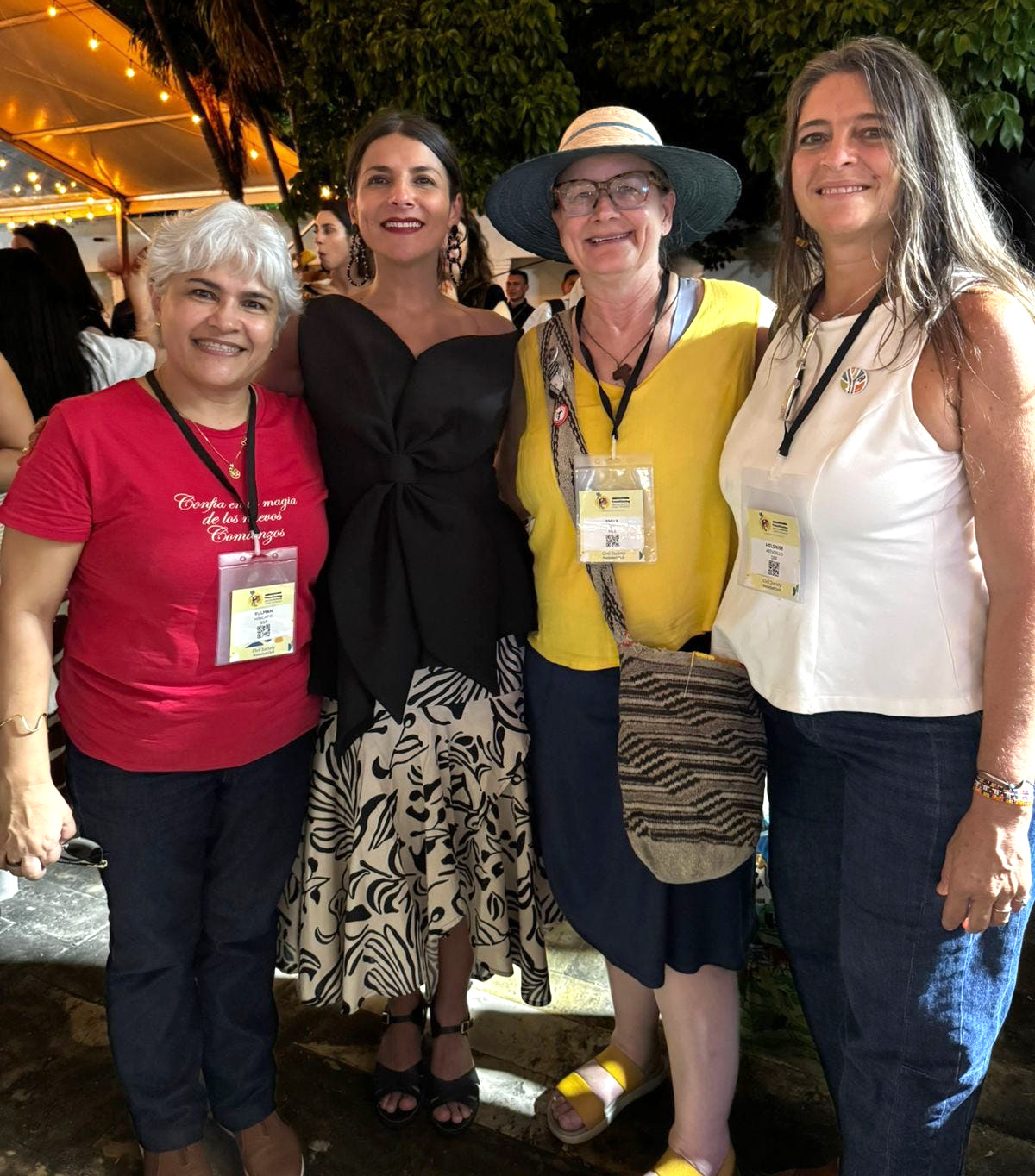
At our gathering we hear that one individual will go forward to the summit with officials from the Colombian government. My name is suggested; I won’t let it stand. But after the vice-minister of the environment, visits our meeting things change. We are given space for four of us to go forward. Two Catholic laywomen and two ordained women from different traditions, Presbyterian, Anglican. It turns out we are a perfect team. Superheroes with different qualities. Sulman is detail oriented; Rev. Neddy is a theological powerhouse; Madeleine has a framework of how these big meetings work. She speaks treaty language and has a deep understanding of the push towards creating a binding document. Then there’s me. I bring a commitment to meaningful language around our world and the role of the holiness imbedded in our work. In Mad Love with the World. We should have capes. The four of us, and other women from the Bambu collective, eco-feminist theologians, from Panama, Chile, Brazil, huddle in a room, load ourselves with coffee, and work on a collective statement of faith communities.
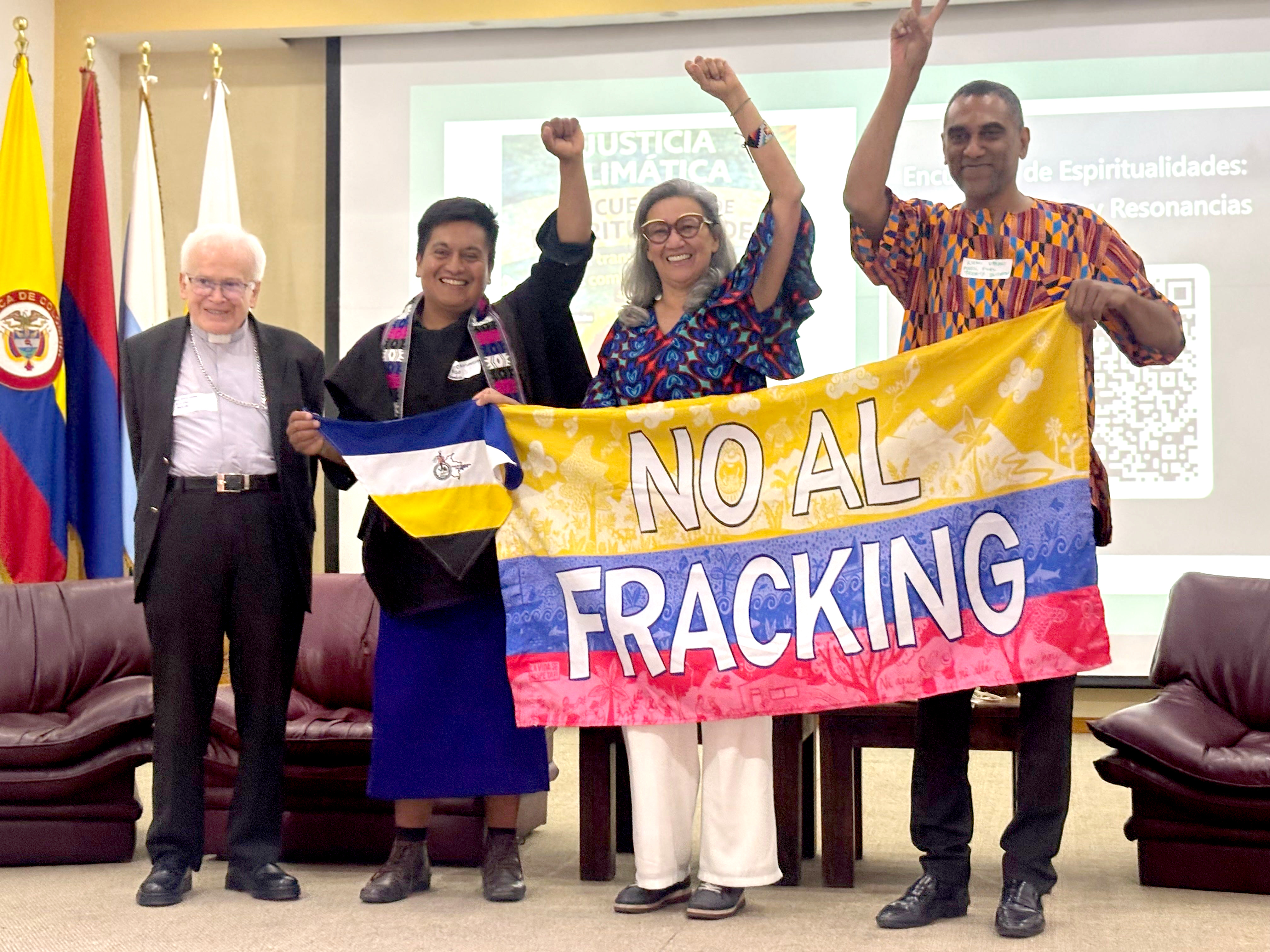
The next day we head to the university, and into the summit. The four of us, the inter-faith delegation, are in with the social movements sector. We meet all day. Stories after stories of communities rising to defend the Earth. Then we choose one woman — a Colombian anti-fracking activist — to be our representative at the full inter-governmental meeting over the next two days. Then we choose one technical support person, an Indigenous leader from the US. And we select 12 observers. It can’t be me, I think, until my three fellow compañeras, give me a sharp nudge. My hand goes up. There we go. All four of us will be at the high-level government conference.
The next two days whirl by. Countries give three-minute presentations each. Some are brilliant — Panama, I hear the voice of Jocabed Solano, Guna activist and ferocious eco-feminist theologian. Some are heart-breaking — Tuvalu, in the Pacific Ocean, facing the rising seas. Some are disgraceful — Canada, busy building hydro-electric dams, and ‘moving’ towards phasing out coal. Nothing said about the recent pipeline promises across the country, or the fracking chopping up the earth in northern British Colombia.
In the end Santa Marta was another meeting. Different from the endless turmoil of the fossil-fuel lobby-embedded COPs. In the end hopeful, necessary. But not revolutionary. Not yet. I am afraid we will burn up before we figure it out. Or sink beneath the waves. But what else can we do? Keep fighting.
La Reposta Somos Nos
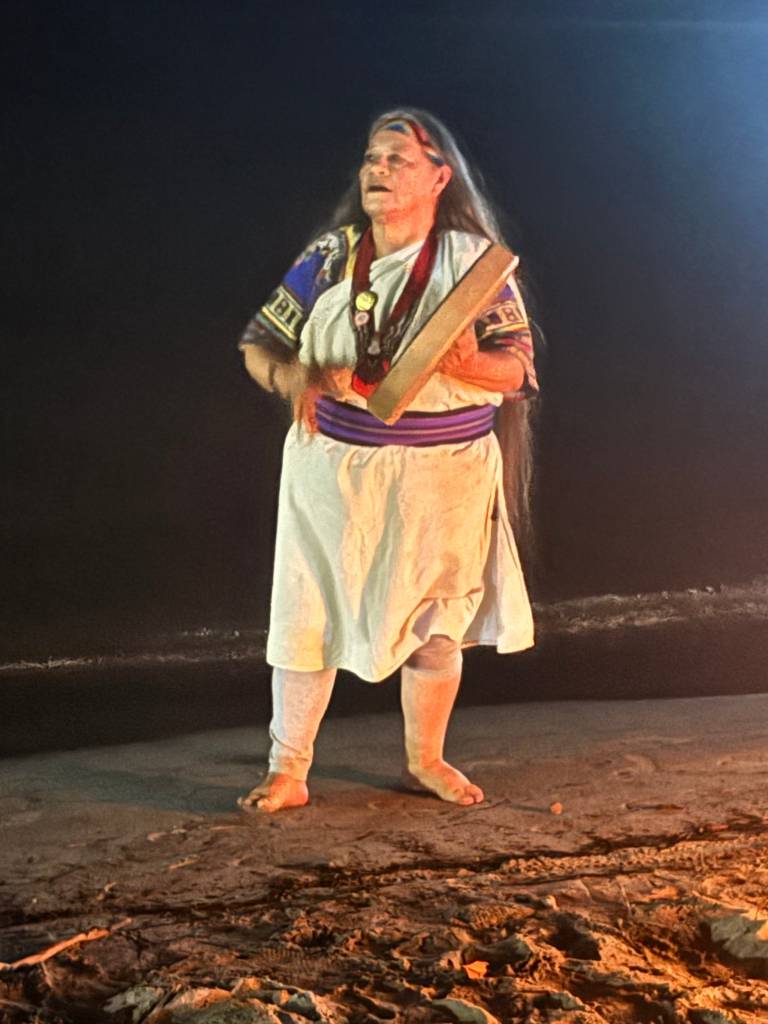
On the last night before part of our delegation returns to Bogotá the Muisca elder, Blanca Nieves, leads some of us to the ocean. Earlier in the day we had held a ceremony, inviting us all to pray, with earth, water, wind and fire. But we had no fire, no candle, matches, lighter. (No one smokes anymore!) So, we did without. Not this time.
On the beach, in front of the stretch of hotels, we lay out the elements. We stoke a roaring, dancing fire. We pray. Blanca has us turn and face the ocean. “Our mother’s uterus,” she says. “She calls and calls us into right relationship. To love one another. To care for the little ones. To tend the earth. To honour the water. To live differently. To calm our hearts. To end our greed and grasping. Amen.
La Reposta Somos Nos. La Respuesta Somos Nosotros. We are the answer. Or we could be if we return to our mother’s womb.
As we kneel around the fire the beach police come. Roaring over on four-wheeled sand machines. No, no, no fires here. We explain. To no avail. Didier, a Muisak leader takes charge, calmly, of police-people relations. Yes, yes, he says. We move to push the coals deep, and to cover the flames with sand. We all sit quietly. The police leave. When we were sure they had made their way back to tourist protection, we uncover the flames and finish praying.
Amen.
Visit the takenote.ca HOME page for a colourful display of hundreds of other blogs which may interest or inspire you


Leave a Reply