A sermon for the congregation of St. Stephen, Summerland
Sunday, November 15th, 2026 – Twenty-Fifth Sunday after Pentecost
|The Very Rev. Ken Gray
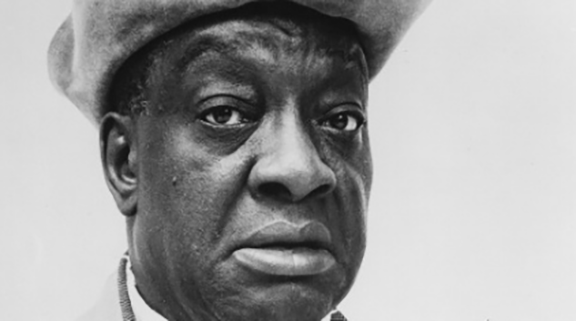
The phrase: “Here comes the judge” was originally created and performed by Black vaudeville comedian Dewey “Pigmeat” Markham (1904-1981) in his courtroom sketch routines. The words form part of a humour sketch. Today’s application however is no laughing matter:
“Deborah, a prophetess, wife of Lappidoth, was judging Israel. She used to sit under the palm of Deborah between Ramah and Bethel in the hill country of Ephraim; and the Israelites came up to her for judgement. She sent and summoned Barak son of Abinoam from Kedesh in Naphtali, and said to him, “The Lord, the God of Israel, commands you, ‘Go, take position at Mount Tabor, bringing ten thousand from the tribe of Naphtali and the tribe of Zebulun. I will draw out Sisera, the general of Jabin’s army, to meet you by the Wadi Kishon with his chariots and his troops; and I will give him into your hand.'”
Pardon a second pop culture reference, this time from Mission Impossible: “Your mission, [Deborah] should you decide to accept it . . .” The story continues:
“Barak said to [Deborah], “If you go with me, I will go; but if you don’t go with me, I won’t go.” “Certainly I will go with you,” said Deborah. “But because of the course you are taking, the honor will not be yours, for the Lord will deliver Sisera into the hands of a woman.” So Deborah went with Barak to Kedesh.” (JUDGES 4:1-7 [8=9])
The rest, as they say, is history. In the end, the “woman” who killed Sisera was not Deborah herself. And in the end, Sisera ended up with a tent peg through his head. Ouch! And in the end, it was Deborah’s courage and her fidelity to God’s plan which accomplished the victory of Israel over its enemies. If you’re like me you are not familiar with the Book of Judges. Writing in The Christian Century Leigh Benish provides some important context:
Although the era of the judges was pivotal in the history of God’s people, this short passage is the only appearance of Judges in the three-year Revised Common Lectionary—and it doesn’t even finish the story it starts! What it does, though, is recall a familiar, recurring pattern: the people mess up, they are punished, they cry out for help, and God provides relief.
Deborah is frequently lifted up as a heroine of the faith, and rightfully so. She was a judge, a prophet, and a military leader. [That’s quite a resume.] When she is identified as “wife of Lappidoth,” this could also be translated as “woman of fire.” Deborah certainly lived up to this designation! The narrator states plainly that she speaks for God, is sought out for her wisdom and judgment, and is a trusted leader. She’s so respected that Barak does not feel confident about going to battle — something God has already commanded — without her.
[. . .]
Deborah’s story offers a powerful reminder that God does not always work in ways we expect. We pray for God’s help, imagining that we already know what God’s answer should be. When we ask for a prophet, we envision a certain look; when we seek a leader, we think they must possess certain qualities or fit a particular mold. [We still seek prophets in the tradition of Mahatmas Ghandi; Martin Luther King Jr., Nelson Mandela, Dorothy Day.] Deborah is just one reminder that God’s people have always been more diverse and capable than our assumptions allow, and the gifts of those God has called are never a surprise to God.
Remembering the caveats named above, what about today’s “women of fire?” I can think of so many.
Sister Dorothy Stang, called by many of the “Angel of the Amazon” was murdered on February 12, 2005. “News of Dorothy’s murder spread quickly across Brazil and then around the world. Her death became a symbol of the violence surrounding land disputes in the Amazon and placed enormous pressure on the Brazilian government.”
Closer to home I think of Toronto-area priest, Maggie Helwig whose book Encampment has put a compassionate face on homelessness: “Think about my friends sleeping outside tonight. Think about them struggling with pointless, almost incomprehensible, systemic barriers which make it nearly impossible for them to find a safe place, aside from those tiny places of safety they create for each other.”
Still thinking in church circles I must name Marinez Rosa Dos Santos Bassotto, Bishop of the Anglican Diocese of the Amazon and metropolitan of Igreja Episcopal Anglicana do Brasil. She is a charming and determined leader of an important area of our Anglican Communion. She was recently named chair of the Anglican Communion Environmental Network with which I continue to minister.
Then there is The Rt. Rev. Marion Budde; she’s the one who implored Donald Trump to be kind to vulnerable persons. She has yet to be invited to the White House for tea. And of course, the first ever female Archbishop of Canterbury, The Most Reverend and Right Honourable Dame Sarah Mullally. She did not arrive at this position as a shrinking violet.
Finally, however, respect must be shown to the late Virginia Briant, longtime resident of Penticton, priest of this diocese and one of the six women ordained as priests in 1976. This year, 2026 marks the 50th anniversary of the first ordination of women in the Anglican Church of Canada. Years ago, I worked with Virginia in her ministry with the Anglican healing ministry, the Order of St. Luke. It is hard for me to reconcile her quiet nature with the image of Judge Deborah, the so called “woman of fire.” Surrounded by a church steeped in patriarchy, Virginia and five others were simultaneously ordained in four dioceses: Cariboo (now the Territory of the People), Huron, Niagara, and New Westminster. In a note sent to this year’s anniversary celebration Primate Shane Parker wrote:
“The ordination of women came about because women and men believed that it was profoundly right from every perspective and through every lens. These people of conviction and courage spoke out, put themselves forward, and made decisions. They took concrete action to discern, to demonstrate and, ultimately, to consecrate. And so, our church was blessed and enriched-and continues to be-by the gifts of priests who are women.”
While the highlights above are admittedly all ecclesiastical, beyond the world of our church there are so many lay and community leaders, male and female and non-binary identified who deserve mention, though time does not allow today. The cost of leadership, especially iconoclastic discipleship is steep, though necessary for life to be shaped by Godly justice. As our church, including this parish, rethink ways of being church in today’s world, let us welcome the leaders we find among and all about us. We will definitely be challenged by their voice and presence; and we will be surprised.
Visit the takenote.ca HOME page for a colourful display of hundreds of other blogs which may interest or inspire you


Leave a Reply