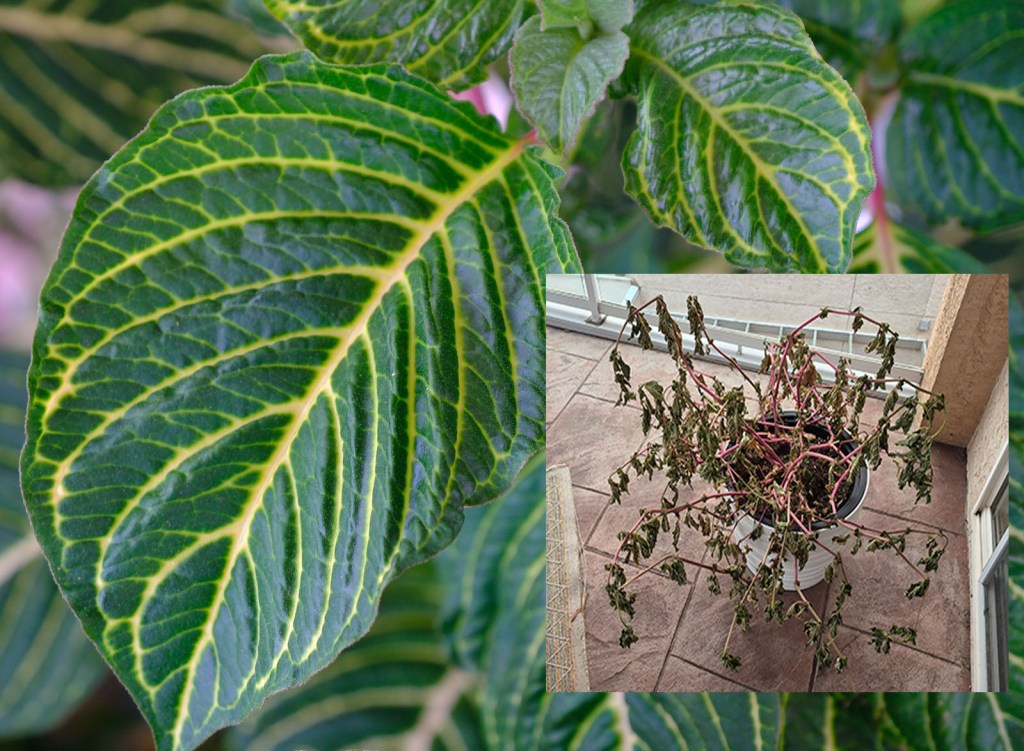
Few people, if any, name their plants; I am likely the only one. I named my Tropical Green Blood Leaf plant with pink stems Larry for no particular reason. The name felt right at the time. I bought him (gender assigned) from a local greenhouse back in the Spring thinking he could fill an important space on our lower patio deck.
Well able to endure the occasional warm, direct sun, he thrived basted with a good douse of water at least once daily. He grew up and out noticeably and quickly, obviously happy to fill the space delighting visitors with a vivid display of yellow veinlike designs atop rich, deep green leaves.
Sadly, Larry has left the deck, a victim of the heat, ash and smoke, starved for water arising from our emergency evacuation caused by the Bald Range wildfire. Our evacuation story is here; other stories can be found here. Compared with others we are very fortunate. There was no damage to our unit with only light clean-up required upon return after thirteen days away.
It is sobering to move through our community (the constantly updated property condition map is here). Data from the District of Summerland Rapid Damage indicate that of the 799 properties inspected to date 26 lots are empty; 2 are unsafe; access to 7 is restricted; 9 and inaccessible; and 42 are destroyed. Similar data from outside the town region are much worse. It seems frivolous, almost disrespectful to think about plants at this time. For many Summerlanders, however, gardening is a passion and a pleasure, a life-giving hobby and for some, a vocation or even profession. Two talented and committed gardener friends shared their return experience with me this past weekend. Bonnie Fulton heads the Friends of the Summerland Ornamental Gardens at the Agrifood Canada Research Station site. Bonnie writes:
“We were permitted access to the Ornamental Gardens Friday; the Gardens will remain closed as long as the alert is in effect. The gardeners are permitted to return on Monday as are four of us. Our irrigation was not interrupted so areas that were on scheduled watering were watered but what was interesting was a newly planted area with drought tolerant and native plants was in good shape. We had been hand watering those daily since they were new plantings and we had yet to install micro irrigation to the area. We perhaps lost a couple of plants but otherwise everything has survived and in some cases thrived. Plants we had potted up for the fall sale were not watered and yet the majority survived. Our veggie beds are looking good. Overall I feel it is a lesson in what is really drought tolerant and what that means. We obviously overwater. Extreme heat leads us to believe the plants are far more thirsty than perhaps they are.
“At home we had turned the irrigation off when we were evacuated. I lost my hanging baskets but my potted plants (petunias, geraniums and such were all alive and with watering have completely recovered. I cut off all the spent and new blossoms on my petunias and have fertilized them; they will be blooming again soon. In my veggie beds I lost lettuce and chard. Carrots, beans, kale, basil, parsley all survived. My tomatoes and cucumbers thrived; they are in half wine barrels on the east side of the house. All the plants in my perennial beds have revived as have the weeds which seem to have thrived! I have a lot of deadheading to do at home and at the Gardens.”
Christina Ripley is one of the founders of the Summerland Community Garden hosted by Summerland Alliance Church in concert with the Summerland Foodbank. Christina writes:
“I managed a quick visit to the community garden yesterday. Ran into some of the club members as well. What a surprise; the winter squash bed, which does not have auto-irrigation, thrived. It is hard to tell how often and how well the irrigation worked. Generally, flowers and veggies fared better than expected. Lettuce . . . well, maybe next year, or winter variety are possible.
At home husband, Doug and I have been replacing lawn with drought tolerant ground covers. While I had been hand watering these areas they did not miss a beat. Almost two weeks without water and they look fine, even great. Makes me think that we tend to over-water in normal times. I have a number of plants in containers; the Swiss Chard and Basil are gone; perennials like thyme and oregano bounced back after a good soak.
We just completed a major renovation of our front yard. We are just a hop, skip, and a jump from the Cartwright Ave. fire lines. Things could have been so much worse.”
Local orchardist, Jan Carlson tends a sizable home garden centrally placed in an orchard near their home which itself escaped destruction; the same cannot be said for their office block, operations centre, and outbuildings. (She and husband, Keith, credit neighbours with saving their home.) Nestled between rows of cherry trees her garden survived unscathed.
Some takeaways from this small sample of return reports suggest that plants are often more resilient than we expect. We likely over-water as some plants stressed by heat and smoke seem to have thrived. As with all farming and gardening, location connects directly with growth and quality outcomes. Finally, with all agriculture both large and small, weather and soil quality are key contributors to success.
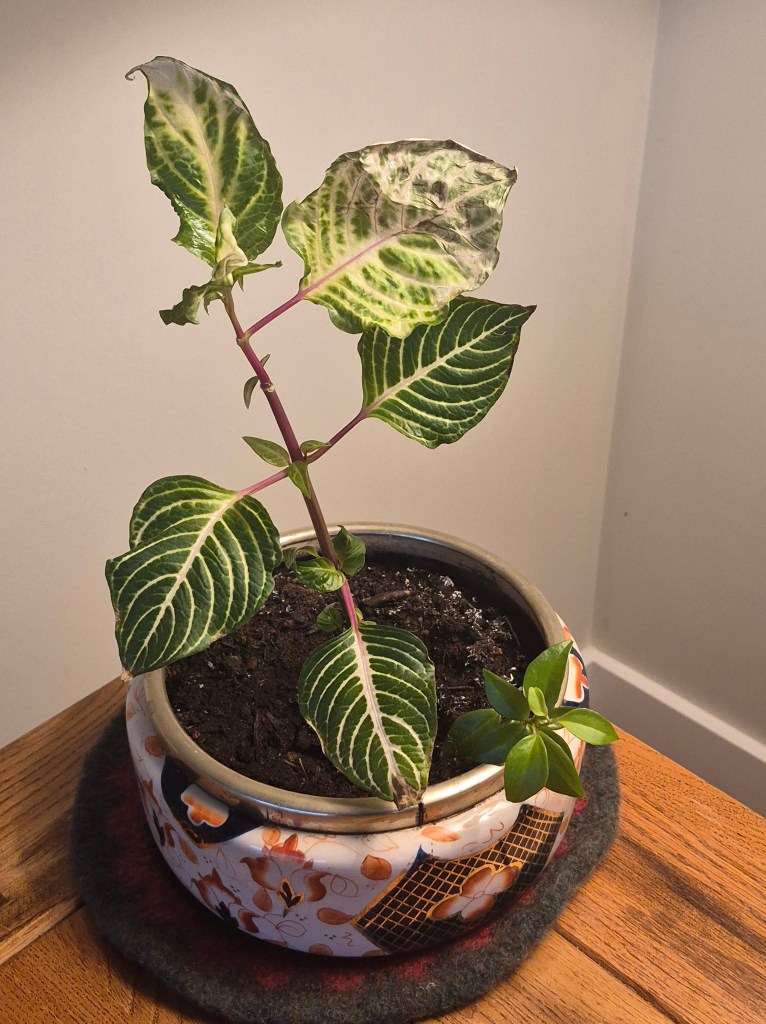
As for Larry, Kathie took some cuttings from him a few weeks ago. Placed indoors, Larry 2.0 was deprived of water for 13 days. His condition points thankfully toward recovery and winter growth. Thanks to all who grow our food and make our world beautiful.
Visit the takenote.ca HOME page for a colourful display of hundreds of other blogs which may interest or inspire you
 Take Note - Reflections on life, music, politics, retirement and more by Ken Gray

Leave a comment