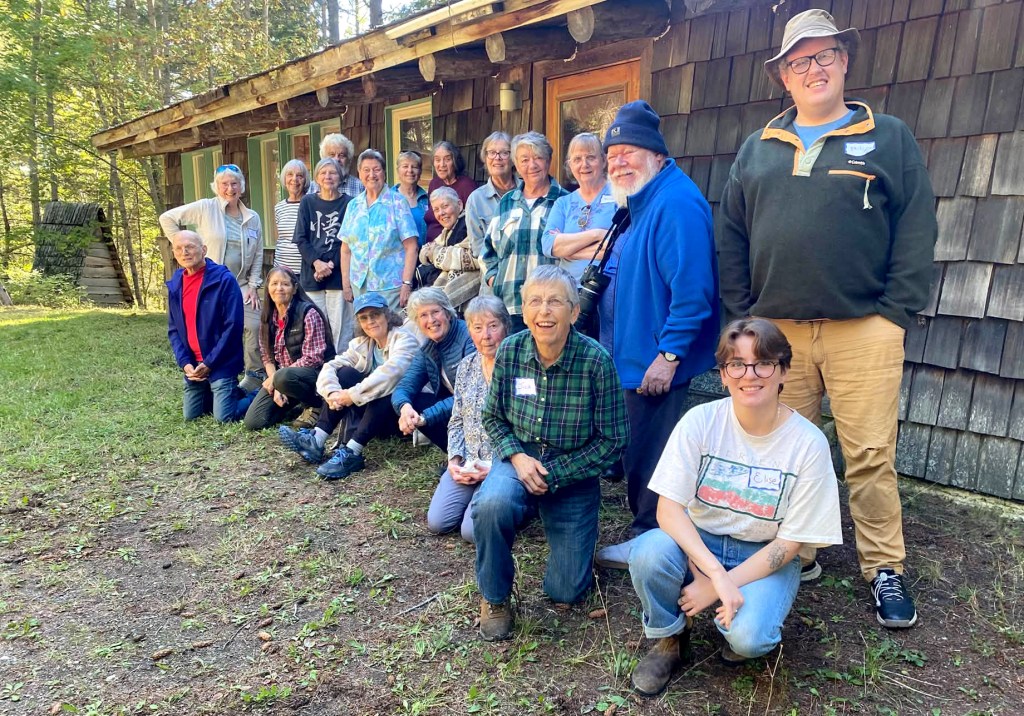
Many thanks to Lay Minister, Mandy Bath of St. Mark’s Anglican Church, Kaslo BC for sharing her sermon from Sept 209, 2026
We start with a Questionnaire by Wendell Berry:
- How much poison are you willing to eat for the success of the free market and global trade? Please name your preferred poisons.
- For the sake of goodness, how much evil are you willing to do? Fill in the following blanks with the names of your favourite evils and acts of hatred.
- What sacrifices are you willing to make for culture and civilization? Please list the monuments, shrines and works of art you would most willingly destroy.
- In the name of patriotism and the flag, how much of our beloved land are you willing to desecrate? List in the following spaces the mountains, the rivers, the towns, the farms you could most willingly do without.
- State briefly the ideas, ideals or hopes, the energy sources, the kinds of security, for which you would kill a child. Name, please, the children whom you would be willing to kill.
This is a shocking piece of writing which stops us dead in our tracks. When the questions are so concrete: “Name, please, the children whom you would be willing to kill,” it concentrates the mind and forces us to smack ourselves awake and ask, “What in the name of humanity and sanity are we doing to this planet and our fellow inhabitants, human, animal, insects, birds, flowers, trees? What good purpose can ever be served by war, toxic air pollution, loss of biodiversity and desecration of sacred sites and artefacts? Why do we continue to let these things happen without making a fuss?”
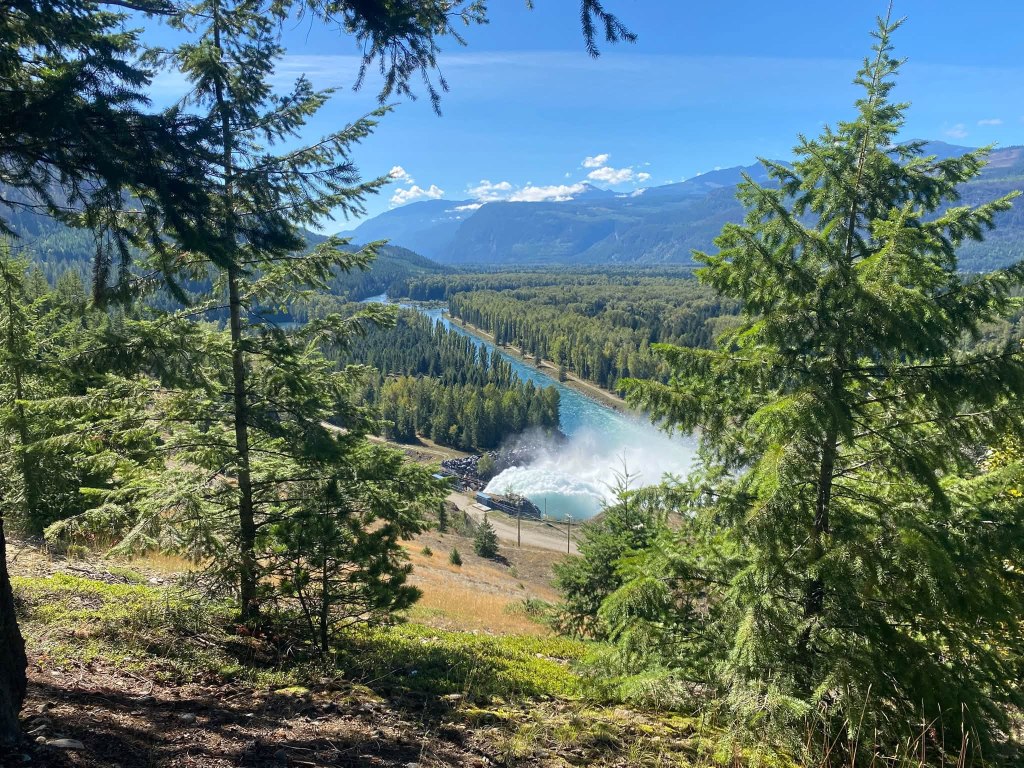
Here at St. Mark’s Church we just finished hosting an Eco-Justice Pilgrimage, during which a group of concerned and caring people had the chance to be in the beauty of Kaslo’s environs. They hiked mountain trails to view old growth cedar trees; they skimmed across Kootenay Lake by boat under gentle rain, and they met like-minded people from two other religious communities. But after our week together I confess I still am not entirely clear WHAT Eco-Justice is; what it means for us and how we should try to incorporate it into our lives?
So I’ve done a bit of digging and here are my reflections.
At its core, Eco-justice seems to be a broad concept linkingwendellerry, social justice with environmental protection. Eco-justice means combining social fairness with the ecological health of the planet to ensure a thriving earth and fair treatment for all living beings. Key concepts include the following:
- Eco-justice views human social inequality and environmental degradation as deeply connected problems.
- It stresses that the costs of environmental damage and the benefits of a healthy environment must be shared fairly among all people, without harming marginalized communities.
- It connects environmental protection with human rights, recognizing that pollution and climate change often harm marginalized communities the most.
- Some use the term interchangeably with ‘environmental justice’ to focus on human access to clean air, water, and green spaces, while others include the rights of animals, ecosystems, and the wider natural world to enjoy these things.
- Eco-justice treats the Earth and all living beings as an interconnected community that deserves protection and respect. Human actions, economies and nature depend on one another.
Some eco-justice proponents believe that animals also have entitlements, for instance to an adequate habitat. This is known as Interspecies Justice and Biodiversity conservation. It’s not only a matter of securing the wellbeing of future human generations, but also a matter of doing justice to non-human living beings. Aiming for strong sustainability is not only something that we owe each other as fellow humans but also something we owe all the other creatures with which we share our planet.
Recently the Vatican has officially declared environmental destruction a “sin against creation and the Creator”. In a 29,000-word document titled Caring for our Common Home, Pope Leo elevates ecological concerns from a merely political or scientific issue into a direct matter of personal faith.
The text declares that destroying natural habitats, polluting, and exploiting resources, are not just civic failures but are “a sin against creation and against the Creator, that directly violates God’s plan.” Pope Leo notes that failing to safeguard the planet severely harms the poorest populations and future generations, distorting the core relationships that define humanity. By placing ecological action squarely in the realm of our moral responsibility, the Catholic Church is challenging millions of people, through their governments, to treat environmental care as a fundamental requirement of their faith.
But how do we individually achieve these things? How do we bring about Eco- and Interspecies-Justice to our world? In such a way that their worthiness becomes self-evident, as goals worth pursuing? How can we make a difference?
This week’s discussions here at St. Mark’s Eco-justice pilgrimage no doubt touched on such questions. I was not present for most of it, but here are a few ideas that occur to me, for ways we might make a difference, always remembering the mantra: Think Globally, Act Locally.
- Live what you seek to preach. Rescue the spider crawling across your computer and give her safe haven outdoors. Assist the earthworm stranded in the road after a rain shower to find damp grass and leaf mould away from the asphalt. Feed birds in winter. Give away generously your plants, seeds, seedlings and harvests.
- Grow gardens and create habitat for birds, pollinating insects, reptiles and amphibians.
- Study books by thinkers who embody these beliefs, such as Sacred Earth, Sacred Soul and The Great Search by John Philip Newell. There is much food for thought and suggestions for action in books such as these.
- Support our local organic biodynamic farms by buying their beautiful produce.
- Keep the subject of eco-justice in the public eye by writing to your local newspapers and national media. Question our governments’ actions when they do not align with the highest ideals. Because time is running out.
- Consider what kind of world we are bequeathing to our children and grandchildren. Take actions, as concrete as possible, to improve the condition of the world they will inherit. Think about this beautiful world we inhabit, and how we can preserve it.
- Fight for environmental protection of the remaining pristine places in your local area. Oppose development that fells the trees and paves over wilderness areas.
- Vote your conscience: seek to elect municipal Councillors and a Mayor who will demonstrably uphold life-affirming and protective values in your community.
- Align yourself with, and support, environmental groups like Wildsight, Friends of Kootenay Lake, the World Wildlife Fund for Nature, and others. They are out there doing the work. They need our help.
- Be the kind of driver whose car carries the bumper sticker, “I Brake for Butterflies”
Why do this? Because God is in this work. We meet him in the garden. We see him in the eyes of an injured bird who hit our window and lies trustingly in our palm. We find God in the magnificence of a mountain summit, and in clean water gushing from an alpine spring, nurturing everything it meets.
Let another man also named Berry, Thomas Berry, have the last words:
We need the sun, the moon, the stars, the rivers,
and the mountains and birds, the fish in the sea,
to evoke a world of mystery, to evoke the sacred.
— Thomas Berry, “The Great Work”
And a final blessing:
May the Holy One, who brought water from the rock, sustain us in the desert.
May Christ our Lord, who is Living Water, refresh us for the work of restoration.
And may the Holy Spirit carry us on currents of grace until justice rolls down like water and righteousness like an ever-flowing stream. Amen
Visit the takenote.ca HOME page for a colourful display of hundreds of other blogs which may interest or inspire you


So very meaningful. Thanks for sharing, Ken. Susan
On Tue, Sep 29, 2026, 5:00 AM Take Note – Reflections on life, music,
LikeLike