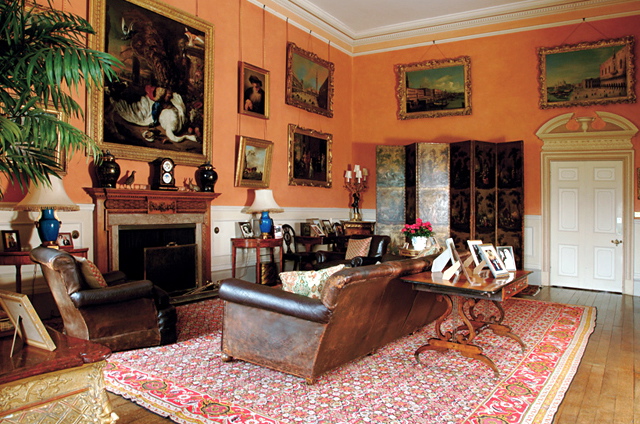
I have always imagined a “fireside chat” as the place where two people enjoy conversation and libations in front of a roaring fireplace in an English country house. or a remote Canadian cabin. I have enjoyed both over the years, where the conversation included politics of all sorts and stripes, religion, photography, biography, literature, music. and many other topics.
Right now, and for the purposes of this blog, “fireside” means watching a wildfire consume parts of my home community of Summerland, a fire that drove over 20,000 people from our homes for thirteen or more days, wreaking havoc on local forests and fields, taking some homes near the town centre and completely destroying the outlying community of Faulder.
Readers of my recent blogs are well aware of the effects of the Bald Range wildfire, a tempest which still stomps out of control, now thankfully pushing away from our town seeking additional fuel and a new target. One person in our church community has lost everything though plans (and is able) to rebuild. We have all experienced anxiety and uncertainly; we have all inhaled heavy smoke (which continues); we know of others who have lost if not homes, then outbuildings including garages and working areas. We Summerlanders have all experienced a brief encounter of a very dangerous kind.
I used to explain to clergy colleagues that it is hard to talk about environmental matters in Summerland, because, frankly, life seems so perfect here. Everything is so prosperous and beautiful — Well, it used to be this way. “Stay here; put your head down; and let the rest of the world solve its own problems.” Well, now, the global consequences of climate change have hit us in the teeth; right here; right now.
We have seen the local effects of climate change all around us for years though we have paid scant attention to these changes. The sustained loss of moisture in the ground; the steady annual decrease of frost-free moist days; the expansion and intensification of drought; lower lake-water levels. All these observations support what the BC Wildfire Incident Commander announced in a briefing a few days ago: “Every year the severity and impact of wild fire grows, steadily and significantly,” he said.
It just occurred to me that there is no place I can travel in the Province of BC where there is no risk of fire — From Victoria to Port Hardy on Vancouver Island; in the northeast including Fort Nelson and Fort St. John; at Kamloops where we once lived; the entire South Okanagan region including Kelowna and points south down to Osoyoos and now out towards Princeton; and let’s not forget the East Kootenays around Kimberley. I have lived in, or visited all these places over many years. In BC there is no place immune to wildfire.
I shall now put on my preacher’s hat; or more correctly, preaching scarf or stole. We humans have been given a gift, a place to call home, a cluster of natural resources which sustains all of life including ourselves. We are given creation in trust by Creator God. We need the ground upon which we walk for food, for clean water, and other nourishment. We are given beauty to savour, to enjoy, and inspire.
So what do we do with it? We find ingenious ways to convert physical resources into monetary commodities. “Who doesn’t want a little profit; after all we need a strong economy to create jobs,” the oligarchs say. Yet the prophet says, “think again.” While a dam here, and a solar or wind project there, these take little from the earth. Such projects return resources to the earth. The continued expansion of fossil fuel extraction, transportation, and combustion takes everything and returns nothing to creation as they negatively alters the state of our atmosphere.
Do you remember your high school chemistry class? Turn up that Bunsen Burner in order to speed up chemical reactions. In foods class you learned to put a lid on the frying pan to cook the eggs faster. The same physical laws learned in school classrooms operate identically in the universal laboratory, the earth and its atmosphere. The result is a massive increase in extreme weather events, locally and globally. Compare, for instance, fires in BC with simultaneous, intense flooding in Alberta and Manitoba. There was a time when I would compare Canadian ecological realities with the plight of developing countries. Now such contrasts exist within our own borders.
Back now to my fireside chat. Seated by my living room window I look at a long mountain-scrape, Cartwright Mountain, a side of town where we once lived, a place where until the fire we walked our dogs almost daily. Juno and her friends know every trail; they know the homes of things that fly and things which scamper. The mountain is their, and our, happy place. Who knows when we can return. Within an hour of ignition the fire crossed the Cartwright Ridge and came straight towards our home. Thankfully, we were well prepared and got out just fine. Had the winds not changed we would very likely have lost our home and the entire condominium complex.
Interviewed on a recent Emergency Service broadcast Summerland Fire Chief Rob Robinson explained how twenty-one of his firefighters made a last stand on Cartwright Avenue on a line which extended to the north end of Garnett Valley Road. This courageous crew (mostly volunteers) succeeded at holding the fire back from downtown as residents were evacuated on the first night of the fire. Had they been unsuccessful, the fire would have rampaged right through to downtown Main Street. The fire was a veritable Blitzkrieg, a lightning-fast swoosh towards the centre of town. (BTW the fire was human-caused — no lightening involved — An investigation continues.)
A friend recently complained: “Government should have built fire guards.” Fine, but where? I know that Venice is sinking and barricades are constructed to protect that city; I also know that we’re not going back to walled towns and cities. That didn’t work in Medieval times. Won’t work now. Others say that “the wildfire service should have put more equipment on the fire, faster.” Truth is that our location near Penticton airport meant that BCWS did scramble both equipment and personnel quickly.
We were very fortunate especially as with over 120 fires burning in BC at last count, where forty remain out-of-control, capacity is not unlimited. Additional resources came from up and down the valley and eventually from other provinces and countries including Mexico, Costa Rico, Australia, and New Zealand. (Nothing of course from the United States — They just want us to drink their booze and let them drink our milk.)
We have to face a hard fact. “Fire Weather” is the new norm. Strategies and expectations must shift to address this new reality. “Summer” as a time of rest and relaxation is more of a memory than a present-day meme. We must do everything we can to manage our forestry sector better and move beyond single bottom line economic strategies. As the earth gives us so much, we need to stop taking too much from the resources which enliven us. We need to replenish creation and restore not only what we have taken, but to take less so creation can flourish.
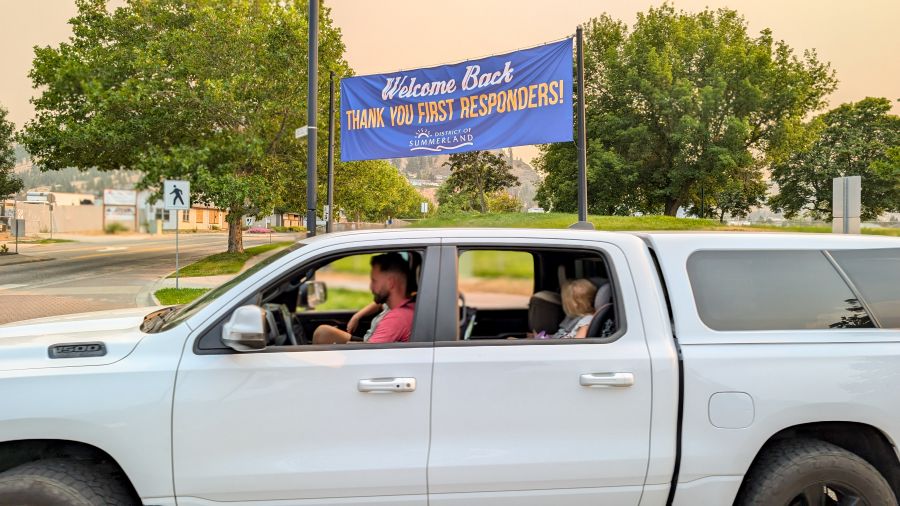
At last, the fire outside my window is dying down — it’s actually moving away, less visible now as it continues its outside attack on my nostrils. It is time for us Summerlanders to move on, confident, though still coughing; still rebuilding; still remembering; still drawing strength from each other. What has been most encouraging these past days is seeing our community come together. Legions of volunteers have staffed evacuation and support centres. Residents have collaborated with neighbours. Day by day, stories tell of generous acts towards those who have lost so much, stories of compassion to animals and the agricultural community, stories shared in lineups at the grocery stores, coffee shops, and in hair salons, stories of simple gestures of gratitude, appreciation, and thanksgiving for the very best that life and community can offer.
Eric Thompson, Communications Officer for the Regional District of Okanagan/Similkameen (RDOS) Emergency Operations Centre recounted his recent visit to burn sites and community support centres in Summerland and Penticton: “I had a chance to see what this Bald Range Wildfire did to the area. What I do know is that it didn’t break our spirit.” No pun intended, but the Bald Range fire is a watershed moment for Summerland. Despite the losses, including one human life, we have survived. We will “rise from the ashes.”
Summerland strong, everyone.
Visit the takenote.ca HOME page for a colourful display of hundreds of other blogs which may interest or inspire you


As a fellow Summerlander, I found this insightful and incredibly moving. In this lovely little town, we all did feel protected from the dangers, both physical and political. Now our innocence is gone. We need to pay attention to what’s happening around us — can you say “climate change”? You’d better learn how to, because climate change has caused devastation to our town and we need to learn how to protect our town and our world.
LikeLike